Category: OTT

  • Navigating Complex OTT System Integration for Global Media Networks

    Navigating Complex OTT System Integration for Global Media Networks

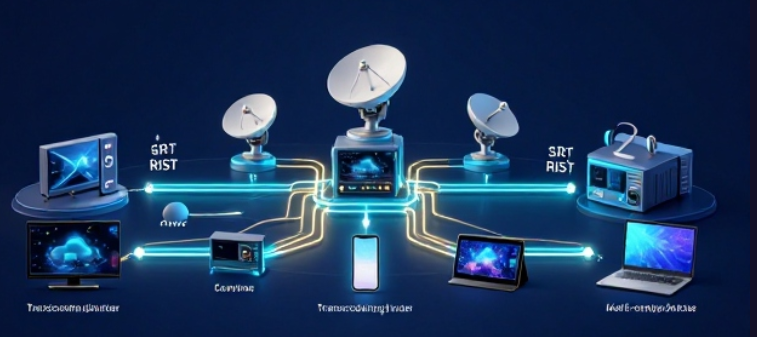
    The digital streaming landscape has crossed a critical threshold. Modern media conglomerates, telecommunications operators, and sports leagues across the USA and the UAE can no longer rely on isolated, off-the-shelf software applications to manage their video operations. As subscriber bases expand and multi-device consumption models fracture, enterprise broadcasters face a daunting engineering challenge: connecting disparate legacy back-office mainframes, cloud transcoders, subscriber management systems, and multi-CDN networks into a cohesive, low-latency execution fabric.

    This complex orchestration process is known as OTT System Integration.

    ┌────────────────────────────────────────────────────────────────────────┐
    │             ENTERPRISE OTT SYSTEM INTEGRATION ARCHITECTURE             │
    ├────────────────────────────────────────────────────────────────────────┤
    │  [ Legacy Infrastructure ] ──> REST / GraphQL Middleware API Gateway    │
    │                                           │                            │
    │  [ Ingestion & Encoding ]  ──> Automated QC & Dynamic ABR Transcoding  │
    │                                           │                            │
    │  [ Security Core ]         ──> Multi-DRM (FairPlay / Widevine)          │
    │                                           │                            │
    │  [ Data & Billing Mesh ]   ──> Unified Subscriber & CRM Gateway        │
    │                                           │                            │
    │  [ Edge Distribution ]     ──> Multi-CDN Switching + SSAI Engines      │
    └────────────────────────────────────────────────────────────────────────┘
    

    Without a well-engineered integration strategy, launching or scaling a streaming platform often leads to fragmented data silos, delayed video playback startup, security vulnerabilities, and unpredictable operational expenditures. This guide explores the architectural blueprints, integration frameworks, and technical standards required to build a resilient video ecosystem.

    image

    Understanding the Scope of Enterprise OTT System Integration

    At its core, OTT System Integration is the technical discipline of connecting multiple independent software subsystems into a single, automated end-to-end streaming engine.

    Unlike launching a basic direct-to-consumer video app—where a single SaaS vendor manages content hosting and simple user sign-ups—enterprise video deployments must communicate directly with existing corporate infrastructure. This includes syncing asset metadata with localized linear broadcast archives, connecting subscriber entitlement systems to legacy telco billing gateways (such as RADIUS or carrier billing interfaces), and feeding real-time viewing telemetry into enterprise data lakes.

    A complete system integration blueprint addresses five primary operational flows:

    1. Media Ingest & Transcoding Pipelines: Automated file movement from satellite/mezzanine sources to cloud encoding engines.
    2. Metadata & Rights Synchronization: Harmonizing assets across custom catalog databases and a centralized Video CMS.
    3. Security & Entitlement Verification: Enforcing hardware-level encryption keys across all user sessions.
    4. Subscriber Billing & CRM Gateways: Synchronizing user profiles, recurring payment tokens, and regional tax engines.
    5. Dynamic Ad Insertion & Analytics: Stitching targeted advertisements at the cloud server level while transmitting QoS metrics to data lakes.

    Executing this integration requires working alongside an experienced OTT platform development company capable of bridging legacy IT infrastructure with cloud-native video architectures.

    Core Architectural Pillars of an Integrated Video Mesh

    Building a scalable video platform requires a microservices-based software stack. The table below details the essential components required within an integrated enterprise pipeline.

    Subsystem LayerPrimary FunctionIndustry Standards & API InterfacesCore Failure Mode Mitigated
    Ingestion & EncodingAutomated QC, chunking mezzanine files into dynamic ABR laddersHLS, MPEG-DASH, HEVC, AV1, AWS Elemental, REST APIsBuffer stalls caused by fluctuating mobile network speeds
    Asset OrchestrationManaging content taxonomies, series structures, and localized metadataVideo Content Management Systems, GraphQL, JSON-RPCCorrupted asset metadata and broken player playlists
    Security & RightsEnforcing hardware-level license key verification across devicesMulti DRM, Widevine, FairPlay, PlayReadyScreen recording, link harvesting, and stream piracy
    Monetization EngineProcessing recurring billing, pay-per-view rentals, and targeted adsOTT Monetization Services, Stripe, Adyen, SSAI, VAST 4.2Payment processing drop-offs and client-side ad-blocker loss
    Edge DistributionRouting traffic dynamically to the optimal regional edge serverAkamai, Cloudflare, Fastly, Real-Time Latency AnalyticsServer crashes and buffering during major content drops

    Connecting Complex Subsystems: The API Middleware Layer

    The most sensitive layer in an integrated streaming ecosystem is the API Middleware Layer. This software layer acts as a central translation bridge between modern cloud services and older, localized corporate databases.

    ┌────────────────────────────────────────────────────────┐
    │            MIDDLEWARE ORCHESTRATION LAYER              │
    ├────────────────────────────────────────────────────────┤
    │  Client Apps (Smart TVs, Mobile, Web)                 │
    │         │                                              │
    │         ▼                                              │
    │  API Gateway (GraphQL / REST Microservices)            │
    │         │                                              │
    │         ├──> Legacy ERP / Database (SAP / Oracle)      │
    │         │                                              │
    │         ├──> Video CMS & Metadata Hub                  │
    │         │                                              │
    │         ├──> DRM License Key Server                    │
    │         │                                              │
    │         └──> Payment Gateways & Telco Billing (SAMP)   │
    └────────────────────────────────────────────────────────┘
    

    When a user opens an application and clicks “Play,” the middleware orchestrates multiple real-time handshakes within milliseconds:

    1. Authentication Check: The gateway verifies the user’s active session against the subscriber database or Single Sign-On (SSO) server.
    2. Entitlement Query: The system confirms whether the user’s current plan permits access to the requested asset ID.
    3. DRM License Issue: The middleware contacts the Digital Rights Management Software license server to issue an encrypted decryption key bound specifically to the user’s physical device hardware.
    4. Manifest Generation: The player receives a customized HLS or MPEG-DASH stream manifest populated with Server-Side Ad Insertion (SSAI) markers matching the user’s demographic profile.

    Cross-Regional Implementation Dynamics: USA vs. UAE

    While video transport protocols like HLS and DASH are standardized worldwide, regional regulatory standards and consumer habits create distinct operational priorities between North American and Middle Eastern deployments.

    The USA Enterprise Market

    In the United States, systems integration projects focus heavily on programmatic ad integration, legacy cable platform synchronization, and extreme device fragmentation.

    • Device Footprint: Systems must maintain absolute feature parity across Smart TVs (Samsung Tizen, LG webOS, Vizio), connected TV sticks (Roku, Fire TV, Apple TV), and mobile devices.
    • Ad-Tech Complexity: Integration teams must connect video manifests directly to Demand-Side Platforms (DSPs) and Supply-Side Platforms (SSPs) using VAST 4.2 protocols for real-time programmatic ad bidding.
    • Accessibility Compliance: Systems must automatically parse, validate, and render closed captioning files (CEA-608/708) to satisfy FCC regulatory standards.

    The UAE & GCC Regional Market

    Driven by rapid 5G network expansion, high smartphone usage, and national digital mandates, the UAE market prioritizes low-latency live streaming, mobile payment integration, and localized data residency.

    • Sovereignty & Compliance: Integration architectures must comply with UAE Personal Data Protection Law (PDPL) guidelines and local media regulation mandates. All personal subscriber data and viewing logs must reside in local, sovereign cloud regions.
    • Payment Rails Integration: Platforms must integrate directly with regional telecom billing channels (e.g., e&, du) and localized payment gateways (such as MADA and local credit processors) alongside standard international gateways.
    • Bilingual Localization: The Video CMS and front-end client applications must support dual-direction user interfaces (RTL Arabic and LTR English) with synchronized multi-audio track switching.

    Enterprise Commercial Use Cases

    Executing a comprehensive OTT System Integration blueprint solves severe operational challenges across diverse commercial verticals:

    1. Telecommunications & Pay-TV Operators

    • The Challenge: A regional telecom operator needs to bundle digital video subscriptions with home broadband plans, but their subscriber data sits inside an older mainframe system.
    • The Integration Solution: Developers construct a custom RESTful middleware layer that translates legacy billing queries into lightweight API calls. This enables instant subscriber entitlement verification without modifying the core legacy billing platform.

    2. Tier-1 Sports Leagues & Live Event Broadcasters

    • The Challenge: Delivering ultra-low latency live match streams to millions of concurrent fans while serving personalized, localized video ads.
    • The Integration Solution: Engineers connect low-latency HLS (LL-HLS) video ingest lines with a server-side manifest manipulation engine. The system inserts localized, high-yield video ads dynamically based on the viewer’s geolocation data, preserving broadcast quality without introducing stream latency.

    3. Global Film Distributors & Content Owners

    • The Challenge: Managing thousands of hours of premium film assets across international buyers while preventing digital piracy and unauthorized restreaming.
    • The Integration Solution: Deploying a unified Digital Rights Management core that applies hardware-level Multi-DRM (Widevine, FairPlay, PlayReady) alongside dynamic forensic watermarking, which embeds invisible, user-specific tracking identifiers directly onto video frames.

    In-House System Integration vs. Specialized Development Partners

    When evaluating how to build or modernize an integrated platform, enterprise executives must choose between leveraging internal IT teams or hiring a dedicated integration partner.

    ┌────────────────────────────────────────────────────────┐
    │             STRATEGIC DECISION MATRIX                  │
    ├────────────────────────────────────────────────────────┤
    │  IN-HOUSE IT INTEGRATION TEAM                          │
    │   ✔ Direct alignment with internal company culture     │
    │   ✔ Immediate on-site access to legacy systems         │
    │   ✖ High operational overhead and specialized skills gap│
    │   ✖ Slower initial deployment schedules                │
    ├────────────────────────────────────────────────────────┤
    │  SPECIALIZED INTEGRATION PARTNER                       │
    │   ✔ Pre-built API connectors and video blueprints      │
    │   ✔ Multi-disciplinary team (DRM, CDN, player SDKs)    │
    │   ✖ Higher upfront initial professional fees           │
    │   ✖ Requires structured SLAs for long-term support     │
    └────────────────────────────────────────────────────────┘
    

    In-House Engineering Teams

    • Pros: Deep internal familiarity with proprietary company databases; direct control over long-term software changes; retention of internal operational knowledge.
    • Cons: High fixed payroll costs; difficulty recruiting specialized video engineers skilled across Multi-DRM, ABR encoding, and low-latency player SDKs; risk of project delays due to learning curves.

    Specialized Integration Partners

    • Pros: Accelerated time-to-market using pre-tested software connectors; immediate access to seasoned video architects; reduced risk of architectural bottlenecks during initial rollout.
    • Cons: Requires clear upfront capital budget; long-term operational success depends on establishing comprehensive Service Level Agreements (SLAs).

    Media brands often work with established system integrators like ARYtech or explore modular, pre-integrated software solutions through platforms like Vodistry to balance custom flexibility with rapid market deployment.

    Expert Recommendations for Engineering Leadership

    Expert Insight: “The most common point of failure in enterprise video projects is treat system integration as an afterthought. Teams spend months polishing front-end UI mockups, only to discover during staging that their legacy subscriber database cannot handle the authentication load generated during a major live event concurrency spike.”

    To ensure your system integration initiative runs smoothly without accumulating technical debt:

    1. Mandate an API-First Integration Architecture: Require all subsystem vendors to provide documented RESTful APIs or GraphQL endpoints. Avoid proprietary software vendors that restrict direct access to your underlying database layers.
    2. Conduct Load Stress Tests Early: Do not wait until launch week to evaluate system handshakes. Perform high-concurrency synthetic load testing across the entire API gateway, DRM license server, and billing interfaces during early staging sprints.
    3. Decouple Front-End Apps from Backend Logic: Structure your client applications using clean microservices patterns. Ensure that updating an internal database or changing a CDN provider does not require redeploying native client apps across app stores.
    4. Prioritize Total Data Ownership: Ensure all vendor contracts stipulate that viewing metrics, customer emails, financial logs, and video metadata remain your company’s exclusive intellectual property.

    Frequently Asked Questions (FAQs)

    What is OTT system integration?

    OTT system integration is the engineering process of connecting diverse software and hardware subsystems—such as cloud video transcoders, Video CMS platforms, Multi-DRM key servers, CRM databases, payment gateways, and CDN networks—into a unified, automated video delivery infrastructure.

    Why is system integration critical for enterprise streaming platforms?

    Without robust system integration, streaming platforms suffer from data silos, manual asset management errors, slow video startup times, security vulnerabilities, and payment processing failures. System integration automates these workflows, allowing platforms to scale seamlessly to millions of concurrent users.

    How long does an enterprise OTT integration project take?

    A standard enterprise system integration project typically takes 12 to 24 weeks, depending on the complexity of legacy backend systems, the number of target client applications, and custom billing gateway requirements.

    What is the role of Multi-DRM in system integration?

    Multi-DRM integrates Apple FairPlay, Google Widevine, and Microsoft PlayReady into a single management framework. During the integration process, the license server is connected directly to the user entitlement database, ensuring that content decryption keys are issued only to verified, active subscribers.

    Can an integrated OTT platform work alongside our existing legacy database?

    Yes. Experienced integration engineers build custom API middleware layers that act as translation bridges. This allows modern cloud video platforms to read and write data to older corporate mainframes (such as SAP, Oracle, or custom SQL databases) without requiring a complete overhaul of your existing IT infrastructure.

    What is the difference between custom system integration and using a white-label platform?

    Custom system integration connects bespoke or best-of-breed software components through custom API middleware, providing complete technical flexibility and source code ownership. A managed white-label platform provides a pre-integrated, out-of-the-box streaming system, which offers faster market entry but limited customization. For a deeper breakdown of pre-engineered options, review our guide on White Label OTT Solutions.

    How do I prepare a business plan for an enterprise OTT integration project?

    An enterprise integration plan must map out technical subsystem requirements, content acquisition or production costs, cloud infrastructure overhead, multi-device distribution targets, and projected subscriber LTV. To structure your commercial roadmap effectively, consult our detailed resource on creating an OTT Business Plan.

    Conclusion and Strategic Action Plan

    Executing a successful OTT System Integration initiative requires balancing software engineering with disciplined commercial project management. By establishing an API-first middleware layer, protecting assets with Multi-DRM, and connecting legacy databases to modern cloud architectures, media brands can build scalable, future-proof streaming businesses.

    To move your integration initiative from initial design to production execution:

    1. Audit Your Existing Subsystem Infrastructure: Map out all current databases, transcoders, billing systems, and CRM tools to identify integration dependencies.
    2. Formulate a Technical Architecture Blueprint: Define your data flows, API gateway requirements, and Multi-CDN routing strategies using comprehensive Business Consulting Services.
    3. Engage Experienced System Integrators: Partner with proven engineering specialists at ARYtech to design, connect, and scale your end-to-end digital streaming infrastructure.

    Further Reading & Resources

  • Engineering Enterprise Video Architecture: The Executive Guide to Deploying an OTT VOD Platform

    Engineering Enterprise Video Architecture: The Executive Guide to Deploying an OTT VOD Platform

    he global video streaming industry has entered an era of technological consolidation. Enterprise broadcasters, film studios, telecom operators, and niche media networks across the USA and the UAE are transitioning away from fragmented, legacy distribution networks. Today, scaling a digital video enterprise requires deploying a resilient, security-hardened OTT VOD platform.

    Building a modern video-on-demand platform involves far more than configuring a cloud media transcoder and embedding a front-end HTML5 web player. Delivering thousands of hours of high-bitrate video content across a fragmented device ecosystem—encompassing Apple TV, Android TV, Samsung Tizen, LG webOS, Roku, and mobile handsets—demands an end-to-end software architecture.

    ┌────────────────────────────────────────────────────────────────────────┐
    │               ENTERPRISE VOD PLATFORM ARCHITECTURE                     │
    ├────────────────────────────────────────────────────────────────────────┤
    │  [ Media Ingestion ]     ──> Automated QC & Multi-Bitrate Encoding     │
    │                                           │                            │
    │  [ Asset Orchestration ] ──> Video CMS & Metadata Management           │
    │                                           │                            │
    │  [ Security Fabric ]     ──> Multi-DRM (FairPlay / Widevine / PlayReady)│
    │                                           │                            │
    │  [ Monetization Gateway] ──> Hybrid Billing Engine (SVOD/TVOD/AVOD)    │
    │                                           │                            │
    │  [ Edge Distribution ]   ──> Multi-CDN Mesh + Manifest Manipulation   │
    └────────────────────────────────────────────────────────────────────────┘
    

    Without an architecture that pairs modular cloud infrastructure with clear commercial unit economics, expanding a digital video catalog can lead to escalating bandwidth overhead, subscriber churn, and lost revenue.

    image


    The Architectural Evolution of Video-on-Demand

    Over-The-Top Video-On-Demand (VOD) platforms bypass legacy cable set-top boxes and satellite providers, streaming video files directly over public and private IP networks. In high-density technology markets such as the United States and the United Arab Emirates, consumer expectations for playback performance are strict. Viewers expect instant video startup times (under 1.5 seconds), buffer-free Adaptive Bitrate (ABR) rendering, and broadcast visual quality up to 4K HDR.

    To meet these requirements, engineering teams must build an integrated video pipeline addressing four primary challenges:

    • High-Efficiency Transcoding: Processing high-resolution mezzanine files into fragmented MP4 containers (HLS and MPEG-DASH) using efficient codecs like HEVC and AV1 to reduce bandwidth consumption without sacrificing image fidelity.
    • Studio-Grade Asset Security: Implementing robust Digital Rights Management frameworks to meet studio compliance rules and prevent stream theft.
    • Granular Asset Management: Organizing multi-language audio tracks, closed captions, and deep metadata inside a centralized Video CMS.
    • Multi-CDN Routing: Distributing traffic across dynamic edge delivery networks to prevent regional bottlenecks during high-demand release windows.

    When building or upgrading media platforms, enterprise brands often partner with a specialized OTT platform development company to build custom API gateways and native multi-screen applications.

    Anatomy of an Enterprise OTT VOD Architecture

    Deploying a resilient ott vod platform requires a microservices-based software stack. The table below details the core components within a production-grade video delivery pipeline.

    Pipeline LayerPrimary FunctionIndustry Standards & FrameworksPrimary Failure Mode Mitigated
    Ingestion & EncodingAutomated QC, chunking mezzanine files into dynamic ABR laddersHLS, MPEG-DASH, HEVC, AV1, AWS Elemental, FFmpegBuffer stalls caused by fluctuating mobile network speeds
    Asset OrchestrationManaging content taxonomies, series structures, and localized metadataVideo Content Management Systems, RESTful APIs, GraphQLCorrupted asset metadata and broken player playlists
    Security & RightsEnforcing hardware-level license key verification across devicesMulti DRM, Widevine Modular, Apple FairPlay, PlayReadyScreen recording, link harvesting, and unauthorized stream restreaming
    Monetization EngineProcessing recurring billing, pay-per-view rentals, and targeted adsOTT Monetization Services, Stripe, Adyen, SSAI, VAST 4.2Payment gateway drop-offs and client-side ad-blocker loss
    Edge DistributionRouting traffic dynamically to the fastest regional edge serverAkamai, Cloudflare, Fastly, Real-Time Latency AnalyticsServer crashes and buffering during major content drops

    Monetization Engineering: Hybrid Models for VOD Scale

    Choosing an effective commercial framework is as critical as designing the underlying technical architecture. Rather than relying on a single revenue model, modern enterprise platforms deploy hybrid monetization matrices to maximize Average Revenue Per User (ARPU).

    1. SVOD (Subscription Video on Demand)

    SVOD delivers predictable, recurring revenue through monthly or annual access subscriptions. Long-term profitability requires managing Subscriber Acquisition Costs (SAC) while reducing customer churn through personalized recommendation algorithms and deep video catalogs.

    2. TVOD (Transactional Video on Demand)

    TVOD enables pay-per-view (PPV) models, allowing users to buy or rent individual high-value titles, exclusive sporting events, or early-window theatrical releases. This requires instant entitlement provisioning, precise time-windowing logic within your Video CMS, and low-friction checkout flows.

    3. AVOD & FAST (Ad-Supported VOD & Free Ad-Supported TV)

    AVOD monetizes free or low-cost content through targeted video ad placements. By utilizing Server-Side Ad Insertion (SSAI), platforms stitch video ads directly into the primary HLS/DASH manifest at the cloud server level. This bypasses client-side ad blockers and provides a smooth viewing experience.

    Media brands frequently engage Business Consulting Services alongside technical engineers to evaluate content acquisition costs against projected lifetime value (LTV).

    Cross-Regional Markets: USA vs. UAE Deployment Dynamics

    While baseline video transport protocols are standardized globally, regional infrastructure and compliance requirements create different operational priorities across North American and Middle Eastern markets.

    The USA Enterprise Market

    The US streaming landscape is defined by platform fragmentation, a mature programmatic advertising infrastructure, and high competition for viewer attention.

    • Device Footprint: Applications must support native execution across Smart TVs (Samsung Tizen, LG webOS, Vizio SmartCast), connected TV devices (Roku, Fire TV, Apple TV), and mobile ecosystems.
    • Monetization Focus: Growth is heavily driven by FAST channel adoption and ad-supported subscription tiers.
    • Regulatory Compliance: Platforms must comply with FCC accessibility mandates, closed-captioning standards (CEA-608/708), and federal privacy laws like COPPA.

    The UAE & GCC Regional Market

    Driven by high mobile connectivity, rapid 5G infrastructure expansion, and national digital mandates, the UAE represents a fast-growing digital media ecosystem.

    • Device Footprint: Mobile-first user interface design, support for high-throughput 5G streaming, and native bilingual capabilities (Arabic/English).
    • Security & Compliance: Alignment with regional data residency guidelines, local payment processing rails, and strict content licensing enforcement via Digital Rights Management Software under local media regulations.
    • Infrastructure Strategy: Strategic use of localized edge CDN nodes in Dubai and Abu Dhabi to reduce physical latency across regional internet exchange points.

    Industry Use Cases Across Commercial Verticals

    Custom-engineered ott vod platform architectures resolve complex operational challenges across diverse industries:

    1. Enterprise Media Houses & Film Distributors

    • The Challenge: Transitioning legacy film archives to global digital distribution while preventing illegal restreaming and piracy leaks.
    • The Technical Solution: Implementing a complete Multi DRM stack paired with dynamic forensic watermarking, which embeds invisible, user-specific tracking identifiers directly onto target video frames.

    2. Niche & Independent Content Networks

    • The Challenge: Building a dedicated global audience without sacrificing platform revenue to third-party social video aggregators.
    • The Technical Solution: Leveraging White Label OTT Solutions to quickly deploy branded native applications across Smart TV app stores while retaining total control over customer data and billing systems.

    3. Enterprise Corporate Training & Internal Communications

    • The Challenge: Securely hosting internal video libraries, corporate town halls, and educational content for global enterprise workforces.
    • The Technical Solution: Integrating single sign-on (SSO) authentication protocols (SAML 2.0 / OAuth 2.0), strict IP whitelisting, and domain locking to prevent unauthorized internal document access.

    Pros & Cons: In-House Custom Engineering vs. Managed White-Label Solutions

    When evaluating how to create your own OTT platform, business leaders face a core decision: build a fully custom internal architecture or launch using a managed, white-label framework.

    ┌────────────────────────────────────────────────────────┐
    │             STRATEGIC DECISION MATRIX                  │
    ├────────────────────────────────────────────────────────┤
    │  CUSTOM IN-HOUSE ENGINEERING                           │
    │   ✔ Complete ownership of custom source code & IP      │
    │   ✔ Tailored UI/UX design and player optimization      │
    │   ✖ High upfront capital expenditure and development    │
    │   ✖ Internal responsibility for SLA and maintenance    │
    ├────────────────────────────────────────────────────────┤
    │  MANAGED WHITE-LABEL PLATFORM                          │
    │   ✔ Rapid market entry (weeks instead of months)       │
    │   ✔ Pre-integrated DRM, billing, and player SDKs       │
    │   ✖ Recurring SaaS fees and revenue share models       │
    │   ✖ Feature expansion bounded by vendor roadmap        │
    └────────────────────────────────────────────────────────┘
    

    Custom In-House Engineering

    • Pros: Unrestricted control over software IP; fully customizable video player SDKs; zero revenue-share payouts to third-party technology providers.
    • Cons: Substantial upfront engineering investment; extended development cycles (6–12 months); requires a dedicated team of video engineers and DevOps staff.

    Managed White-Label Solutions

    • Pros: Faster time-to-market; predictable operational expenditure; pre-certified native apps across major app stores; automated security patching and cloud infrastructure maintenance.
    • Cons: Custom feature requests depend on vendor product roadmaps; long-term licensing fees scale alongside user volume growth.

    Expert Recommendations for Selecting a Technology Partner

    Expert Insight: “The most common mistake enterprise teams make when evaluating an OTT VOD platform is prioritizing front-end UI templates over backend video infrastructure. If your underlying platform lacks studio-grade DRM, flexible Video CMS capabilities, and multi-CDN load balancing, customer acquisition costs will rise quickly as technical debt mounts.”

    1. Require API-First Architecture: Ensure the platform vendor provides documented RESTful APIs and GraphQL endpoints. This enables seamless integration with your existing CRM, enterprise data lakes, and custom billing services.
    2. Audit Multi-DRM Security Credentials: Verify that the platform’s security framework includes studio-approved Apple FairPlay, Google Widevine Modular, and Microsoft PlayReady encryption keys.
    3. Review Concurrency and Multi-CDN Failover: Request historical performance metrics showing how the platform performs during major traffic spikes. Confirm that automatic multi-CDN failover triggers operate without interrupting active video playback.
    4. Insist on Total Data Ownership: Ensure software agreements state that all user analytics, viewing histories, customer emails, and video metadata remain your exclusive corporate IP.

    Frequently Asked Questions (FAQs)

    What is an OTT VOD platform?

    An ott vod platform is a software ecosystem that delivers video-on-demand content directly over the internet to end-user devices, bypassing traditional cable, satellite, and linear broadcast television networks.

    What is the difference between VOD and Live Streaming?

    VOD (Video-on-Demand) allows viewers to select and watch pre-recorded video assets from a digital catalog at any time. Live Streaming delivers real-time video feeds (such as sporting events or breaking news) to concurrent viewers as the event occurs.

    How much does it cost to build an enterprise OTT VOD platform?

    Investment depends on project scope. Managed White Label OTT Solutions typically range from $15,000 to $45,000 in setup fees, plus ongoing SaaS hosting fees. Building a custom, enterprise-grade platform with custom native apps across multiple app stores generally ranges from $60,000 to $200,000+.

    What is Multi-DRM, and why is it essential for VOD platforms?

    Multi-DRM combines Apple FairPlay, Google Widevine, and Microsoft PlayReady into a unified management layer. It encrypts video streams to prevent piracy, screen recording, and unauthorized distribution across diverse operating systems and native devices.

    What is the role of a Video CMS in an OTT platform?

    A Video CMS manages content ingestion, video asset tagging, metadata taxonomies, multi-language subtitle tracks, poster art, and content publishing schedules across target client applications.

    How does Server-Side Ad Insertion (SSAI) work in VOD streaming?

    SSAI stitches targeted video advertisements directly into the primary video stream manifest at the cloud server level before it reaches the viewer’s device. This creates a smooth transition between content and commercials while preventing client-side ad blockers from interrupting revenue delivery.

    How do I write a comprehensive business plan for a VOD platform?

    A complete strategy should outline target audience demographics, content licensing or production budgets, technical architecture preferences, multi-device app distribution plans, security compliance policies, and a financial model covering bandwidth, hosting, and subscriber acquisition costs. For a deeper breakdown, review our detailed guide on structuring an OTT Business Plan.

    Conclusion and Strategic Action Plan

    Building and scaling a successful enterprise ott vod platform requires balancing software engineering with disciplined financial management. By investing in a flexible architecture, protecting digital assets through robust Multi-DRM, and executing a targeted monetization model, media brands can establish high-ROI streaming businesses.

    To move your video platform from initial design to production execution:

    Engage Proven Engineering Specialists: Partner with established technical providers like ARYtech or explore enterprise product frameworks at Vodistry to build, secure, and scale your streaming business.

    Audit Technical Requirements: Define your video catalog size, expected concurrent viewing numbers, and target native device ecosystems.

    Formulate a Commercial Strategy: Align your content acquisition overhead with realistic subscription (SVOD), transactional (TVOD), or ad-supported (AVOD/FAST) monetization models.

  • ARYtech Heading to CABSAT 2026: Revolutionizing the Future of Streaming with Next-Gen OTT Solutions

    ARYtech Heading to CABSAT 2026: Revolutionizing the Future of Streaming with Next-Gen OTT Solutions

    The global broadcast, satellite, and media landscape is accelerating at an unprecedented pace. As consumer expectations for low-latency streaming, personalized content, and multi-device access peak, technology leaders must deploy software architectures that bridge scalability with sustainable monetization.

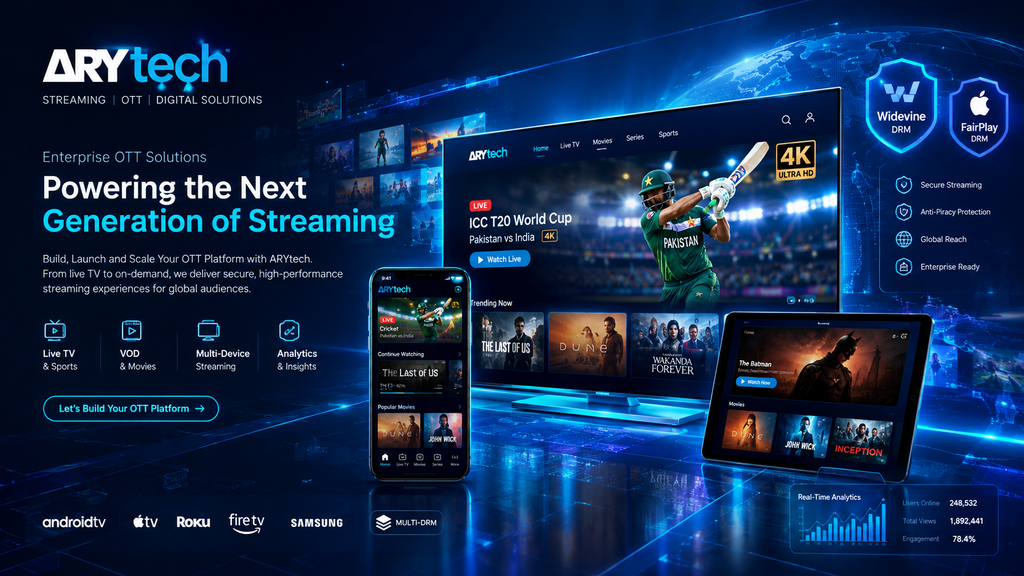
    ARYtech is excited to announce our official participation in CABSAT 2026 the premier MEASA region event for media, broadcast, and satellite technology. At this year’s exhibition, our team will unveil our proprietary, next-generation enterprise OTT (Over-The-Top) Product Suite, engineered to help broadcasters, content owners, and digital publishers build, secure, and monetize high-performance streaming platforms.

    Event Essentials: Mark Your Calendar

    If you are attending CABSAT 2026 in Dubai, here are the essential details to plan your meeting with the ARYtech executive and engineering teams:

    • Event Name: CABSAT 2026
    • Dates: October 5 – October 7, 2026
    • Location: Dubai Exhibition Centre (DEC), Expo City Dubai, UAE
    • Exhibition Timings:
      • Day 1 (Oct 5): 10:00 AM – 5:00 PM
      • Day 2 (Oct 6): 10:00 AM – 5:00 PM
      • Day 3 (Oct 7): 10:00 AM – 4:00 PM
    image 1

    What ARYtech is Bringing to CABSAT 2026

    At CABSAT 2026, ARYtech will present a hands-on look at our comprehensive OTT Platform Architecture. Designed to eliminate the operational friction of dual-native app updates, high bandwidth costs, and media piracy, our product suite delivers an end-to-end framework for digital video distribution.

    ┌────────────────────────────────────────────────────────────────────────┐
    │                   ARYtech ENTERPRISE OTT ARCHITECTURE                  │
    ├────────────────────────────────────────────────────────────────────────┤
    │  [ Ingestion & Transcoding ] ──> Dynamic ABR Bitrate Ladder (HLS/DASH)  │
    │                                           │                            │
    │  [ Content Security ]        ──> Studio-Grade Multi-DRM Engine         │
    │                                           │                            │
    │  [ Asset Orchestration ]     ──> Modular Video CMS & Metadata Sync    │
    │                                           │                            │
    │  [ Dynamic Monetization ]    ──> Hybrid Billing (SVOD / AVOD / FAST)   │
    │                                           │                            │
    │  [ Global Edge Delivery ]    ──> Multi-CDN Mesh + SSAI Integration     │
    └────────────────────────────────────────────────────────────────────────┘
    

    Key Pillars of the ARYtech OTT Product Architecture

    1. Modular Video CMS & Asset Orchestration: A centralized management hub built for complex multi-language taxonomies, localized metadata, automated video encoding pipelines, and seamless playlist scheduling.
    2. Studio-Grade Multi-DRM Security: Integrated protection powered by Apple FairPlay, Google Widevine, and Microsoft PlayReady encryption standards to prevent stream grabbing and unauthorized media distribution.
    3. Hybrid Monetization Frameworks: Out-of-the-box support for flexible commercial models, including Subscription VOD (SVOD), Transactional VOD (TVOD), and Free Ad-Supported Streaming TV (FAST) backed by Server-Side Ad Insertion (SSAI).
    4. Cross-Platform Native Apps: Pre-engineered, white-label client applications for Apple TV, Android TV, Samsung Tizen, LG webOS, Roku, iOS, and Android enabling brand launch across major app stores in record time.
    5. Ultra-Low Latency Live Streaming: WebRTC and LL-HLS protocol chains that deliver real-time live sports and news feeds under 3 seconds glass-to-glass delay.

    Why Connect with ARYtech at CABSAT 2026?

    Whether you are scaling an existing media platform or planning a ground-up OTT deployment, ARYtech offers deep technical expertise combined with flexible business models.

    • Live Product Demonstrations: Experience interactive walkthroughs of our Video CMS admin console, analytics dashboards, and multi-device player SDKs.
    • Architectural Consultations: Sit down with our solution architects to review your existing video pipeline, identify performance bottlenecks, and map out cost-effective multi-CDN strategies.
    • Tailored Business Models: Discuss custom white-label licensing, cloud hosting topologies (SaaS, Hybrid, or On-Premises), and regional compliance needs (including local data residency and payment gateway integrations across the Middle East and global markets).

    Schedule a 1-on-1 Meeting at CABSAT 2026

    Ensure dedicated time with our senior executive team during the show floor hours. To book a private meeting or request a personalized product demo prior to the event, reach out to us today:

    • Official Website: https://arytech.com/
    • Direct Booking: Contact our media engineering team directly via our website to reserve your preferred time slot at CABSAT 2026.
    cabsat 2026

    Join ARYtech in Dubai this October to explore how our enterprise OTT products can transform your streaming vision into a high-ROI operational reality!

  • Architecting Modern Streaming Platforms: The Enterprise Strategy for Scalable OTT Streaming Services

    Architecting Modern Streaming Platforms: The Enterprise Strategy for Scalable OTT Streaming Services

    The global video landscape has shifted away from monolithic broadcast infrastructure toward distributed, software-defined networks. Today, enterprise media brands, telecom operators, and sports leagues across the USA and the UAE are expanding their reach by deploying highly scalable, resilient OTT streaming services.

    However, operating a successful streaming platform requires far more than transcoding video files and embedding a basic web player. Delivering low-latency, high-bitrate video streams across thousands of fragmented consumer devices—ranging from Apple TV and Roku to Smart TVs and mobile handsets—demands an end-to-end cloud and edge architecture.

    ┌────────────────────────────────────────────────────────────────────────┐
    │                   ENTERPRISE OTT SYSTEM ARCHITECTURE                   │
    ├────────────────────────────────────────────────────────────────────────┤
    │  [ Ingestion & Transcoding ] ──> Dynamic ABR Encoding (HLS / DASH)     │
    │                                           │                            │
    │  [ Security & Compliance ]   ──> Multi DRM (Widevine / FairPlay)       │
    │                                           │                            │
    │  [ Orchestration Engine ]    ──> Video CMS & Metadata Management       │
    │                                           │                            │
    │  [ Monetization Gateway ]    ──> Unified Billing (SVOD / AVOD / FAST)  │
    │                                           │                            │
    │  [ Global Edge Delivery ]    ──> Multi-CDN Mesh + Server-Side Insertion  │
    └────────────────────────────────────────────────────────────────────────┘
    

    Without a unified technical foundation that pairs resilient cloud infrastructure with precise commercial monetization models, growing an audience can quickly result in spiraling bandwidth costs, high subscriber churn, and lost revenue.

    image 16

    The Evolution of Enterprise OTT Streaming Services

    Over-The-Top (OTT) technology bypasses traditional terrestrial, cable, and satellite distribution networks, delivering video content directly over the internet. What began as basic VOD (Video on Demand) catalog hosting has evolved into real-time, low-latency live streaming environments capable of serving millions of concurrent viewers during marquee events.

    In mature digital environments like the USA and rapidly scaling technology hubs like the UAE, consumer expectations for OTT streaming services are uncompromising. Users demand instant playback startup times (under 1.5 seconds), buffer-free Adaptive Bitrate (ABR) switching, and broadcast-grade visual clarity up to 4K HDR.

    Core Technical Drivers

    To meet these performance targets, engineering teams must address four distinct operational layers:

    • Ingestion and Transcoding Optimization: Converting raw SDI feeds or mezzanine files into fragmented MP4 containers (HLS and MPEG-DASH) across multiple resolution ladders.
    • Content Security and Rights Management: Protecting high-value media assets through Multi DRM solutions that satisfy studio compliance mandates.
    • Metadata and Asset Orchestration: Structuring localized metadata, multi-language audio tracks, and closed captions inside a centralized Video CMS.
    • Edge Delivery and CDN Load Balancing: Distributing traffic across multi-CDN architectures to prevent single-point-of-failure bottlenecks during traffic spikes.

    Enterprise media organizations often partner with a specialized OTT platform development company to engineer custom API gateways and cross-platform native applications.

    Anatomy of an Enterprise OTT Architecture

    Building a resilient streaming platform requires a modular microservices design. Below is an architectural breakdown of the core pipeline components required to run high-throughput video networks.

    Pipeline LayerPrimary FunctionKey Technical Standards / ToolsCore Failure Mode Addressed
    Ingestion & EncodingChunking raw video streams into adaptive bitratesHLS, MPEG-DASH, HEVC, AV1, AWS Elemental, FFmpegBuffer stalls caused by bandwidth fluctuations
    Content ProtectionEnforcing hardware-level encryption and license keysDigital Rights Management Software, Widevine, FairPlay, PlayReadyPiracy, stream grabbing, and unauthorized redistribution
    Asset OrchestrationManaging content taxonomies, schedules, and assetsVideo Content Management Systems, RESTful APIs, GraphQLCorrupted metadata and broken player playlists
    Ad Insertion EngineStitching targeted ads directly into video manifestsServer-Side Ad Insertion (SSAI), VAST 4.2, VPAID, SCTE-35Ad-blocker loss and buffering latency
    Multi-CDN DeliveryRouting viewer traffic to the optimal edge nodeAkamai, Cloudflare, Fastly, Real-Time Latency SwitchingRegional network congestion and outage buffering

    Monetization Frameworks: Navigating Hybrid Revenue Models

    Selecting the right commercial model is just as important as building the technical architecture. Rather than relying on a single revenue stream, modern streaming platforms deploy hybrid monetization matrices.

    1. SVOD (Subscription Video on Demand)

    Provides recurring revenue through monthly or annual access passes. Success depends on maintaining low Subscriber Acquisition Costs (SAC) and minimizing Customer Churn through personalized recommendation algorithms.

    2. AVOD & FAST (Ad-Supported & Free Ad-Supported Streaming TV)

    Monetizes free or low-cost content through programmatic ad placements. Utilizing Server-Side Ad Insertion (SSAI) allows platforms to stitch ads directly into the video stream at the manifest level, bypassing client-side ad-blockers and delivering a seamless, broadcast-like viewing experience.

    3. TVOD & PVOD (Transactional & Premium VOD)

    Enables pay-per-view access for high-demand live events, pay-per-night movie rentals, or exclusive sports broadcasts. Requires secure, low-friction checkout gateways alongside instant entitlement provisioning.

    To navigate these complex monetization paths, media brands often leverage specialized OTT Monetization Services alongside comprehensive Business Consulting Services to forecast lifetime value (LTV) and bandwidth overhead.

    Cross-Regional Markets: USA vs. UAE Deployment Dynamics

    While the underlying video engineering standards remain consistent globally, local market conditions create distinct operational priorities between North American and Middle Eastern deployments.

    The USA Enterprise Market

    The US streaming landscape is characterized by high platform fragmentation, mature ad-tech ecosystems, and intense competition for subscriber attention.

    • Distribution Mandate: Universal device coverage is required across Smart TVs (Samsung Tizen, LG webOS, Vizio SmartCast), streaming sticks (Roku, Fire TV, Apple TV), and mobile platforms.
    • Monetization Focus: Heavy shift toward FAST channels and hybrid SVOD/AVOD tiers to capture cost-conscious cord-cutters.
    • Regulatory Compliance: Strict adherence to FCC accessibility guidelines, closed-captioning standards (CEA-608/708), and COPPA privacy frameworks.

    The UAE & GCC Regional Market

    Driven by high smartphone penetration, expanding 5G networks, and major national digital initiatives, the UAE represents one of the fastest-growing digital media markets.

    • Distribution Mandate: Mobile-first user experience design, ultra-low latency live sports streaming, and native multi-language support (Arabic/English).
    • Security & Compliance: Compliance with regional data residency guidelines, local payment gateways (such as MADA and local credit rails), and strict Digital Rights Management requirements enforced by regional authorities like the UAE Media Council.
    • Infrastructure Strategy: Heavy reliance on localized edge CDN nodes in Dubai and Abu Dhabi to minimize latency across regional internet exchanges.

    Key Industry Use Cases Across Global Markets

    Custom-engineered OTT streaming services solve distinct operational challenges across diverse business sectors:

    1. Live Sports Leagues & Regional Broadcasters

    • The Challenge: Delivering glass-to-glass latency under 5 seconds to hundreds of thousands of concurrent fans during high-profile matches without stream degradation.
    • The Technical Solution: Deploying WebRTC or Low-Latency HLS (LL-HLS) protocol chains backed by multi-CDN failover meshes that balance traffic across local edge nodes dynamically.

    2. Specialized Niche & Faith-Based Media Networks

    • The Challenge: Building a dedicated global community without relying on third-party social media platforms that take large revenue cuts.
    • The Technical Solution: Utilizing White Label OTT Solutions to launch branded native apps across mobile and TV ecosystems rapidly while maintaining direct owner control over customer data.

    3. Enterprise Internal Communications & Training

    • The Challenge: Securely broadcasting sensitive internal town halls and training material to distributed global workforces.
    • The Technical Solution: Implementing single sign-on (SSO) authentication, domain locking, and dynamic forensic watermarking to prevent screen recording and unauthorized leaks.

    Pros & Cons: In-House Engineering vs. White Label Platforms

    When evaluating how to create your own OTT platform, technology executives face a core strategic choice: build an in-house engineering architecture or launch via a customizable white-label solution.

    ┌────────────────────────────────────────────────────────┐
    │            ENGINEERING TRADE-OFF ANALYSIS              │
    ├────────────────────────────────────────────────────────┤
    │  CUSTOM IN-HOUSE ARCHITECTURE                          │
    │   ✔ Unlimited custom UI/UX and feature control         │
    │   ✔ Complete ownership of proprietary source code      │
    │   ✖ High initial capital expenditure and slow launch    │
    │   ✖ Full internal responsibility for SLA uptime        │
    ├────────────────────────────────────────────────────────┤
    │  WHITE LABEL / PAAS PLATFORM                           │
    │   ✔ Rapid time-to-market (weeks instead of months)     │
    │   ✔ Pre-integrated DRM, billing, and player SDKs       │
    │   ✖ Recurring SaaS licensing and revenue share fees    │
    │   ✖ Custom feature development bound by vendor roadmap │
    └────────────────────────────────────────────────────────┘
    

    Custom In-House Engineering

    • Pros: Complete control over software IP; custom player engine optimization; zero revenue-share fees paid to third-party vendors.
    • Cons: Substantial upfront engineering costs; long development cycles (6–12 months); requires a permanent internal team of video engineers, QA teams, and DevOps staff.

    Managed White-Label Platforms

    • Pros: Fast time-to-market; predictable SaaS pricing; pre-certified apps across all major app stores; automated security patches and CDN scaling.
    • Cons: Custom features are limited by the platform’s core API roadmap; long-term licensing costs scale alongside user volume growth.

    Expert Recommendations for Selecting an OTT Technology Partner

    Expert Insight: “The most expensive mistake a streaming brand can make is selecting a platform vendor based solely on front-end UI templates. If the underlying architecture lacks robust Multi-DRM support, multi-CDN switching logic, and clean video manifest manipulation for SSAI, your operational costs will explode the moment your subscriber base scales.”

    1. Prioritize Open API & Webhook Support: Ensure any underlying platform vendor provides fully documented RESTful or GraphQL APIs, allowing your team to integrate custom CRMs, analytics tools, and billing platforms easily.
    2. Conduct Rigorous Live Concurrency Audits: Demand proof of how the platform performs during major traffic spikes. Review historical uptime metrics and multi-CDN failover triggers under load.
    3. Verify DRM Studio Compliance: Confirm that the platform’s content security architecture includes studio-approved Widevine Modular, Apple FairPlay, and Microsoft PlayReady encryption.
    4. Insist on Transparent Data Ownership: Ensure your contract explicitly states that all subscriber data, viewing analytics, and content assets remain your exclusive corporate property.
    image 15

    Frequently Asked Questions (FAQs)

    What are OTT streaming services?

    OTT streaming services are digital platforms that deliver audio and video content directly over the internet, bypassing traditional cable, satellite, and broadcast television infrastructure. Users access content via connected devices such as Smart TVs, smartphones, tablets, and streaming sticks.

    How much does it cost to launch an enterprise OTT platform?

    Costs vary based on deployment strategy. Launching via a managed white-label solution typically ranges from $15,000 to $45,000 in setup fees plus ongoing SaaS hosting fees. Building a custom, enterprise-grade platform with custom native apps across multiple app stores generally ranges from $60,000 to $200,000+ depending on feature complexity.

    What is Multi-DRM and why is it necessary for OTT platforms?

    Multi-DRM (Digital Rights Management) is a security framework that combines Apple FairPlay, Google Widevine, and Microsoft PlayReady to protect video streams from piracy. It ensures encrypted content can playback securely across diverse operating systems and native devices while satisfying studio licensing mandates.

    How does Server-Side Ad Insertion (SSAI) differ from Client-Side Ad Insertion (CSAI)?

    Client-Side Ad Insertion relies on the device app to pause the video stream and call an ad server, making it vulnerable to ad-blockers and buffering delays. Server-Side Ad Insertion stitches video ads directly into the primary content stream at the manifest level on the cloud server, delivering a smooth, un-blockable viewing experience.

    What is the difference between HLS and MPEG-DASH streaming protocols?

    HTTP Live Streaming (HLS) is an adaptive bitrate streaming protocol developed by Apple, required for playback on iOS, macOS, and Apple TV devices. MPEG-DASH is an international, open-standard protocol widely used across Android, Windows, and Smart TV platforms. Modern OTT platforms transcode content into both formats to ensure universal device compatibility.

    How do streaming platforms maintain low latency during live sports broadcasts?

    Platforms achieve low latency (under 5 seconds) by deploying Low-Latency HLS (LL-HLS) or WebRTC protocols, utilizing shorter video segment chunk sizes (1–2 seconds), and leveraging edge-computing CDN nodes that process video data closer to the end user physically.

    What should be included in an OTT business strategy?

    A comprehensive strategy must define target audience demographics, content acquisition or production budgets, platform architecture options, multi-device distribution plans, security compliance protocols, and a detailed financial model covering bandwidth, hosting, and subscriber acquisition costs.

    Conclusion and Actionable Roadmap

    Launching and scaling modern OTT streaming services requires balancing cloud video engineering with sustainable financial management. By investing in a flexible architecture, securing media assets with Multi-DRM, and executing a targeted monetization model, media brands can build scalable digital businesses.

    To take your streaming initiative from concept to production:

    Engage Proven Engineering Specialists: Partner with experienced technology providers like ARYtech or explore solutions at Vodistry to build, secure, and scale your streaming platform.

    Audit Your Technical Requirements: Evaluate your media library size, target live concurrency numbers, and required app ecosystem coverage.

    Formulate a Structured Commercial Model: Review your content licensing costs against projected subscription (SVOD) or ad-supported (AVOD/FAST) revenue tiers using a dedicated OTT Business Plan.

  • OTT App Development Cost: A Complete Enterprise Blueprint for 2026

    OTT App Development Cost: A Complete Enterprise Blueprint for 2026

    The streaming industry has matured past the point of simple video hosting. Whether you are targeting the highly competitive USA market or tapping into the booming digital economy of the UAE, launching a streaming service requires enterprise-grade architecture. Broadcasters, sports leagues, and independent media houses are no longer asking if they should transition to streaming; they are asking how to build scalable infrastructure without burning through capital.

    If you are planning to create your own OTT platform, the first hurdle is always financial clarity. The OTT app development cost isn’t just about writing code for a smart TV; it’s about architecting a video delivery pipeline, securing licenses, and integrating monetization engines.

    In this comprehensive guide, we will break down the exact costs, architectural decisions, and hidden fees involved in launching a premium over-the-top (OTT) platform.


    The Business Reality of Streaming in USA & UAE

    Launching a platform in the United States requires handling massive concurrent user loads and navigating complex regional content rights. Conversely, the UAE and the broader MENA region are seeing aggressive investments in hyper-localized content, demanding robust multi-language support and varied local payment gateways.

    Before writing a single line of code, enterprises need a bulletproof OTT Business Plan. This plan must account for varying hardware preferences Roku and Apple TV dominate the US, while Android TV and regional smart TV brands hold significant market share in the Middle East. Your target devices directly influence your total development expenditure.

    image 17

    Anatomy of an Enterprise OTT Platform (Architecture Overview)

    As an OTT Solution Architect, I never look at a streaming app as just a frontend interface. The real investment goes into the backend infrastructure. A standard enterprise OTT architecture includes:

    • Ingestion & Transcoding: Raw video files are uploaded, compressed, and converted into adaptive bitrates (HLS or DASH protocols) so they stream smoothly on a 4K TV or a 3G mobile network.
    • Video CMS: A robust backend system to handle metadata, tagging, and organization. Relying on specialized Video Content Management Systems ensures your editorial team can curate content instantly.
    • CDN (Content Delivery Network): Edge servers strategically placed globally (e.g., AWS CloudFront, Akamai) to reduce latency.
    • Security Layer: DRM (Digital Rights Management) license servers to prevent screen recording and piracy.
    • Frontend Applications: The native code running on iOS, Android, Tizen (Samsung), WebOS (LG), and Roku.

    When evaluating an OTT platform development company, ensure they understand this microservices approach rather than offering monolithic legacy software.

    OTT App Development Cost: The 2026 Breakdown

    The total OTT app development cost for an enterprise-grade solution typically ranges from $50,000 to $250,000+, depending on the scope of supported devices and backend complexity.

    Here is a realistic financial breakdown for a custom-built solution:

    Development PhaseDescriptionEstimated Cost Range (USD)
    Discovery & UI/UXWireframing, user journey mapping, and interface design for mobile, web, and Smart TVs.$10,000 – $25,000
    Backend & InfrastructureSetting up cloud servers, databases, and a custom Video CMS.$20,000 – $60,000
    Mobile App DevelopmentNative iOS (Swift) and Android (Kotlin) development.$25,000 – $55,000
    Smart TV & Console AppsRoku (BrightScript), Samsung Tizen, LG WebOS, Apple TV.$35,000 – $80,000
    Security & IntegrationPayment gateways, Digital Rights Management, and analytics tools.$15,000 – $40,000
    Testing & QAAutomated and manual testing across 50+ real devices.$10,000 – $20,000

    Custom Build vs. White-Label Architectures

    A critical decision that dictates your budget is whether to build from scratch or license a ready-made SaaS platform.

    1. Custom Development (Ground-Up)

    Building from scratch gives you total ownership of the IP and source code. It is essential for broadcasters who need deep integration with existing legacy broadcast systems or highly unique user experiences. However, it carries the highest initial OTT app development cost and a longer time-to-market (6-10 months).

    2. White-Label OTT SaaS Platforms

    For many businesses, leveraging White Label OTT Solutions is the smarter play. These platforms provide pre-built backends and customizable frontend apps. You pay a setup fee and a monthly licensing/usage fee.

    Comparison Summary:

    FactorCustom DevelopmentWhite-Label Solution
    Upfront CostHigh ($100k+)Low to Medium ($10k – $30k)
    Time to Market6 to 10 months4 to 8 weeks
    CustomizationUnlimitedHigh, but bound by platform limits
    MaintenanceHandled by your internal/hired teamManaged by the SaaS provider
    Best ForLarge broadcasters, niche tech requirementsMid-market media, sports clubs, creators

    If you are looking for ready-to-deploy enterprise SaaS models, platforms like Vodistry offer highly scalable infrastructure without the massive custom development price tag.

    Core Features That Drive Up Your Budget

    Certain enterprise features are non-negotiable but require specialized engineering, directly impacting your final budget.

    Content Security & Anti-Piracy

    Studios will not license content to your platform unless it meets Hollywood-grade security standards. Implementing basic encryption isn’t enough; you need Multi DRM support (Apple FairPlay, Google Widevine, and Microsoft PlayReady). Integrating robust digital rights management software ensures your video streams cannot be pirated or downloamulti-DRMally.

    Advanced Monetization Engines

    How you make money dictates your engineering needs. Supporting complex billing cycles, localized currencies (like AED in the UAE and USD in America), and varied ad-servers adds technical overhead.

    • SVOD (Subscription): Requires Stripe/PayPal integration and in-app purchase handling.
    • AVOD (Advertising): Requires Server-Side Ad Insertion (SSAI) to prevent ad-blockers.
    • TVOD (Transactional): Pay-per-view logic.

    If you need help configuring these revenue streams, utilizing specialized OTT Monetization Services can streamline the integration of hybrid (SVOD + AVOD) models.

    Expert Insights for OTT Architects

    After deploying multiple enterprise platforms across the US and Middle East, here are three best practices I enforce:

    1. Don’t Launch on Every TV Simultaneously: The biggest budget killer is trying to build for Roku, Tizen, WebOS, Android TV, and Apple TV all at once. Look at your demographic data. Launch on Web, iOS, and Android first. If your audience is in the US, target Roku next. If you are in the UAE, prioritize Android TV and Samsung.
    2. Decouple Your Backend: Use a headless CMS. Your frontend applications should strictly be presentation layers that pull data via REST or GraphQL APIs. This means if you want to redesign your mobile app in two years, you don’t have to rebuild your entire backend database.
    3. Invest in Strategic Guidance Early: Technology is only half the battle. Bringing in experts for Business Consulting Services during the discovery phase prevents costly architectural rebuilds later when you realize your CDN costs are cannibalizing your subscription revenue.

    Frequently Asked Questions (FAQs)

    1. What is the average OTT app development cost in 2026?

    For a fully custom, enterprise-grade multi-device platform, costs range from $50,000 to over $250,000. White-label SaaS solutions lower the initial CapEx to between $10,000 and $30,000, plus monthly fees.

    2. How long does it take to build an OTT application?

    Custom development takes between 6 to 10 months. White-label solutions can be configured, branded, and launched to App Stores in 4 to 8 weeks.

    3. Why do I need a specialized Video CMS?

    A standard CMS (like WordPress) is built for text and images. A Video CMS is engineered to handle massive video files, transcoding workflows, subtitle (VTT/SRT) management, and DRM configuration.

    4. What are the hidden costs in running an OTT platform?

    Beyond app development, ongoing costs include CDN bandwidth (which scales with viewership), cloud storage, DRM licensing fees, and App Store commissions (Apple and Google take 15-30% of in-app subscriptions).

    5. How do I protect my premium video content from piracy?

    You must integrate Multi-DRM technology. This encrypts the video feed and requires the player to fetch a secure decryption key that cannot be intercepted by screen recording software.

    6. Can I monetize my OTT app with both ads and subscriptions?

    Yes. This is called a Hybrid model (AVOD + SVOD). It requires complex backend logic to show ads to free users while bypassing the ad-server for authenticated premium subscribers.

    7. Do I need separate codebases for iOS and Android?

    While native development (Swift for iOS, Kotlin for Android) offers the best performance for video players, frameworks like React Native or Flutter are increasingly capable of handling OTT apps, which can reduce development costs.

    8. Why is Smart TV app development so expensive?

    Unlike mobile phones, which run on two main OS platforms, smart TVs are highly fragmented. Samsung uses Tizen, LG uses WebOS, and Roku has BrightScript. Each requires specialized developers and distinct QA testing hardware.

    Conclusion & Next Steps

    Understanding the true OTT app development cost is about looking beyond the initial agency quote. It requires factoring in the architecture, security layers, ongoing bandwidth, and platform scalability. Whether you choose to invest heavily in a custom-built infrastructure or accelerate your launch with a white-label SaaS product, your focus should remain on delivering a frictionless, secure viewing experience.

    Partnering with the right technology team makes the difference between an app that crashes under the weight of live sports traffic and one that scales globally. Companies like ARYtech provide end-to-end engineering and consulting to ensure your platform is built on solid architectural foundations.

    Ready to turn your video content into a scalable streaming business? Start mapping out your technical requirements today and consult with an expert to get a precise quote tailored to your market.

  • Multi DRM for OTT Platforms: How to Protect Video Content Across Devices

    Multi DRM for OTT Platforms: How to Protect Video Content Across Devices

    The streaming industry is hemorrhaging billions of dollars annually due to sophisticated video piracy, stream ripping, and unauthorized credential sharing. For media enterprises, sports broadcasters, and independent studios operating in high-value markets like the United States and the United Arab Emirates, securing video assets is not just a technical checklist item it is a strict legal prerequisite for licensing premium content.

    If you plan to stream Hollywood blockbusters in the USA or live championship cricket in the UAE, you cannot rely on basic password protection. You need enterprise-grade cryptographic security. To achieve this across a highly fragmented consumer electronics market, media architects deploy a Multi DRM strategy.

    This comprehensive guide breaks down the engineering, business logic, and architectural deployment of Multi-DRM technology, explaining exactly how it protects your revenue and ensures flawless playback on every screen.

    What is Multi DRM and Why is it Necessary?

    To capture the featured snippet for this query, here is the direct, technical definition:

    Multi DRM (Multiple Digital Rights Management) is a unified security infrastructure used by streaming platforms to encrypt video content and manage decryption licenses across different operating systems. Because Apple, Google, and Microsoft each mandate their own proprietary DRM technology (FairPlay, Widevine, and PlayReady, respectively), a Multi-DRM setup ensures that a single encrypted video file can securely request the correct license key and play flawlessly, regardless of the device the user is watching on.

    Without a Multi DRM approach, you would either alienate huge segments of your audience (e.g., blocking all iPhone users from watching) or violate the strict studio compliance guidelines required for premium media distribution.

    image 18

    The OTT Device Fragmentation Problem (USA & UAE Focus)

    Executing a flawless OTT Business Plan requires reaching audiences wherever they are. However, hardware fragmentation makes this incredibly complex.

    The United States Market: Connected TV Dominance

    The US market is heavily driven by the living room experience. Connected TV (CTV) environments are highly fragmented. A single household might have an Apple TV in the living room, a Roku stick in the bedroom, an Xbox in the basement, and a mix of Android and iOS smartphones. To execute seamless OTT app development across this diverse hardware landscape, your platform must support every major DRM system simultaneously. If your app on a Samsung Smart TV fails to fetch a PlayReady license quickly, the user will experience a black screen and immediately cancel their subscription.

    The United Arab Emirates Market: Mobile and Live Sports

    The UAE, functioning as the digital hub of the MENA region, boasts incredibly high smartphone penetration. The market is characterized by a massive expatriate population consuming live sports (like football and cricket) and localized entertainment on mobile devices. Piracy rings in this region often attempt to intercept live streams to rebroadcast them on illegal IPTV networks. Implementing robust Digital Rights Management with real-time key rotation is the only way to disrupt these illegal streams instantly.

    How Multi DRM Works: An Architectural Breakdown

    A common misconception is that platforms must encrypt their video files three separate times for three different DRM systems. Modern infrastructure utilizes Common Encryption (CENC) to avoid this costly inefficiency.

    1. Content Ingestion: Raw media files are uploaded to enterprise-grade Video Content Management Systems.
    2. Transcoding & Packaging: The cloud transcoder compresses the video for Adaptive Bitrate Streaming (ABR). The packager then encrypts the video file once using standard AES-128 encryption (CENC).
    3. Multi DRM Signaling: Instead of duplicating the video, the packager attaches metadata headers for Widevine, FairPlay, and PlayReady to the single encrypted file.
    4. CDN Delivery: The encrypted video chunks are pushed to a global Content Delivery Network (CDN) for fast, low-latency distribution.
    5. License Acquisition: A user clicks “Play” on their iPad. The video player reads the metadata, recognizes it is on an Apple device, and sends a secure request to the FairPlay license server alongside a user authentication token.
    6. Decryption: The backend validates the user’s subscription. If valid, the DRM server securely delivers the decryption key to the hardware-level Content Decryption Module (CDM) on the iPad. The video plays securely.

    Comparing the “Big Three” Ecosystems

    To securely reach 99% of global consumer devices, your platform must integrate the following three primary DRM providers.

    DRM ProviderTechnology OwnerPrimary Supported Devices & BrowsersHardware Security
    WidevineGoogleAndroid, Chrome, Android TV, Chromecast, FirefoxL1 (Hardware-backed), L3 (Software)
    FairPlayAppleiOS, macOS, tvOS, Safari, Apple TVSecure Enclave (Hardware-backed)
    PlayReadyMicrosoftWindows, Edge browser, Xbox, legacy Smart TVsSL3000 (Hardware), SL2000 (Software)

    Partnering with a specialized OTT platform development company ensures that your media players are configured to automatically request the correct license based on this matrix.

    Real-World Use Cases for Streaming Platforms

    • Premium VOD Releases: A studio releasing a blockbuster movie for digital rental ($20 per view) requires absolute security. Multi DRM ensures that a user on a Windows PC (PlayReady) cannot use screen-capture software to rip the movie, while simultaneously allowing a user on an iPhone (FairPlay) to watch it securely.
    • Live Sports Broadcasting: A sports network broadcasting a high-stakes cricket match in the UAE uses dynamic key rotation. The Multi DRM server changes the decryption key every 10 minutes. If a pirate intercepts a key, their illegal stream will crash moments later when the key rotates.
    • Offline Viewing: When a user downloads a series episode to their Android tablet for a flight, the Widevine DRM system issues a “persistent license.” This allows secure offline playback that automatically self-destructs after a predetermined rental window (e.g., 48 hours).

    Pros and Cons of a Multi-DRM Strategy

    The Advantages

    • Studio Compliance: Hollywood studios (Disney, Warner Bros, Sony) mandate hardware-backed DRM. You cannot license premium content without it.
    • Maximum Device Reach: Ensures you do not alienate lucrative audience segments.
    • Granular Playback Control: You can enforce strict output rules, such as blocking the video from playing if the user tries to connect their phone to an unauthorized external monitor via HDMI (HDCP compliance).
    • Revenue Protection: Safeguards your OTT Monetization Services by eliminating credential sharing and casual piracy.

    The Challenges

    • Integration Complexity: Building and maintaining three separate license servers is an engineering nightmare.
    • Latency Risks: If the license request process is not optimized, the Time-to-First-Frame (TTFF) increases, causing the user to experience a delay before the video starts.
    • Cost: Managed DRM services charge a fraction of a cent per license issued, which scales as your audience grows.

    Architect Best Practices and Expert Tips

    Expert Insight:

    “Never attempt to build a DRM license server in-house. The cryptographic complexity and the constant need to update SDKs to match iOS or Android OS patches will drain your engineering resources. Instead, leverage a managed Multi-DRM provider API, and focus your internal team on optimizing your frontend video player and UI.”

    Deployment Best Practices

    1. Always Use Common Encryption (CENC): Encrypting a 4K video file three separate times triples your cloud storage and CDN costs. CENC allows you to store one file that works across all DRM systems, massively reducing overhead.
    2. Pre-fetch Licenses: To prevent user frustration, architect your apps to request the DRM license in the background while the user is reading the movie description. When they click play, the video starts instantly.
    3. Combine with Watermarking: DRM stops unauthorized playback, but it cannot stop someone from pointing a physical camera at their TV screen. Combine DRM with forensic watermarking to embed an invisible user ID into the video stream, allowing you to trace leaks back to the source account.
    4. Consult with Experts: Before finalizing your technical stack, utilize professional Business Consulting Services to audit your infrastructure and ensure your chosen DRM strategy aligns with your regional expansion goals.

    Frequently Asked Questions (FAQs)

    1. What is Multi DRM?

    It is a unified security system that supports Google Widevine, Apple FairPlay, and Microsoft PlayReady simultaneously, allowing an encrypted video to play securely on any device or browser.

    2. Why can’t I just use standard AES-128 encryption?

    Standard AES encryption (Clear Key) hides the video, but the decryption key is sent in plain text to the browser. Anyone with basic developer knowledge can intercept the key and steal the video. DRM hides the key inside secure, tamper-proof hardware.

    3. Do I really need Widevine, FairPlay, and PlayReady?

    Yes. Apple devices only support FairPlay. Android devices require Widevine. Windows and Xbox require PlayReady. To reach all consumers, you must support all three.

    4. Does Multi DRM cause video buffering?

    If architected poorly, requesting the license can add a slight delay before the video starts. However, using optimized White Label OTT Solutions with license pre-fetching ensures the user experiences zero delay or buffering.

    5. What is the role of Digital Rights Management Software?

    Dedicated Digital Rights Management Software acts as the secure middleman. It verifies with your backend that a user has paid for the content before handing over the decryption key to their device.

    6. Can Multi DRM stop screen recording?

    Yes. Hardware-level DRM (like Widevine L1 or PlayReady SL3000) blocks the device’s operating system from capturing the decrypted video frames. If a user tries to screen record, they will only capture a black screen.

    7. How do I implement Multi DRM if I am just starting out?

    If you plan to create your own OTT platform, the most efficient route is to partner with a specialized technology firm like ARYtech or utilize cloud video platforms like Vodistry that offer pre-integrated Multi-DRM pipelines out of the box.

    8. What is the cost structure for Multi DRM?

    Costs typically involve a monthly platform fee plus a tiny micro-transaction fee (fractions of a cent) for every license issued to a user. This scales predictably with your audience growth.

    image 13

    Conclusion

    The shift from linear broadcasting to digital streaming has unlocked unprecedented global reach, but it has also exposed media assets to severe piracy risks. Understanding and implementing a Multi DRM architecture is not merely a technical task for your engineering team; it is the foundational shield that protects your platform’s revenue, satisfies high-level studio licensing requirements, and guarantees a flawless, broadcast-quality experience for your viewers.

    By utilizing Common Encryption, optimizing license delivery speeds, and supporting the “Big Three” ecosystems natively, media enterprises in the USA, UAE, and globally can distribute their most valuable assets with absolute confidence.

    Ready to secure your streaming infrastructure?

    Building a resilient, studio-compliant video pipeline requires highly specialized architectural expertise. Contact ARYtech today to consult with our leading OTT solution architects. Whether you are upgrading an existing platform or building from the ground up, we provide the enterprise-grade security and development frameworks necessary to scale your media business securely.

  • The Architect’s Guide to Over the Top OTT Services: Building Enterprise Platforms

    The Architect’s Guide to Over the Top OTT Services: Building Enterprise Platforms

    The traditional broadcast television model has been systematically dismantled by internet-based media delivery. For enterprise media companies, sports leagues, and global content creators, the transition from linear cable to direct-to-consumer digital streaming is no longer an experimental phase—it is the core of modern broadcasting. Operating in high-value, highly competitive markets like the United States and the rapidly expanding digital landscape of the United Arab Emirates requires more than just a massive media library. It demands a highly resilient, globally scalable engineering infrastructure.

    At the center of this industry transformation are over the top OTT services. Delivering low-latency 4K video to millions of concurrent viewers across a fragmented device ecosystem requires meticulous architectural planning, robust security, and intelligent monetization strategies.

    This comprehensive guide, written from the perspective of a streaming solution architect, deconstructs the technical and commercial frameworks required to launch and scale enterprise-grade streaming platforms in today’s demanding digital economy.

    What Are Over the Top OTT Services?

    To capture the featured snippet for this query, here is the direct, technical definition:

    Over the top OTT services are media distribution platforms that deliver video, audio, and live streaming content directly to consumers over the internet, completely bypassing traditional cable, broadcast, and satellite television platforms. These services function on a direct-to-consumer model, allowing users to stream media on demand via smartphones, web browsers, Smart TVs, and gaming consoles, relying heavily on cloud computing, Content Delivery Networks (CDNs), and adaptive bitrate streaming technologies.

    Unlike IPTV (Internet Protocol Television), which runs on a closed, managed network controlled by a specific telecommunications provider, OTT operates over the open public internet.

    image 19

    Regional Streaming Dynamics: USA vs. UAE Markets

    To succeed globally, your technological rollout and content strategy must align with regional consumer behaviors.

    The United States Market: Hybrid Models and Niche Content

    The US streaming landscape is heavily saturated, with users managing multiple subscriptions simultaneously. Subscription fatigue is a real business threat.

    • Market Strategy: Broadcasters are pivoting rapidly toward FAST (Free Ad-Supported Streaming TV) channels and hybrid models to capture price-sensitive users.
    • Technical Requirement: The US market demands flawless, multi-platform accessibility. Your engineering team must execute complex OTT app development covering highly fragmented Smart TV ecosystems, including Roku, Apple TV, Amazon Fire, and standard mobile OS environments.

    The United Arab Emirates Market: High ARPU and Live Events

    The UAE serves as the digital hub for the Middle East and North Africa (MENA) region. It is characterized by high smartphone penetration, massive investments in 5G infrastructure, and a population that demands premium, localized content.

    • Market Strategy: The UAE streaming market is heavily driven by exclusive live sports (cricket, football, motorsport) and premium Arabic and South Asian entertainment.
    • Technical Requirement: Because live sports generate massive, instantaneous traffic spikes, the underlying architecture must feature ultra-low latency protocols (like WebRTC or CMAF) and auto-scaling cloud servers to prevent platform crashes during a championship final.

    Core Architecture of Enterprise Streaming Platforms

    Building a platform capable of handling enterprise-level traffic requires a sophisticated data pipeline. Below is a descriptive breakdown of how data flows in a modern OTT environment.

    1. Ingest and CMS: Raw, high-bitrate video files are securely uploaded to enterprise Video Content Management Systems. Here, the media is tagged with robust metadata (cast, genre, release year) to power the frontend search and recommendation AI.
    2. Transcoding Engine: The cloud transcoder (e.g., AWS Elemental MediaConvert) breaks the master file into multiple resolutions and bitrates (ranging from 4K down to 360p). This enables Adaptive Bitrate (ABR) streaming, ensuring users with poor internet do not experience buffering.
    3. Security and Packaging: The transcoded chunks are encrypted. Implementing robust Digital Rights Management Software (like Widevine, FairPlay, and PlayReady) is a mandatory requirement imposed by Hollywood studios and major sports leagues to prevent stream ripping and piracy.
    4. Content Delivery Network (CDN): The encrypted video files are pushed to an origin server and cached across a global network of edge servers (e.g., Akamai, Cloudflare).
    5. Client Playback: The end-user launches the application on their Smart TV. The app authenticates their subscription, requests the DRM decryption key, and pulls the video chunks from the geographically closest CDN server to ensure zero-latency playback.

    Monetization Strategies: Funding the Ecosystem

    A brilliant application is useless if it does not generate sustainable revenue. Integrating the right billing gateways is a foundational step in your OTT Business Plan.

    Enterprises rely on comprehensive OTT Monetization models to drive profitability:

    • SVOD (Subscription Video on Demand): Recurring monthly revenue. Excellent for predictable cash flow but requires a continuous pipeline of fresh content to prevent churn.
    • AVOD (Advertising Video on Demand): Content is free, supported by pre-roll and mid-roll commercials. This requires deep technical integration with Server-Side Ad Insertion (SSAI) to bypass consumer ad-blockers.
    • TVOD (Transactional Video on Demand): Pay-per-view access for highly anticipated live events or early-release cinematic content.

    Real-World Use Cases for Streaming Providers

    • Regional Sports Leagues: Bypassing restrictive cable television contracts to broadcast games directly to fans, utilizing TVOD models to sell “season passes” and secure 100% of the revenue.
    • Corporate Training and E-Learning: Global enterprises launching secure, internal over the top OTT services to deliver mandatory high-definition compliance training and CEO broadcasts to a distributed workforce.
    • Faith-Based Networks: Large organizations distributing live streams of weekly services alongside vast archives of on-demand content, utilizing OTT to reach a global, rather than purely local, audience.

    Deployment Models: Custom vs. White Label vs. SaaS

    When you decide to create your own OTT platform, selecting the right deployment method dictates your capital expenditure, time-to-market, and long-term scalability.

    Deployment StrategyDefinitionBest Use CaseControl over IPTime to Market
    Custom Enterprise BuildEngineered from the ground up by a dedicated team. Infinite scalability.Global broadcasters and major sports networks.100% Ownership6 to 9 Months
    White Label SolutionsPre-engineered architecture customized to your brand and specific rules.Mid-to-large media brands needing rapid, scalable deployment.High2 to 3 Months
    SaaS (Software as a Service)Renting a template-based platform for a monthly fee.Independent creators testing a new content niche.None (Rented)1 to 2 Weeks

    For enterprises, partnering with a specialized OTT platform development company to build custom applications or deploying highly resilient White Label OTT Solutions offers the necessary security, API flexibility, and codebase ownership required to scale.

    Pros and Cons of Launching Your Own Platform

    The Advantages

    • First-Party Data Ownership: Unlike uploading content to YouTube, operating your own platform means you own the viewer’s email, demographic data, and hyper-specific watch habits.
    • Absolute Revenue Control: You control the pricing tiers, the ad inventory, and the billing relationships, keeping the lion’s share of the profits.
    • Brand Authority: A standalone app on Apple TV or Roku elevates the prestige of your content far beyond standard web video hosting.

    The Challenges

    • Variable Infrastructure Costs: Video hosting is bandwidth-heavy. As your platform goes viral, your CDN and cloud computing costs will scale simultaneously.
    • Customer Acquisition Cost (CAC): Marketing your standalone application and convincing users to download and subscribe requires significant ad spend.
    • Ongoing Maintenance: Operating systems update constantly. Your development team must continuously patch the codebase to ensure compatibility with new iOS, Android, and Smart TV firmware releases.

    Architect Best Practices and Expert Tips

    Expert Insight:

    “One of the most fatal errors in OTT architecture is relying on a single Content Delivery Network. If your sole CDN experiences an outage in the Middle East during a highly anticipated live broadcast, your brand reputation is destroyed instantly. Always implement a Multi-CDN strategy with intelligent, real-time routing. If one network drops packets, the system should instantly switch traffic to a secondary network without the end-user ever noticing a buffered frame.”

    1. Optimize Time-to-First-Frame (TTFF): Users will abandon a stream if it takes more than 3 seconds to load. Architect your player to pre-fetch the DRM license key in the background while the user is reading the movie description.
    2. Server-Side Ad Insertion (SSAI) is Mandatory: If you are running an AVOD model, do not use client-side ads. Ad-blockers will decimate your revenue. SSAI stitches the advertisement directly into the master video feed at the server level, making it unblockable.
    3. Choose the Right Technology Partner: Avoid generic web development agencies. Streaming requires highly specialized video engineering. Collaborate with platforms like Vodistry or bespoke engineering teams to handle the heavy backend media processing.
    image 12

    Frequently Asked Questions (FAQs)

    1. What is the fundamental difference between OTT and traditional TV?

    Traditional TV is pushed to users on a rigid schedule via dedicated satellite or cable lines. OTT delivers media on-demand over the public internet, allowing the user to choose what to watch, when to watch, and on what device.

    2. How much internet speed is required for over the top OTT services?

    For standard definition (SD) streaming, 3 Mbps is generally sufficient. For high-definition (1080p), platforms recommend 5 to 8 Mbps. For flawless 4K Ultra-HD streaming, a consistent connection of 25 Mbps or higher is required.

    3. Do I need an app for every Smart TV brand?

    Ideally, yes. The Smart TV landscape is highly fragmented. Samsung uses Tizen, LG uses webOS, and Vizio has its own ecosystem. A comprehensive OTT rollout requires native apps built for each specific operating system.

    4. How do platforms prevent multiple people from using one account?

    Enterprise platforms utilize concurrent stream limits and IP tracking via their backend entitlement servers. If the system detects four different devices in four different cities logging in simultaneously, it can automatically terminate the oldest session or lock the account.

    5. What is Adaptive Bitrate (ABR) streaming?

    ABR is a technology that continuously monitors the viewer’s internet speed in real-time. If their Wi-Fi signal drops, the video player seamlessly lowers the video resolution (e.g., from 1080p to 480p) to prevent the video from pausing to buffer.

    6. How much does it cost to build an enterprise OTT platform?

    Costs scale with complexity. A robust, multi-device enterprise deployment featuring custom DRM, live streaming architecture, and advanced analytics typically ranges from $75,000 to well over $200,000.

    7. Why is DRM necessary if I already require a password?

    A password only protects the frontend of your app. Without DRM, the actual video file being sent to the browser is unencrypted. Anyone with basic developer tools could find the source URL, download the raw video file, and distribute it illegally.

    8. Can I migrate my content from a SaaS provider to a custom platform later?

    Yes, but data migration can be complex. You must securely export your user database, billing tokens (via Stripe or PayPal), and manually re-ingest your entire video library into the new CMS architecture.

    Conclusion

    The shift toward over the top OTT services represents a permanent evolution in global media consumption. Audiences in high-growth markets like the UAE and mature territories like the USA will no longer tolerate the rigid, inflexible schedules of traditional broadcasting. They demand high-definition, buffer-free, hyper-personalized entertainment available on every screen they own.

    However, capitalizing on this demand requires severe technical rigor. From architecting scalable Multi-CDN pipelines and ensuring Hollywood-grade DRM compliance, to deploying dynamic monetization strategies, the underlying engineering of a streaming service dictates its commercial success. Attempting to build this ecosystem with generic video tools will inevitably lead to high subscriber churn and catastrophic outages during peak viewing hours.

    Are you ready to architect the future of digital broadcasting?

    Navigating the complexities of enterprise video engineering requires a battle-tested technology partner. Contact ARYtech today to consult with expert solution architects, audit your digital infrastructure, and launch a broadcast-quality streaming platform engineered for global scale and sustainable profitability.

  • The Enterprise Guide to OTT Monetization: Strategies for Scaling Revenue in the USA & UAE

    The Enterprise Guide to OTT Monetization: Strategies for Scaling Revenue in the USA & UAE

    The streaming industry has crossed a critical threshold. A few years ago, the primary goal for broadcasters and media enterprises was pure subscriber acquisition. Today, the focus has shifted entirely toward sustainable profitability. As audiences in mature markets like the USA experience subscription fatigue, and rapidly growing markets like the UAE demand highly localized, premium content, platforms must intelligently engineer how they generate revenue.

    At the core of this financial transition is ott monetization. Building a beautiful app is only half the battle; integrating the correct payment gateways, ad servers, and dynamic billing logic is what transforms a media library into a highly profitable digital enterprise.

    Whether you are drafting a comprehensive OTT Business Plan for a massive media conglomerate or looking to create your own OTT platform for a niche sports league, this architect-level guide breaks down the commercial models, technical requirements, and strategic best practices for maximizing streaming revenue.

    What is OTT Monetization?

    To capture the featured snippet for this query, here is the direct, technical definition:

    OTT monetization refers to the specific commercial frameworks and technological integrations that streaming platforms use to generate revenue from video and audio content delivered over the internet. This process involves utilizing dynamic subscription billing, server-side ad insertion (SSAI), or pay-per-view transactional gateways to convert active viewership into sustainable, recurring income.

    Understanding the various ott monetization models allows platforms to adapt to shifting consumer behaviors, ensuring they do not rely solely on a single revenue stream in a volatile digital economy.

    image 20

    Market Dynamics: USA vs. UAE Streaming Landscapes

    Implementing a monetization strategy requires a deep understanding of regional audience behaviors and economic conditions.

    The United States: The Rise of FAST and Hybrid Tiers

    The US market is heavily saturated. The average American household already subscribes to four or more streaming services. Consequently, pure subscription models are facing high churn rates.

    To combat this, enterprise platforms in the USA are aggressively pivoting toward ad-supported tiers and Free Ad-Supported Streaming TV (FAST). US audiences are highly receptive to watching pre-roll and mid-roll commercials in exchange for lower monthly fees, making dynamic ad insertion a mandatory technical requirement for any new platform launch.

    The United Arab Emirates: Premium Sports and TVOD

    The UAE, acting as the digital heartbeat of the MENA region, boasts incredibly high smartphone penetration and high Average Revenue Per User (ARPU). Here, audiences are highly willing to pay premium prices for exclusive content, particularly live sports (like cricket and football) and localized Arabic entertainment.

    In this market, Transactional Video on Demand (TVOD) for high-stakes live events and tiered VIP subscriptions dominate the revenue landscape.

    Exploring Core OTT Monetization Models

    There is no “one size fits all” approach to streaming revenue. The most successful broadcasters leverage one or a combination of the following ott monetization models:

    1. Subscription Video on Demand (SVOD)

    The traditional “Netflix model.” Users pay a recurring monthly or annual fee for unlimited access to a content library.

    • Best For: Platforms with massive, constantly updated content libraries that can keep users engaged month after month.
    • Technical Need: Robust recurring billing engines with automated dunning management (handling failed credit card charges gracefully).

    2. Advertising Video on Demand (AVOD)

    The content is free to watch, but users must sit through targeted video advertisements.

    • Best For: Platforms with older, syndicated content or massive user bases where the sheer volume of views can drive substantial ad revenue.
    • Technical Need: Integration with VAST/VPAID ad tags and Server-Side Ad Insertion (SSAI) to prevent ad-blockers from disrupting revenue.

    3. Transactional Video on Demand (TVOD)

    The pay-per-view or digital rental model. Users pay a one-time fee to access a specific movie, series, or live event for a limited time.

    • Best For: Live sports, premium concert broadcasts, or early-release cinematic movies.
    • Technical Need: Instantaneous payment processing capable of handling massive traffic spikes right before a live event begins.

    4. Free Ad-Supported Streaming TV (FAST)

    A rapidly growing hybrid of traditional television and digital streaming. FAST channels stream scheduled programming 24/7 with built-in commercial breaks, completely free to the viewer.

    • Best For: Deep content catalogs (like 24-hour news, classic sitcoms, or weather) that can be stitched together into a linear feed.

    5. The Hybrid Model (HVOD)

    The modern industry standard. A platform offers a free ad-supported tier, a low-cost tier with limited ads, and a premium, ad-free subscription tier. This maximizes audience capture by appealing to all income levels.

    Comparison Table: Choosing the Right Revenue Model

    ModelPrimary Revenue SourceUser Barrier to EntryChurn RiskInfrastructure Cost
    SVODRecurring monthly feesHigh (Requires credit card upfront)High (If new content slows down)Medium
    AVODAd impressions (CPM)Low (Free to access)LowHigh (Requires heavy CDN usage)
    TVODOne-time purchasesMedium (Pay per event)N/A (Event-based)Low (Storage) / High (Live Event Spikes)
    HybridSubscriptions + AdsLow to High (Tiered)MediumHigh (Complex backend billing logic)

    Architecture Diagram: The Technical Billing Workflow

    (Descriptive breakdown of how enterprise monetization is engineered on the backend).

    1. Content Management & Protection: Videos are ingested into enterprise Video Content Management Systems. If the content is premium (SVOD/TVOD), it is encrypted using Digital Rights Management Software to prevent piracy.
    2. User Authentication: A user opens the app on their Smart TV. The backend verifies their session token against the entitlement database.
    3. The Billing Gateway:
      • If SVOD: The system checks if the user’s monthly Stripe/PayPal subscription is active.
      • If AVOD: The system bypasses the payment gateway and triggers the Ad Decision Server (ADS).
    4. Ad Delivery (For AVOD/FAST): The ADS analyzes the user’s demographic data and sends targeted ad video chunks to the video player just before the main content begins (Pre-roll).
    5. Secure Playback: Once payment is cleared or the ad is registered, the DRM license server issues a decryption key, and the high-definition video begins streaming via the Content Delivery Network (CDN).

    Real-World Use Cases for Streaming Platforms

    • Regional Sports Broadcasters (TVOD + SVOD): A UAE-based sports network charges a $10 monthly subscription for historical match archives and talk shows (SVOD), but charges a one-time $25 fee for the live broadcast of a championship boxing match (TVOD).
    • Corporate & E-Learning (SVOD): Professional certification platforms utilizing custom OTT app development to charge recurring monthly fees for access to high-value IT training and corporate compliance videos.
    • Independent Filmmakers (AVOD + TVOD): Niche cinema platforms that offer older indie films for free with ads to build an audience, while charging $5 to rent newly released independent festival winners.

    Pros and Cons of Different Strategies

    Pros of a Strong Monetization Strategy

    • Revenue Diversification: Utilizing a Hybrid model ensures that if ad rates (CPMs) drop during an economic downturn, subscription revenue keeps the platform profitable.
    • Data-Driven Pricing: Advanced analytics allow platforms to A/B test subscription prices and determine exactly what the market is willing to pay.
    • Global Scalability: Digital payments allow platforms to instantly accept multiple currencies, opening up international markets without physical infrastructure.

    Cons & Challenges

    • App Store Commissions: If users subscribe through iOS or Android apps, Apple and Google take a massive 15% to 30% cut of your revenue.
    • Technical Complexity: Managing distinct billing logic for different countries (e.g., applying correct taxes in the US vs. VAT in the UAE) requires sophisticated backend engineering.
    • Ad-Blockers: In poorly engineered AVOD systems, users can install ad-blockers that bypass commercials entirely, severely damaging revenue.

    Architect Best Practices and Expert Tips

    Expert Insight:

    “The biggest mistake new platforms make is hard-coding their payment gateways into their mobile apps. Always build a centralized, API-driven entitlement engine on your backend. This allows you to instantly change pricing tiers, switch from SVOD to a Hybrid model, or offer promotional discounts without having to submit an app update to Apple or Roku.”

    Strategic Deployment Tips

    1. Implement Server-Side Ad Insertion (SSAI): For AVOD models, do not rely on Client-Side Ad Insertion. SSAI stitches the advertisement directly into the video stream on the server level, making it completely immune to browser-based ad-blockers and ensuring a TV-like, buffer-free transition.
    2. Drive Signups to the Web: To avoid the 30% “Apple Tax,” restrict sign-ups on your mobile and Smart TV apps. Prompt users to create their accounts and enter their credit card information on your web browser first, then simply log into the app on their TV.
    3. Leverage Accelerated Solutions: If you want to deploy complex billing models quickly, do not build everything from scratch. Utilize White Label OTT Solutions that come pre-integrated with Stripe, PayPal, and leading ad servers to cut your time-to-market in half.
    image 11

    Frequently Asked Questions (FAQs)

    1. What is the most profitable OTT monetization model?

    Currently, the Hybrid Model (HVOD) is the most profitable. It maximizes audience reach by offering a free, ad-supported tier while generating high ARPU from premium subscribers who pay to remove ads.

    2. How do platforms deal with users sharing passwords?

    Enterprise platforms use advanced DRM and concurrent stream limits. The backend monitors IP addresses and device IDs; if a single account tries to stream from four different cities simultaneously, the system automatically blocks access and prompts an upsell.

    3. What is the difference between AVOD and FAST?

    AVOD is on-demand; the user selects a specific movie and watches ads before or during it. FAST is linear; it operates like a traditional TV channel with scheduled programming and commercial breaks that the user cannot skip or fast-forward.

    4. Can I change my monetization strategy after launching?

    Yes, provided your backend architecture is flexible. Many platforms launch as entirely free AVOD to aggressively build a user base, and then introduce premium SVOD tiers a year later once the audience is loyal.

    5. How much do advertisers pay for AVOD views?

    Ad revenue is calculated on a CPM (Cost Per Mille / Cost per 1,000 views) basis. Depending on the niche and the target country (USA CPMs are generally higher than global averages), rates can range from $10 to $35 per 1,000 ad impressions.

    6. Do I have to pay app store fees on TVOD purchases?

    Yes. If a user buys a pay-per-view event directly through your iOS or Android app using native in-app purchases, Apple/Google will take a percentage. This is why many platforms force transactional purchases through their website.

    7. Is it hard to integrate ad servers into a custom app?

    It requires specialized video engineering. The video player must be configured to read VAST (Video Ad Serving Template) tags, pause the main video, play the ad, fire tracking pixels back to the advertiser, and resume the video seamlessly.

    8. Why is churn rate so important in SVOD?

    Churn is the percentage of users who cancel their subscription each month. If your churn rate is higher than your new subscriber acquisition rate, your platform will actively lose money, regardless of how high your subscription price is.

    Conclusion

    Mastering ott monetization is the defining factor that separates a successful digital streaming business from a costly media experiment. As the landscapes in the USA and the UAE continue to evolve, audiences demand flexibility. Relying strictly on a single revenue stream is a vulnerability; modern media enterprises must architect platforms capable of seamlessly blending subscriptions, targeted advertising, and high-value transactional events.

    Implementing these varied ott monetization models requires an incredibly robust backend architecture. From managing concurrent live-stream payments to bypassing ad-blockers via server-side insertion, the technical execution of your billing strategy dictates your profit margins.

    Ready to scale your streaming revenue?

    Do not leave your platform’s financial success to generic video builders. Partner with an elite OTT platform development company that understands both the deep technical engineering and the strategic business logic of streaming. Whether you are migrating a massive content library or utilizing platforms like Vodistry for rapid deployment, contact ARYtech today to architect a custom streaming ecosystem designed for maximum profitability and global scale.

  • The Enterprise Guide to Crafting a Scalable OTT Business Plan

    The Enterprise Guide to Crafting a Scalable OTT Business Plan

    The global streaming industry has transitioned from a disruptive technology into a foundational pillar of modern media. In mature markets like the United States, cord-cutting is the norm, with audiences demanding highly specialized, niche content. Meanwhile, in the United Arab Emirates and the broader MENA region, soaring smartphone penetration and a massive appetite for live sports and localized entertainment are driving unprecedented digital adoption.

    However, the technical and financial barrier to entry is high. Successfully launching a streaming service requires more than just a library of videos and a generic media player. It requires a meticulously engineered OTT business plan. Whether you are a traditional broadcaster transitioning to digital, a sports league aiming for direct-to-consumer distribution, or an entrepreneur looking to create your own OTT platform, a robust strategy is the difference between a profitable enterprise and a costly technical failure.

    This comprehensive guide, written from the perspective of an OTT Solution Architect, breaks down the commercial and technical frameworks required to build a winning OTT business plan for the US and UAE markets.

    What is an OTT Business Plan?

    To capture the featured snippet for this query, here is the direct, technical definition:

    An OTT business plan is a comprehensive strategic document that outlines the commercial, technical, and operational roadmap for launching an Over-The-Top streaming service. It details target audience demographics, content acquisition strategies, required technological infrastructure (such as CDNs and media servers), monetization models (SVOD, AVOD, TVOD), and financial projections to ensure long-term profitability and scalable user growth.

    Without this blueprint, platforms risk underestimating cloud computing costs, failing studio security audits, or misunderstanding their Subscriber Acquisition Cost (SAC).

    image 21

    Market Analysis: USA vs. UAE Streaming Dynamics

    A successful OTT business plan must be tailored to the specific regional market you intend to capture.

    The United States: The Battle for Niche Dominance

    The US market is highly saturated with massive general-entertainment giants (Netflix, Hulu, Amazon Prime). Competing directly with them is a losing battle. An enterprise business plan in the US must focus on hyper-niche content.

    • Target Audiences: Niche sports (e.g., rodeo, martial arts), specialized educational content, or independent cinema.
    • Technology Needs: US consumers expect flawless 4K streaming and instant load times. Your technical budget must account for premium multi-CDN architectures and sophisticated OTT app development across all connected TV (CTV) ecosystems like Roku and Apple TV.

    The United Arab Emirates: Live Events and Localization

    The UAE acts as the media hub for the Middle East. The market here is characterized by high Average Revenue Per User (ARPU) and a massive expatriate population demanding diverse content.

    • Target Audiences: Live cricket and football broadcasting, premium Arabic original series, and South Asian entertainment.
    • Technology Needs: Because live sports are a major driver here, the technical plan must prioritize low-latency live streaming protocols and aggressive anti-piracy measures to protect broadcasting rights.

    The 4 Pillars of a Profitable OTT Business Plan

    Building a streaming service requires balancing creative content with rigorous financial and technical planning.

    1. Executive Summary & Value Proposition

    Define exactly what makes your platform unique. Why will a user pay for your service instead of watching free videos on YouTube? Your value proposition could be exclusive broadcasting rights, a massive back-catalog of a specific genre, or an interactive viewing experience.

    2. Content Strategy & Acquisition

    Content is your biggest expense. Your plan must detail how you will source media:

    • Original Production: High upfront costs but total ownership of IP.
    • Licensing: Leasing content from studios. You must budget for licensing fees and ensure your platform meets the studios’ strict security requirements.
    • User-Generated Content (UGC): Lower cost, but requires heavy investment in moderation tools.

    3. Technology & Architecture Strategy

    This is where many business plans fail. You must budget for the entire data pipeline. Who will build the apps? Where will the videos be stored? Will you build a custom backend or partner with an established OTT platform development company?

    4. Financial Modeling & KPIs

    Your financial model must track three critical metrics:

    • Customer Acquisition Cost (CAC): How much marketing spend it takes to gain one new subscriber.
    • Average Revenue Per User (ARPU): The average monthly revenue generated per user.
    • Lifetime Value (LTV): The total revenue a single user generates before they cancel (churn). Rule of thumb: LTV should be at least 3x your CAC.

    Architecture Diagram: The Technical Foundation

    (Note: Below is a descriptive breakdown of an enterprise-grade OTT data flow to include in your technical planning).

    1. Content Ingest: Raw video files are securely uploaded into robust Video Content Management Systems (CMS) for metadata tagging (titles, descriptions, cast).
    2. Transcoding: Cloud servers (like AWS Elemental) compress the master video into multiple resolutions (4K, 1080p, 720p, 480p) to enable Adaptive Bitrate Streaming (ABR).
    3. Security (DRM Packager): The video is encrypted using studio-approved Digital Rights Management Software to prevent unauthorized downloading and screen recording.
    4. Storage & CDN: Encrypted video chunks are stored on a cloud origin server and distributed globally via a Content Delivery Network (CDN) to ensure zero buffering.
    5. Client Playback: The end-user opens the app on their Smart TV or mobile device. The app requests a DRM decryption key from the license server, authenticates the user’s active subscription, and streams the video.

    Monetization Models: How to Generate Revenue

    Your OTT business plan must clearly define how you will make money. Modern platforms often combine these models to maximize revenue.

    • SVOD (Subscription Video on Demand): Users pay a recurring monthly or annual fee (e.g., Netflix). This provides predictable, recurring revenue but requires a constant influx of fresh content to prevent churn.
    • AVOD (Advertising Video on Demand): Free to the user, supported by pre-roll and mid-roll video ads (e.g., Tubi). Excellent for user acquisition, but requires a massive viewer base to attract high-paying advertisers.
    • TVOD (Transactional Video on Demand): Pay-per-view. Users rent or buy specific pieces of content (e.g., UFC fights or new movie releases). Highly lucrative for exclusive live events.
    • FAST (Free Ad-Supported Streaming TV): Linear, scheduled programming delivered over the internet, mimicking traditional TV channels.

    Deployment Strategies: Custom vs. White Label vs. SaaS

    How you build the platform determines your capital expenditure (CapEx) versus operational expenditure (OpEx).

    FeatureCustom App DevelopmentWhite Label OTT SolutionsEnd-to-End SaaS Platforms
    DescriptionBuilt from scratch by specialized engineering teams.Pre-built, customizable source code customized to your brand.Hosted, template-based platforms rented monthly.
    IP OwnershipYou own 100% of the code and architecture.You own the customized frontend and customer data.You rent the software; zero code ownership.
    ScalabilityInfinite. Can handle millions of concurrent users.High. Built on robust, scalable cloud infrastructure.Limited by the vendor’s rigid backend capabilities.
    Best ForEnterprise media conglomerates and global sports leagues.Broadcasters and mid-sized enterprises wanting fast time-to-market.Independent creators testing a new market.
    Industry ExamplePartnering with ARYtech for bespoke builds.Leveraging White Label OTT Solutions via an agency.Subscribing to platforms like Vodistry.

    Real-World Use Cases for Streaming Platforms

    • Regional Sports Networks: Transitioning away from regional cable contracts to offer direct-to-consumer live streaming of local baseball or football teams.
    • E-Learning & Corporate Training: Enterprises building secure, internal OTT platforms to distribute high-quality training modules globally.
    • Faith-Based Organizations: Megachurches broadcasting live services and archiving past sermons on branded Smart TV apps for global congregations.

    Pros and Cons of Launching an OTT Service

    Pros

    • Direct Audience Ownership: You own the user data, email addresses, and viewing habits, rather than handing that data over to YouTube or social media networks.
    • Global Reach: An internet connection is the only barrier to entry, allowing a platform based in the UAE to seamlessly acquire subscribers in the USA or Europe.
    • High Profit Margins at Scale: Once the fixed costs of technology and content are covered, every new subscriber adds almost purely to the profit margin.

    Cons

    • High Infrastructure Costs: Cloud storage, video transcoding compute, and CDN bandwidth become expensive as viewership scales.
    • Technical Complexity: Maintaining apps across fragmented Smart TV ecosystems (Roku, Tizen, webOS) requires constant developer support.
    • Content Churn: If you stop adding new content, subscribers will cancel their memberships rapidly.

    Architect Best Practices and Expert Tips

    Expert Insight:

    “Do not underestimate the cost of customer acquisition in your OTT business plan. Many founders budget perfectly for the app development and video hosting, but leave nothing for marketing. If nobody knows your app exists, the best technology in the world won’t save your business. Allocate at least 30% to 40% of your initial budget strictly for performance marketing and brand awareness.”

    Best Practices for Your Business Plan

    1. Plan for Multi-DRM from Day One: If you intend to license premium content from major studios in the future, your infrastructure must be built with Multi-DRM (Widevine, FairPlay, PlayReady) capabilities from the start. Retrofitting security later is a technical nightmare.
    2. Focus on Churn Mitigation Tactics: Build predictive analytics into your platform. If a user hasn’t logged in for 14 days, automate a push notification or email offering a customized content recommendation to pull them back before they cancel.
    3. Start with a Minimum Viable Product (MVP): Do not try to launch on every single device simultaneously. Launch on Web, iOS, and Android first. Gather data, establish cash flow, and then expand to Roku, Apple TV, and smart TVs in phase two.
    image 9

    Frequently Asked Questions (FAQs)

    1. How much does it cost to start an OTT platform?

    Costs vary drastically based on your approach. A basic SaaS template might cost $1,000/month. A robust White Label solution can range from $20,000 to $50,000 upfront. A fully custom, enterprise-grade platform built for millions of users can exceed $150,000 to launch.

    2. What is the most profitable OTT business model?

    Currently, a Hybrid Model (combining SVOD and AVOD) is proving the most resilient. Offering a lower-priced tier supported by ads attracts price-sensitive users, while a premium ad-free tier satisfies high-value subscribers.

    3. Why do I need a CDN for my streaming service?

    A Content Delivery Network (CDN) stores copies of your video files on servers all around the world. If a user in Dubai tries to watch a video hosted on a server in New York without a CDN, the video will constantly buffer.

    4. How do OTT platforms acquire content?

    Platforms either produce original content (which is expensive but exclusive) or sign licensing agreements with production studios and independent distributors to lease the rights to stream their content for a set period.

    5. What is the biggest risk in an OTT business plan?

    Underestimating the technical infrastructure costs (specifically CDN bandwidth fees) as your platform scales, and failing to budget adequately for user acquisition marketing.

    6. Can I launch an OTT app just on Smart TVs?

    While possible, it is not recommended. Smart TV usage is growing, but mobile and web act as the primary funnels for user registration and payment processing. A multi-device approach is critical.

    7. How do I protect my content from being stolen?

    Your OTT platform must integrate Digital Rights Management (DRM) software and dynamic forensic watermarking. These technologies encrypt the video stream and tie it strictly to an authorized user’s device.

    8. Do I need to build my own video player?

    No. Most enterprise platforms leverage robust commercial video player SDKs (like Bitmovin or THEOplayer) that are already optimized for cross-platform playback and DRM decryption, significantly reducing development time.

    Conclusion

    Drafting a comprehensive OTT business plan is the foundational step in navigating the complex, highly lucrative world of digital streaming. Whether you are targeting the fragmented, niche-driven audiences of the USA or capitalizing on the rapid digital expansion and live sports appetite of the UAE, success demands a delicate balance of engaging content, flexible monetization, and ironclad technology.

    Attempting to piece together this infrastructure with generic tools will inevitably lead to buffering streams, security breaches, and high subscriber churn. To build a platform that scales gracefully and protects your bottom line, you must architect for success from day one.

    Are you ready to bring your streaming vision to life?

    Navigating the complexities of video engineering, global CDNs, and multi-device app development requires a seasoned technology partner. Consult with a leading OTT platform development company today. Contact ARYtech to discuss your business plan, architect your technical roadmap, and launch an enterprise-grade streaming service designed for global dominance.

  • How to Create an OTT Platform: A Step-by-Step Guide

    How to Create an OTT Platform: A Step-by-Step Guide

    Introduction

    The decision to create your own OTT platform is no longer limited to large media companies. Broadcasters, production studios, sports organizations, education providers, fitness brands, religious publishers, and niche content businesses can now build direct-to-consumer streaming services without owning traditional broadcast infrastructure.

    An OTT platform delivers video through the internet instead of relying on cable or satellite distribution. Depending on the business model, it can support video-on-demand, live streaming, subscriptions, advertising, pay-per-view events, or a combination of these approaches.

    However, launching a streaming service is more complicated than putting videos behind a login page. A commercially viable OTT product needs a content strategy, monetization model, video processing pipeline, content management system, CDN, security layer, applications for multiple devices, payments, analytics, and a reliable operational backend.

    For businesses targeting the USA or UAE, the challenge is even more practical: viewers expect fast playback, polished interfaces, flexible payment options, localized experiences, and consistent performance across mobile devices, browsers, and connected TVs.

    This guide explains how to create your own OTT platform from the business planning stage through architecture, development, security, launch, and optimization.

    What Is an OTT Platform?

    An OTT platform is a digital video service that distributes content directly to viewers over the internet. Unlike traditional television distribution, the viewer does not need a conventional cable or satellite subscription to access the service.

    A platform can deliver:

    • Movies and TV series
    • Live sports and events
    • News and broadcasts
    • Educational courses
    • Fitness programs
    • Religious or cultural programming
    • Corporate training
    • Kids’ content
    • Premium niche video libraries

    The basic concept is simple, but the infrastructure behind a professional OTT service is not. Video files must be uploaded, encoded into multiple qualities, packaged for streaming, protected, distributed through a CDN, and delivered to an application that can authenticate the viewer and enforce their access rights.

    AWS, for example, describes a modern VOD workflow involving storage, transcoding, metadata processing, packaging, DRM, and CDN delivery.

    image 22

    Why Create Your Own OTT Platform?

    The biggest commercial advantage is control.

    Instead of depending entirely on third-party platforms, a business can own the customer relationship, pricing strategy, content experience, first-party audience data, and distribution environment.

    Key advantages

    • Direct-to-consumer distribution: Build a relationship directly with viewers.
    • Multiple revenue opportunities: Combine subscriptions, advertising, rentals, purchases, or memberships.
    • Brand ownership: Control the interface, applications, content catalog, and customer journey.
    • Audience insights: Understand what users watch, when they leave, and which content converts.
    • Global scalability: Expand from one market into additional countries and regions.
    • Content flexibility: Build experiences around a specific audience instead of competing with general-purpose platforms.

    For a niche service, this can be particularly valuable. A specialized sports, education, fitness, or regional-content platform does not necessarily need the enormous catalog of Netflix to provide a compelling product.

    How to Create Your Own OTT Platform

    Creating an OTT platform is best approached as a sequence of connected business and technical decisions rather than one large development project.

    Step 1: Define Your Audience and Content Strategy

    Start with the audience, not the technology.

    Before selecting a cloud provider or development framework, establish:

    • Who will use the service?
    • What type of content will they watch?
    • Which countries will you target?
    • Which devices do they use?
    • Is the content live, on-demand, or both?
    • Why would someone choose your platform instead of an existing alternative?

    For example, a UAE-focused Arabic entertainment service may need RTL interface support, Arabic metadata, regional content rights, and a different acquisition strategy from a US-based fitness platform.

    A useful niche is not simply a category. It should represent a clear audience need that your content can satisfy better than competing services.

    Step 2: Select the Monetization Model

    Your monetization strategy influences the product architecture, pricing system, content access rules, and even the type of content you acquire.

    ModelHow It WorksBest ForMain Challenge
    SVODUsers pay recurring subscriptionsPremium librariesChurn and content costs
    AVODUsers watch free content supported by adsLarge audiencesRequires significant viewing volume
    TVODUsers pay for individual titles/eventsPremium releases and eventsRevenue depends on new purchases
    FASTFree, scheduled channels supported by advertisingLinear-style streamingProgramming and ad operations
    HybridCombines two or more modelsFlexible OTT businessesGreater operational complexity

    SVOD is attractive when you have enough valuable content to justify recurring payments. AVOD can reduce the barrier to acquisition, while TVOD works well for individual events or premium releases.

    A hybrid model can be particularly useful when a platform wants both a free audience funnel and a paid tier.

    Step 3: Plan the OTT Technology Stack

    A professional OTT platform consists of several layers rather than one application.

    Core components include:

    1. Video storage
    2. Video transcoding
    3. Content management
    4. Streaming and packaging
    5. CDN
    6. DRM
    7. Identity and authentication
    8. Payment and subscription management
    9. Web and mobile applications
    10. Connected-TV applications
    11. Analytics
    12. Administration and reporting

    For example, an AWS-based video workflow can use S3 for storage, MediaConvert for transcoding, CloudFront for distribution, and additional services for orchestration, monitoring, metadata, and packaging.

    HLS and MPEG-DASH are commonly used adaptive streaming technologies. HLS, documented by Apple, supports both live and on-demand content and can dynamically switch between different bitrates based on network conditions.

    For a business evaluating the development process in more detail, an OTT platform development company can help translate these components into a production architecture.

    Step 4: Build the Video Content Pipeline

    Video cannot simply be uploaded and served as a large MP4 file to every viewer.

    A typical workflow looks like this:

    Content Upload → Storage → Transcoding → Packaging → DRM → CDN → OTT Player → Viewer

    The source video is uploaded to secure storage. The processing layer creates multiple resolutions and bitrates. The resulting streams are packaged into delivery formats such as HLS or DASH and distributed through a CDN.

    This adaptive approach allows the player to select an appropriate stream based on the viewer’s network and device.

    AWS’s reference VOD architecture similarly uses storage, transcoding, workflow orchestration, output storage, and CDN delivery as separate stages.

    Step 5: Develop the Video Content Management System

    A strong OTT service needs more than a video player. Your operations team needs a centralized way to manage the entire catalog.

    A Video Content Management System can support functions such as:

    • Video upload and organization
    • Categories and collections
    • Metadata management
    • Subtitles and captions
    • Thumbnail management
    • Content scheduling
    • User access rules
    • Publishing workflows
    • Search
    • Content analytics

    This becomes increasingly important as the library grows. Without a structured CMS, managing thousands of titles, episodes, languages, thumbnails, and publishing rules becomes inefficient.

    Step 6: Design the OTT User Experience

    A technically strong platform can still fail if viewers cannot find something worth watching.

    The interface should make the path from opening the application to starting playback as short as possible.

    Important UX features include:

    • Personalized home screen
    • Search and filtering
    • Continue Watching
    • Watchlists
    • Genre and category pages
    • Multiple profiles where appropriate
    • Captions and subtitles
    • Audio options
    • Clear subscription status
    • Fast playback initiation

    For USA and UAE audiences, localization should also be considered at the design stage rather than added immediately before launch.

    Step 7: Develop Multi-Device Applications

    Viewers rarely stay on one device.

    A modern OTT service may need:

    • iOS
    • Android
    • Web
    • Android TV
    • Apple TV
    • Roku
    • Amazon Fire TV
    • Samsung Smart TV
    • Other connected-TV environments

    The development approach depends on the audience and budget.

    ApproachAdvantagesLimitations
    Native appsMaximum platform controlHigher development cost
    Cross-platformFaster shared developmentSome platform-specific work remains
    Web/PWALower entry barrierLimited access to some TV capabilities
    Hybrid strategyBalances reach and investmentRequires careful architecture

    For example, an OTT service launching first in web and mobile may postpone less important TV platforms until it has validated product-market fit.

    For a deeper look at the application layer, see this guide to OTT app development.

    Step 8: Implement Payments and Subscription Management

    The payment system needs to handle more than the initial checkout.

    A production OTT platform may need:

    • Monthly and annual subscriptions
    • Free trials
    • Promotional pricing
    • Coupons
    • Upgrades and downgrades
    • Failed-payment recovery
    • Cancellations
    • Refund workflows
    • Multi-currency pricing
    • Transaction records

    The payment experience should also be consistent across supported devices and platforms.

    For businesses entering the US or UAE market, pricing should be designed around the local customer journey rather than simply converting one currency into another.

    Step 9: Protect Premium Video Content

    Content protection should be designed into the platform architecture.

    A comprehensive security strategy can combine:

    • DRM
    • Encryption
    • Secure playback authorization
    • Tokenized access
    • Account protection
    • Session controls
    • Watermarking
    • API security
    • Monitoring and abuse detection

    DRM is particularly important for premium licensed content. AWS defines DRM as technology used to control and manage access to copyrighted material, while its video architecture supports content encryption and DRM as part of the media delivery workflow.

    You can also explore Digital Rights Management Software to understand the role of DRM in a broader OTT security architecture.

    No security system can guarantee that piracy will disappear completely. The objective is to make unauthorized access significantly harder while maintaining a smooth experience for legitimate viewers.

    Step 10: Add Analytics and Personalization

    Launching an OTT platform without analytics creates a major blind spot.

    Track metrics such as:

    • Monthly active viewers
    • Average watch time
    • Completion rate
    • Playback failures
    • Buffering
    • Subscriber conversion
    • Churn
    • Content performance
    • Search behavior
    • Device usage
    • Geographic performance
    • Revenue per user

    Analytics should influence product decisions.

    If viewers repeatedly abandon a particular category after two minutes, the problem may be content quality, metadata, recommendations, playback performance, or audience targeting. Data gives the product team a starting point for investigation.

    image 7

    OTT Platform Architecture: What Should It Look Like?

    Architecture diagram description

    A practical OTT architecture can be represented as:

    Admin/CMS → Object Storage → Encoding/Transcoding → Packaging → DRM → Origin → CDN → Web/Mobile/TV Apps → Viewer

    Supporting services sit around this pipeline:

    Authentication + User Database + Subscription Management + Payment Gateway + Analytics + Recommendation Engine + Monitoring

    The key principle is separation of responsibilities. Video processing should not be tightly coupled to the customer-facing application.

    A CDN reduces the distance between video content and viewers and helps prevent the origin infrastructure from handling every request directly. Cloudflare describes video CDNs as a way to reduce latency and buffering while reducing pressure on the origin server.

    Build From Scratch vs. White-Label OTT

    Businesses considering whether to create their own OTT platform generally have two major routes.

    FactorCustom DevelopmentWhite-Label OTT
    Initial investmentHigherLower
    Development timeLongerFaster
    CustomizationVery highDepends on provider
    Infrastructure ownershipGreater controlProvider-dependent
    MaintenanceInternal responsibilityShared/provider-managed
    Best forComplex or unique productsFaster market entry
    ScalabilityDesigned specifically for businessDepends on solution

    A White Label OTT Solutions approach can be useful when the business wants to launch quickly without independently assembling every infrastructure component.

    Custom development makes more sense when the OTT product has unusual workflows, proprietary technology, complex integrations, or highly specific business requirements.

    Common OTT Platform Use Cases

    The technology can support very different businesses.

    Entertainment

    Studios and production companies can build branded libraries for movies, series, documentaries, or regional programming.

    Sports

    Sports organizations can combine live events, replays, highlights, subscriptions, sponsorships, and pay-per-view access.

    Education

    Universities, training providers, and professional educators can create structured video libraries with user accounts, courses, progress tracking, and premium access.

    Fitness and Wellness

    Fitness businesses can deliver workout libraries, live classes, personalized programs, and subscription packages.

    Corporate Training

    Organizations can use OTT infrastructure for employee education, customer training, certification content, and private video libraries.

    Regional and Niche Media

    A focused platform can serve a specific language, community, genre, or geographic audience instead of competing with general entertainment services.

    Best Practices for Building an OTT Platform

    Start with an MVP

    Do not build every possible feature before testing demand.

    An initial product may require:

    • Content management
    • User accounts
    • Video playback
    • Subscription/payment system
    • Basic analytics
    • Web and selected mobile apps
    • Security controls

    Additional TV applications, advanced recommendations, social features, and complex personalization can follow after validation.

    Design for Scale From the Beginning

    You do not need hyperscale infrastructure on day one, but the architecture should not make future growth unnecessarily difficult.

    Use modular services, cloud infrastructure, scalable storage, CDN delivery, automated monitoring, and asynchronous video-processing workflows.

    Optimize Playback Before Adding Features

    Viewers will forgive a missing feature more easily than constant buffering.

    Monitor:

    • Startup time
    • Buffering ratio
    • Playback failures
    • Video quality
    • CDN performance
    • Error rates

    Treat Content Metadata as a Product Asset

    Titles, descriptions, categories, actors, genres, languages, subtitles, thumbnails, and collections influence both discovery and user experience.

    Plan Security Before Launch

    Adding DRM, authorization, account protection, and secure playback after the platform is already operating can create unnecessary architectural changes.

    Expert Insights

    Expert Insight 1: Your content strategy should determine your technology strategy.
    A live sports service has very different infrastructure requirements from a small VOD library. Define the viewing experience before selecting the stack.

    Expert Insight 2: Do not measure success only by subscriber count.
    A growing subscriber base with poor retention can hide serious product problems. Watch engagement, churn, playback quality, and content-level performance together.

    Expert Insight 3: Build the business model into the architecture.
    SVOD, AVOD, TVOD, and hybrid platforms have different access-control and billing requirements. Choosing monetization late can result in unnecessary redevelopment.

    Expert Insight 4: Multi-device support should be prioritized by audience behavior.
    Supporting every platform at launch is not automatically the best strategy. Start with the devices your target audience actually uses and expand from there.

    Pros and Cons of Creating Your Own OTT Platform

    Pros

    • Direct relationship with viewers
    • Greater control over branding
    • Multiple monetization options
    • Ownership of first-party audience insights
    • Ability to create niche experiences
    • Long-term control over distribution

    Cons

    • Significant initial planning and development
    • Ongoing infrastructure costs
    • Content licensing and production expenses
    • Security and piracy risks
    • Application maintenance across devices
    • Continuous customer acquisition requirements

    The important distinction is that launching an OTT service is not a one-time software project. It is an ongoing digital media business.

    image 8

    FAQs

    What are the main steps to create your own OTT platform?

    The process generally includes audience and niche research, content planning, monetization selection, technology architecture, video processing, CMS development, application development, payments, security, analytics, testing, and launch.

    How much does it cost to create your own OTT platform?

    There is no universal price. Cost depends on the number of applications, content volume, live versus VOD requirements, custom functionality, security requirements, integrations, infrastructure, and development approach. A small web-first MVP can require substantially less investment than a multi-device enterprise streaming service.

    Can I create my own OTT platform without coding everything from scratch?

    Yes. A white-label or managed OTT solution can provide existing infrastructure and platform capabilities, reducing the amount of custom engineering required. Custom development is more appropriate when the business needs unique workflows or functionality.

    Which monetization model is best for an OTT platform?

    There is no single best model. SVOD works well for recurring premium access, AVOD can attract users with free content, TVOD suits individual purchases or events, and hybrid models combine multiple revenue streams.

    What technology is required for an OTT platform?

    A typical OTT technology stack includes cloud storage, video transcoding, adaptive streaming, content management, CDN delivery, DRM, authentication, payment processing, analytics, APIs, and applications for the target devices. AWS’s reference architecture, for example, separates storage, transcoding, packaging, delivery, and monitoring into different components.

    Which streaming protocols should an OTT platform use?

    HLS and MPEG-DASH are common choices for adaptive streaming. HLS supports live and on-demand video and can switch between different bitrate streams according to network conditions.

    How do I protect an OTT platform from piracy?

    Use a layered approach that can include DRM, encryption, secure authorization, tokenized playback, account protection, watermarking, and monitoring. DRM should be integrated into the video delivery workflow rather than treated as a standalone feature.

    Should I build native or cross-platform OTT applications?

    The answer depends on the platforms you need to support, available resources, and required device-specific functionality. Native development offers greater platform control, while cross-platform development can reduce duplicated engineering work.

    Can an OTT platform serve both the USA and UAE?

    Yes. The underlying infrastructure can support international audiences, but the product should account for regional content rights, localization, pricing, payment requirements, language preferences, device behavior, and customer support expectations.

    What should I build first when launching an OTT service?

    Start with the smallest product capable of delivering a reliable viewing experience and validating demand. A practical MVP typically includes content management, authentication, video playback, monetization, basic analytics, and the most important viewer applications.

    Conclusion

    To create your own OTT platform successfully, you need to think beyond the streaming player.

    The strongest OTT products connect four areas: content, technology, monetization, and user experience. A compelling content library will not compensate for unreliable playback. Excellent infrastructure will not solve a weak business model. And a polished application will struggle if users cannot discover content that makes the subscription worthwhile.

    The development process should therefore begin with a clear audience and business objective, followed by the right monetization strategy and a scalable video architecture. From there, businesses can build the CMS, streaming pipeline, applications, payment system, security layer, analytics, and growth infrastructure around actual user requirements.

    For companies that need a customized engineering approach, ARYtech provides an opportunity to explore OTT development from the technology and product perspective. Businesses looking for a ready-to-build OTT ecosystem can also evaluate Vodistry as part of their platform strategy.

    If your goal is to launch an OTT service for the USA, UAE, or a wider international audience, the next step is to define your content model, target devices, monetization strategy, and technical requirements before development begins.

    Ready to build your OTT platform? Start with a technical and business assessment, then choose the architecture that can support your audience today without limiting your growth tomorrow.