Author: admin

  • OTT Playout: Enterprise Cloud Architecture Blueprint for Next-Gen Media Networks

    OTT Playout: Enterprise Cloud Architecture Blueprint for Next-Gen Media Networks

    he Middle East and North Africa (MENA) broadcasting landscape is moving away from traditional master control rooms (MCRs) and fixed satellite uplinks. Across major media hubs in the United Arab Emirates including Dubai, Abu Dhabi, and Sharjah broadcasters and streaming operators are replacing legacy SDI hardware with virtualized cloud infrastructure.

    At the center of this migration is modern ott playout. Modern cloud playout enables media companies to assemble, schedule, graphics-brand, and broadcast 24/7 linear channels over IP networks at a fraction of traditional infrastructure costs. Whether delivering Free Ad-supported Streaming TV (FAST) channels, linear TV feeds, or pop-up sports events, cloud-native playout engines deliver frame-accurate automation with global reach.

    In this technical guide, we break down the operational mechanics, architectural frameworks, monetization strategies, and engineering best practices required to deploy enterprise-grade cloud playout systems in the GCC market.

    Featured Snippet: What is OTT Playout?

    OTT playout (also known as cloud playout) is the process of stitching video-on-demand (VOD) assets, live streams, dynamic graphics overlays, and advertisement markers into a continuous, 24/7 linear video channel streamed over the internet. Unlike traditional hardware-based master control playout, cloud playout runs inside virtualized cloud environments, distributing adaptive bitrate (ABR) HLS and MPEG-DASH streams directly to digital platforms, smart TVs, and mobile apps.

    The Architectural Shift: On-Premise MCR vs. Cloud OTT Playout

    Traditional broadcast playout relies heavily on dedicated hardware: video servers, SDI routers, hardware character generators, and satellite transponders. While reliable, these legacy systems require high capital expenditure (CapEx), specialized on-site engineers, and months of procurement to spin up a single new linear channel.

    For media networks expanding across the Middle East, partnering with a specialized OTT platform development company UAE provides the agility needed to launch linear digital channels in days rather than months.

    Cloud-native playout moves the entire Master Control Room to software. Playlists, graphics overlays, sub-titling, and ad cue insertions are managed via web consoles, allowing remote teams in Dubai, Abu Dhabi, or international offices to orchestrate live broadcasts seamlessly.

    Core Functional Modules of an Enterprise Playout Engine

    A robust linear streaming pipeline relies on several interconnected microservices working in synchronization:

    1. Playlist Scheduling & Automation Engine

    The scheduling core allows operators to construct frame-accurate 24/7 EPGs (Electronic Program Guides). It manages loop schedules, timed program breaks, filler clips, and secondary event triggers (such as graphic pop-ups or audio track switching).

    2. Multi-Format Asset Ingestion & Transcoding

    Video files arrive in various formats (ProRes, DNxHD, H.264, H.265). The playout engine standardizes incoming files on the fly, preparing them for adaptive bitrate packaging (HLS/DASH). Broadcasters manage video catalogs through an enterprise video cms to maintain clean metadata tagging and asset organization.

    3. Dynamic HTML5 Graphics & Branding Overlays

    Modern cloud playout engines eliminate standalone hardware character generators. Instead, they render dynamic HTML5 graphics layers for channel logos (bugs), news tickers, lower-thirds, age ratings, and live sports scoreboards directly over the video stream.

    4. Live Stream Splicing & Switching

    Transitioning between pre-recorded VOD content and live field broadcasts requires seamless signal handling. Platforms configured with high-performance Live Streaming backbones can switch from automated playlists to live SRT or RTMP video feeds without stream interruptions or buffering drops.

    ott playout 2

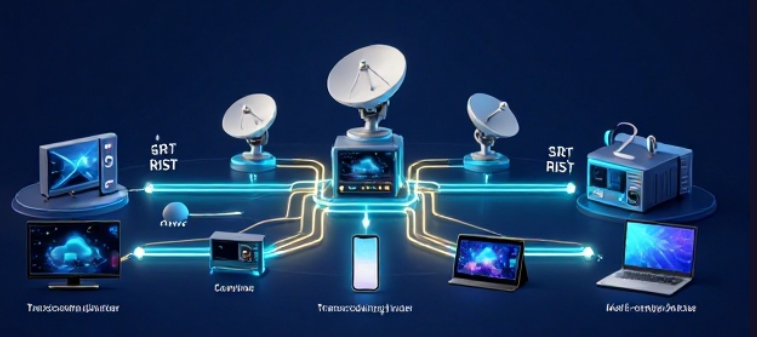
    Cloud OTT Playout Technical Architecture

    To deliver broadcast-grade availability (99.999% uptime), cloud playout architecture must be completely decoupled and fault-tolerant.

    Architectural Breakdown

    1. Scheduling Control Layer: Programmers build daily line-ups using web interfaces. These schedules fire API signals to the playout pipeline.
    2. Playout Processing Node: The virtual engine pulls VOD assets from S3 storage buckets or switches to incoming live SRT streams. It stitches files together, embeds closed captions, renders HTML5 graphics, and injects SCTE-35 markers for ad breaks.
    3. Mezzanine Stream Output: The output stream is transmitted via low-latency transport protocols (SRT, RIST, or Zixi) to cloud encoding farm nodes.
    4. ABR Packaging & DRM Security: Transcoders format the video into multiple resolution ladders. Integrating specialized Digital Rights Management and a multi-key Multi DRM setup guarantees that live linear channels remain protected against illegal re-streaming.
    5. Edge Delivery & Ad Insertion: Streams pass through Server-Side Ad Insertion (SSAI) systems before CDN edge servers deliver content to end-user devices.

    Broadcasters seeking pre-configured deployment architectures utilize specialized Cloud playout engines built directly into modular video platform solutions like Vodistry (or its flagship core on Vodistry).

    Monetizing 24/7 Linear Channels: FAST & AVOD Architectures

    The global resurgence of linear viewing is largely driven by FAST (Free Ad-supported Streaming TV) platforms. Understanding What is AVOD? and FAST model mechanics helps operators design profitable monetization frameworks.

    Key Monetization Components

    • SCTE-35 Signal Injection: The playout engine places frame-accurate SCTE-35 markers into the linear stream to indicate upcoming ad breaks.
    • Server-Side Ad Insertion (SSAI): Instead of relying on client-side ad blockers, SSAI stitches personalized video ads directly into the stream at the cloud edge, ensuring broadcast-quality transitions without buffering glitches.
    • Telecom & Device Bundling: Operators frequently bundle FAST and linear channels into wider subscription offerings using OTT Bundling Models.

    To maximize channel yield, operators work with dedicated OTT Monetization Services to optimize ad fill rates and set up programmatic ad floor prices.

    Comparative Analysis: Legacy Hardware vs. Cloud OTT Playout

    The table below outlines core differences across operational and architectural parameters:

    ParameterLegacy Hardware PlayoutCloud OTT Playout
    Primary InfrastructureOn-premise SDI video servers & switchersVirtualized cloud instances (AWS/Azure/GCP)
    Capital Cost (CapEx)High (Upfront hardware purchases)Minimal (Operational pay-as-you-grow model)
    Channel Provisioning Time2 to 6 MonthsMinutes to Hours
    Graphics CapabilitiesFixed hardware character generatorsDynamic HTML5/CSS overlay engines
    Ad Insertion MethodLocal analog tone / SCTE-104Frame-accurate digital SCTE-35 for SSAI
    Redundancy Model1+1 Hardware MirroringMulti-region cloud auto-failover
    Remote OperationsPhysical presence in MCR required100% Web-based / API orchestrated

    Step-by-Step Deployment Roadmap for Media Networks

    Deploying an enterprise-grade cloud playout ecosystem involves four structured execution phases:

    1. Strategic Planning & Business Modeling: Establish clear business objectives by building a formal OTT Business Plan and seeking expert Consulting Services to determine target markets, channel capacity, and CDN routing strategies.
    2. Deploy Cloud CMS Architecture: Implement a centralized Video Content Management Systems or dedicated Video CMS to manage video assets, subtitle tracks, and rights metadata.
    3. Execute Complex System Integration: Seamlessly connect playout engines with existing systems using enterprise OTT System Integration protocols. This links scheduling consoles with subscription management systems, ad platforms, and analytics engines.
    4. Deploy Application Interfaces: Utilize flexible frontend management suites like an Experience builder to publish linear EPG guides directly across mobile, web, and Smart TV applications.
    5. Monitor Performance via Real-Time Analytics: Integrate advanced video Analytics to monitor viewer concurrency, stream health, ad impression completion rates, and rebuffering incidents in real time.

    ott playout 3

    Pros and Cons of Cloud OTT Playout Systems

    Pros

    • Rapid Scale & Flexibility: Spin up pop-up channels for live sporting events or seasonal programming in minutes, closing them down when the event finishes.
    • Lower Total Cost of Ownership (TCO): Eliminates hardware maintenance fees, hardware refresh cycles, and physical MCR utility overhead.
    • Remote Operational Control: Allows operational teams to manage schedules, approve graphics, and monitor streams from anywhere with secure web credentials.
    • Native Digital Monetization: Built-in SCTE-35 cueing simplifies dynamic ad insertion across global advertising networks.

    Cons

    • Dependence on Internet Connectivity: High-quality mezzanine stream delivery requires stable high-speed cloud connectivity.
    • Egress Cloud Data Costs: High-volume video streaming requires careful bandwidth management to prevent unexpected cloud data egress charges.
    • Legacy System Compatibility: Integrating modern cloud API signals with legacy analogue or hardware broadcast setups requires careful middleware design.

    Expert Architectural Insights & Operational Best Practices

    Architectural Tip from Senior Broadcast Architect: “When designing cloud playout for the MENA region, always implement dual-region hot-hot redundancy. Run identical playout engines concurrently in separate cloud availability zones (e.g., UAE Cloud Region and European Cloud Region). If a primary cloud zone experiences a network glitch, your CDN routing switches to the secondary stream without dropping a single video frame.”

    Operational Best Practices for Broadcasters

    • Utilize Professional Playout Solutions: Choose proven Cloud Playout Solutions that support high-concurrency event handling and multi-protocol stream outputs (SRT, RTMP, HLS).
    • Integrate AI Automated Workflows: Utilize Enterprise Generative AI Development to automate video thumbnail creation, generate multi-lingual subtitle tracks, and automatically detect natural ad-break transition points in legacy video files.
    • Secure High-Value Content: Never transmit unprotected linear feeds over public networks. Use robust Digital Rights Management Software and consider an OTT DRM Replacement if legacy encryption tools introduce latency or device compatibility issues.
    • Cross-Pollinate Broadcast Services: Broadcasters expanding cross-regional services often combine playout infrastructure with multi-platform LiveStreaming Platforms or specialized IPTV Streaming Software for closed network distributions.
    • Explore Flexible Platform Options: Broadcasters assessing rapid deployment options can evaluate pre-integrated White Label OTT Solutions to accelerate market launch.
    • Optimize Content Strategy: Maintain viewer retention on linear channels by implementing strategies to Create Engaging Video Content curated specifically for digital multi-screen viewing habits.
    • Streamline Field Operations: Coordinate mobile live broadcast units, OB vans, and field crews using automated coordination platforms like a Dispatch Software System.

    Frequently Asked Questions (FAQs)

    1. What is the difference between traditional playout and OTT cloud playout?

    Traditional playout relies on physical MCR hardware, SDI cabling, and satellite uplinks. OTT cloud playout runs entirely in virtualized software environments, managing playlists, dynamic graphics, and stream delivery over the internet via adaptive bitrate streaming (HLS/DASH).

    2. What is a FAST channel, and how does cloud playout support it?

    A FAST (Free Ad-supported Streaming TV) channel is a free linear streaming channel monetized through advertising. Cloud playout powers FAST channels by stitching VOD assets into a continuous stream and injecting SCTE-35 markers for Server-Side Ad Insertion (SSAI).

    3. How does cloud playout handle live event switching?

    Cloud playout engines use live signal ingest modules (SRT, RTMP, Zixi) to seamlessly switch from scheduled pre-recorded VOD content to live feeds without dropping frames or requiring client-side player re-buffering.

    4. What transport protocols are used in cloud playout?

    Mezzanine transport uses low-latency, error-correcting IP protocols such as SRT (Secure Reliable Transport), RIST, and Zixi. Final consumer delivery utilizes adaptive bitrate protocols such as HLS and MPEG-DASH.

    5. Can cloud playout render dynamic graphics in real time?

    Yes. Modern playout engines render dynamic HTML5 and CSS graphics layers on the fly, displaying animated channel logos, news tickers, sports scores, age ratings, and custom lower-thirds without specialized hardware character generators.

    6. How does cloud playout lower total operational costs?

    Cloud playout eliminates upfront hardware CapEx, reduces physical data center power and cooling overhead, automates master control operations, and allows operators to pay only for active compute time.

    7. What is SCTE-35, and why is it essential for linear OTT playout?

    SCTE-35 is a standardized signal embedded in video streams that alerts downstream ad insertion engines (SSAI) about upcoming ad break durations and placement opportunities.

    8. How quickly can a new 24/7 linear channel be launched using cloud playout?

    While physical channel deployments traditionally took months, a cloud playout channel using pre-ingested VOD content can be configured, branded, and published live to CDNs in under an hour.

    Conclusion & Next Steps

    The shift toward virtualized ott playout is reshaping broadcast economics across the UAE and global media markets. By adopting cloud-native playout architectures, media brands, broadcasters, and content owners can launch high-value 24/7 channels rapidly, minimize operational overhead, and unlock new monetization avenues through FAST and hybrid ad models.

    Whether you are launching a network of niche FAST channels, transitioning legacy MCR operations to the cloud, or upgrading an existing broadcasting setup, partnering with expert technology providers ensures operational resilience and scalability.

    For organizations seeking an OTT Platform for Broadcasters or ready to create your own OTT platform with integrated 24/7 linear streaming, ARYtech provides complete technical consulting, cloud engineering, and end-to-end media software solutions.


  • Streaming Platform Analytics: Enterprise Architectural Blueprint for Data-Driven OTT Growth

    Streaming Platform Analytics: Enterprise Architectural Blueprint for Data-Driven OTT Growth

    The Over-The-Top (OTT) video streaming market across the United Arab Emirates and the wider Middle East and North Africa (MENA) region is shifting rapidly. With top-tier 5G networks, soaring smart device adoption in Dubai, Abu Dhabi, and Sharjah, and shifting subscriber expectations, media platforms can no longer rely on vanity metrics like aggregate watch hours or total app downloads.

    Modern media networks require an enterprise-grade infrastructure built around granular streaming platform analytics. Understanding why viewers drop off mid-episode, which content assets drive long-term subscriber retention, and how real-time Quality of Experience (QoE) affects revenue is the difference between market dominance and high subscriber churn.

    In this technical blueprint, we analyze the architectural foundations, data pipelines, predictive models, and monetization strategies required to turn raw video telemetry into predictable bottom-line growth.

    Featured Snippet: What is Streaming Platform Analytics?

    Streaming platform analytics is the real-time collection, processing, and visualization of viewer telemetry, video player behavior, technical Quality of Experience (QoE) parameters, and subscriber monetization metrics across Over-The-Top (OTT) streaming platforms. It unifies video telemetry (buffer rates, bitrates, startup delays) with business data (ARPU, churn risk, recommendation click-throughs) into an enterprise data pipeline to maximize viewer retention and streaming revenue.

    The Business Case for Advanced Analytics in GCC Media Markets

    Media platforms operating across Dubai, Abu Dhabi, and the broader GCC face unique operational challenges. High average revenue per user (ARPU) coupled with aggressive regional competition means acquiring a subscriber is expensive, while losing one is immediate.

    Surface-level metrics such as total monthly play counts or average session times fail to capture underlying platform issues. Two viewers in Dubai might spend five hours on a platform every week, but their lifetime value (LTV) profile looks completely different:

    • The High-Risk Viewer: Binges a newly released series over a single weekend, encounters repeated rebuffering errors, ignores catalog recommendations, and cancels their subscription on day three.
    • The High-Value Viewer: Logs in three times a week, explores diverse catalog categories, completes ad breaks without dropping off, and engages with interactive features.

    To protect subscription revenues, operators working with an OTT platform development company UAE must integrate real-time analytics engines capable of distinguishing these behavioral profiles instantly.

    Core Telemetry: The Data Layers That Matter

    A comprehensive analytics engine processes four primary data vectors simultaneously. Fragmenting these vectors across isolated tools creates operational blind spots that delay business decisions.

    1. Quality of Experience (QoE) Metrics

    Technical delivery directly influences user retention. A single 2-second buffering delay can reduce overall session completion rates by up to 25%. Key parameters include:

    • Video Start Time (VST): The time elapsed between a viewer clicking play and the first video frame rendering.
    • Rebuffering Ratio: The percentage of total playback time spent waiting for video buffers to refill.
    • Bitrate Switching Rates: Frequency of adaptive bitrate (ABR) step-downs triggered by localized network instability.

    2. Behavioral Engagement Metrics

    Understanding how users consume video allows content acquisition teams to spend budgets effectively:

    • Completion Rate & Drop-off Timestamps: Identifying the precise minute viewers abandon a episode or movie.
    • Session Depth: Average number of titles, trailers, or live streams consumed within a single app session.
    • Binge Index: Percentage of viewers who transition directly to the next episode via automated playback cues.

    3. Content Discovery & Algorithmic Performance

    Engaging audiences requires fine-tuning recommendation carousels. Platforms utilizing a flexible Experience builder can measure how homepage layouts, banner placements, and personalized rows influence click-through rates (CTR).

    4. Interactive & Live Telemetry

    During live sports broadcasts, understanding real-time audience behavior requires specialized tracking. Deploying modular Interactivity tools allows platforms to monitor viewer participation in live polls, social chats, and synchronized statistics feeds.

    streaming platform analytics 3 1

    Enterprise Architecture: Building Real-Time Streaming Data Pipelines

    To process millions of concurrent playback events without degrading app performance, the analytics backend must be completely decoupled from core video rendering and authorization servers.

    Architectural Breakdown

    1. Client-Side Telemetry Collection: Lightweight SDKs embedded inside video players (AVPlayer, ExoPlayer, HLS.js, Shaka Player) fire micro-events every 5 to 10 seconds.
    2. Ingestion Gateway: Distributed message buses capture incoming telemetry packets during high-concurrency events such as regional football matches or breaking news broadcasts.
    3. Stream Processing & Data Enrichment: Stream-processing engines parse player events, IP addresses, and session tokens in real time, joining them with user profile data from your Video CMS and subscription systems.
    4. Dual Storage Model (Hot vs. Cold):
      • Hot Storage: In-memory or columnar time-series databases power live operational dashboards, alerting engineers to localized CDN failures within seconds.
      • Cold Storage: Data lakes store historical records to train predictive machine learning models and power long-term financial reporting.

    For media companies broadcasting linear channels, connecting player analytics directly with a cloud playout system allows operators to dynamically adjust ad break insertion and channel scheduling based on real-time audience numbers.

    Connecting Viewer Behavior to Streaming Revenue

    An analytics framework must connect technical playback metrics to financial outcomes across various business models.

    Subscription Monetization (SVOD)

    In an SVOD model, analytics identifies “at-risk” subscribers weeks before their monthly renewal date. When an analytics engine flags a drop in weekly session depth or a rise in startup delays, automated retention triggers can offer targeted recommendations or account incentives.

    Advertising Monetization (AVOD & FAST)

    Understanding what is AVOD? is essential for operators building ad-supported services. Enterprise analytics tracks Server-Side Ad Insertion (SSAI) metrics, including ad fill rates, ad impression completion, and break-level drop-offs. Ad sales teams leverage these behavioral segments to sell premium CPM inventory to local advertisers.

    Direct Bundling & Ecosystem Growth

    Operators expanding distribution through OTT Bundling Models rely on shared data pipes to calculate partner revenue splits, verify active carrier billing subscriptions, and evaluate cross-platform promotional campaigns.

    To structure enterprise monetization pipelines effectively, operators can utilize dedicated OTT monetization services to align data collection directly with commercial objectives.

    Predictive Churn Modeling & Subscriber Health Scoring

    Rather than responding to cancellations after they occur, enterprise systems generate an automated subscriber health score.

    By combining viewing habits, device types, billing cycles, and QoE logs, machine learning models assign every active account a daily health rating. If a subscriber’s health score drops below a designated threshold, the system triggers automated retention workflows such as push notifications highlighting trending local content or personalized email newsletters.

    streaming platform analytics 2 1

    Comparative Matrix: Standard vs. Enterprise Analytics

    ParameterBasic App AnalyticsEnterprise Streaming Analytics
    Data Update LatencyBatch processing (24–48 hours)Real-time stream processing (<5 seconds)
    QoE CorrelationNone (Only tracks screen opens)Full (Rebuffering, bitrates, player errors)
    Data OwnershipThird-party vendor storageSovereign Cloud / Private Data Lake
    Security & RightsBasic user trackingIntegrated with Digital Rights Management
    Ad Delivery TrackingBasic page impression countFrame-accurate SSAI completion analytics
    Custom IntegrationFixed, rigid dashboardsOpen APIs, SQL access, custom ML pipelines

    Step-by-Step Analytics Deployment Roadmap

    Deploying an enterprise streaming analytics pipeline requires a structured engineering approach:

    1. Audit Existing Data Infrastructure: Identify data silos across player logs, payment gateways, and marketing tools.
    2. Embed Unified Player SDKs: Deploy unified analytics libraries into client applications powered by Vodistry or custom playback frameworks.
    3. Execute System Integrations: Connect data streams to external platforms through structured OTT System Integration protocols, ensuring secure data exchange across billing systems and user databases.
    4. Implement Robust Security & Privacy: Ensure analytics collection complies with regional data privacy laws and integrates seamlessly with your Multi DRM and Digital Rights Management Software environment to prevent leakages during payload transfers.

    Pros and Cons of In-House vs. Embedded Analytics Solutions

    In-House Custom Analytics Build

    • Pros: Complete ownership of underlying source code, bespoke dashboard designs, tailored database schemas, and zero recurring vendor license fees.
    • Cons: High initial engineering costs, long development cycles, and significant ongoing maintenance requirements for data engineers.

    Embedded Platform Analytics (e.g., Vodistry Native Video Analytics)

    • Pros: Rapid deployment, pre-built video telemetry dashboards, proven scalability during high-traffic events, and native integration with your core streaming player.
    • Cons: Requires alignment with the platform’s core data models, though open APIs allow custom data extraction into external data lakes.

    Media operators seeking pre-integrated solutions often evaluate turnkey architectures like video Analytics to accelerate deployment without sacrificing data granularity.

    Expert Architectural Insights & Best Practices

    Architectural Tip from Lead Data Architect: “Never send raw, un-aggregated player telemetry straight to your primary operational databases. During high-concurrency live sports events in Dubai or Abu Dhabi, millions of concurrent devices firing events every 5 seconds will crash standard SQL servers. Always route telemetry through a distributed message broker like Apache Kafka or AWS Kinesis, summarize events in memory, and write batch updates to your analytical data warehouse.”

    Key Operational Recommendations

    • Distinguish Player Errors from Network Drops: Ensure player SDKs can differentiate between CDN edge failure, player decoders crashing, and local Wi-Fi drops. Blaming your CDN for a home Wi-Fi drop leads to wasted infrastructure spend.
    • Monitor Quality of Experience During Live Streams: Live sports viewers tolerate zero lag. Combine real-time Live Streaming capabilities with dedicated QoE alerts to fix bitrate drops before viewers turn off the stream.
    • Audit Enterprise Video CMS Workflows: Ensure metadata tags (genre, actor, language, resolution) inside your enterprise video cms are complete and clean. Analytics engines depend on clean metadata to deliver accurate content performance scores.
    • Leverage Advanced AI Capabilities: Leading operators explore Enterprise Generative AI Development to automatically generate personalized video thumbnails and localized metadata based on viewer analytics insights.

    Frequently Asked Questions (FAQs)

    1. What is the difference between OTT analytics and standard web analytics?

    Standard web analytics track page views, clicks, and bounce rates across websites. Streaming platform analytics track video-specific telemetry including Video Start Time (VST), rebuffering ratios, adaptive bitrate switching, playback errors, ad completion rates, and episode-to-episode drop-off points.

    2. How does streaming analytics help reduce subscriber churn?

    Analytics systems calculate a real-time Subscriber Health Score based on session frequency, catalog exploration, and playback quality. When a user’s health score drops, automated re-engagement campaigns are triggered before the user initiates account cancellation.

    3. How does Quality of Experience (QoE) impact OTT monetization?

    Poor QoE directly hurts revenue. Rebuffering and slow startup times cause early playback abandonment, reducing ad completions on AVOD services and increasing churn on SVOD platforms. Tracking QoE allows engineers to resolve CDN or encoding issues proactively.

    4. Can analytics data help optimize content acquisition budgets?

    Yes. By analyzing completion rates, re-watch frequencies, and customer acquisition costs per title, content teams can determine which genres, studios, or talent deliver the highest return on investment (ROI).

    5. What infrastructure is required to process real-time video analytics?

    Real-time analytics requires a distributed event ingestion layer (e.g., Apache Kafka), a stream processing engine (e.g., Apache Flink), a fast time-series hot database (e.g., ClickHouse), and a cold storage data lake (e.g., Snowflake or BigQuery) for historical reporting.

    6. How do analytics platforms track ad performance on AVOD and FAST channels?

    Through Server-Side Ad Insertion (SSAI) integration, analytics engines track ad request calls, fill rates, impressions, quadrant completion milestones (25%, 50%, 75%, 100%), and viewer drop-offs during ad pods.

    7. Is user viewing data safe and compliant with global privacy regulations?

    Yes, provided the analytics architecture uses anonymized viewer IDs, enforces role-based access controls, complies with regional data sovereignty mandates, and adheres to standards like GDPR and local privacy frameworks.

    8. How does analytics support live sports streaming?

    Real-time analytics monitors stream health, concurrent viewer counts, regional traffic spikes, and CDN performance during live broadcasts, allowing technical teams to re-route traffic dynamically and maintain stream stability.

    Conclusion & Next Steps

    Unlocking the full potential of your streaming service requires moving beyond surface-level metrics and building a data architecture that links technical playback performance directly to financial outcomes. By deploying enterprise streaming platform analytics, media platforms across Dubai, Abu Dhabi, and the wider GCC region can systematically reduce churn, boost ad yields, and maximize subscriber lifetime value.

    Whether you are launching a new platform or upgrading an existing streaming infrastructure, partnering with regional technology experts ensures long-term operational success.

    For organizations ready to create your own OTT platform or scale existing OTT Streaming Services, ARYtech provides technical consulting, custom platform development, and advanced video analytics built for enterprise media networks.

  • Enterprise Architectural Blueprint for IPTV Streaming Software

    Enterprise Architectural Blueprint for IPTV Streaming Software

    Global telecommunications operators, Tier-1 broadcasters, and hospitality chains across the United States and the United Arab Emirates are phasing out legacy, hardware-bound headends in favor of cloud-native IP video distribution networks. Delivering high-concurrency linear TV, Video on Demand (VOD), and time-shifted TV (TSTV) over managed IP networks or unmanaged internet backbones requires a software stack designed for multi-device execution and strict uptime targets.

    At the core of this transition is modern iptv streaming software. Rather than relying on rigid, proprietary set-top-box middleware, enterprise IPTV architectures function as software-defined video delivery pipelines. These platforms combine low-latency streaming protocols, multi-DRM encryption engines, automated middleware management, and dynamic monetization tools within a unified control plane.

    This architectural guide provides CTOs, broadcast engineers, and media executives across North America and the GCC with an operational reference for evaluating, engineering, and scaling enterprise IPTV ecosystems.

    1. The Structural Shift: Traditional IPTV Middleware to Cloud-Native IP Platforms

    Historically, IPTV deployments operated within closed, managed IP networks using dedicated set-top boxes (STBs), multicast UDP transport streams, and heavy on-premise middleware servers. While this delivered reliable Quality of Service (QoS), it constrained scalability, introduced high hardware replacement costs, and prevented expansion to unmanaged mobile and Smart TV ecosystems.

    Modern enterprise streaming solutions bridge managed multicast environments and unicast HTTP OTT delivery. This convergence allows operators in markets like Dubai, Abu Dhabi, New York, and Los Angeles to maintain low latencies for live sports while supporting multi-device playback across iOS, Android, TV OS, and web browsers.

    To achieve high uptime across complex regional networks, media companies partner with specialized engineering firms like an OTT platform development company UAE such as ARYtech to build resilient, cloud-ready IP video backbones.

    2. End-to-End Technical Architecture of IPTV Streaming Software

    An enterprise IPTV streaming pipeline manages video signals from raw satellite/fiber feeds down to client playback devices through a series of decoupled microservices.

    Ingestion & Transcoding Layer

    Live transport streams (DVB-S2, ASI, SDI) or remote SRT/Zixi contribution feeds enter the IPTV headend. Transcoding engines convert high-bitrate feeds into Adaptive Bitrate (ABR) profiles using efficient H.264, HEVC (H.265), or AV1 codecs to balance bandwidth consumption without degrading visual fidelity.

    IPTV Middleware & EPG Automation

    The middleware layer acts as the control center, coordinating Subscriber Management Systems (SMS), Electronic Program Guides (EPG), Catch-up TV buffers, and Cloud DVR (cDVR) recording engines. Integrating a robust Video Content Management Systems instance ensures metadata, thumbnails, and channel slates stay synchronized across all endpoints.

    Dynamic Packaging & Origin Shielding

    The packaging layer converts transcoded video segments into HTTP Live Streaming (HLS) for Apple environments and MPEG-DASH for Android and Smart TV clients on the fly. Origin shield servers absorb traffic spikes during major live events, shielding core infrastructure from origin overload.

    Media teams modernizing their core video workflows can reference engineering specifications detailed in our blueprint for an enterprise video cms.

    3. Content Protection, Multi-DRM, and Regulatory Compliance

    Securing high-value live sports channels and studio VOD assets against illegal restreaming and signal interception is a mandatory operational requirement for IPTV operators in North America and the Middle East.

    Multi-DRM Ecosystem

    Modern iptv streaming software relies on software-based Multi-DRM rather than legacy hardware conditional access systems (CAS):

    • Apple FairPlay Streaming: Secures native playback across iOS, macOS, and Apple TV ecosystems using HLS.
    • Google Widevine Modular: Protects playback on Android, Chrome, and Smart TV operating systems using DASH.
    • Microsoft PlayReady: Provides high-grade protection for Windows platforms and legacy Smart TV environments.

    Deploying comprehensive Multi DRM and specialized Digital Rights Management Software ensures encryption key exchanges occur securely over HTTPS after user entitlement verification. Broadcasters replacing outdated CAS setups can execute a seamless migration path by deploying a targeted OTT DRM Replacement strategy.

    Regulatory and Regional Compliance

    Operators serving the UAE market must comply with content licensing and data localization standards mandated by bodies like the Telecommunications and Digital Government Regulatory Authority (TDRA). Furthermore, securing user authentication data against global security threats requires adherence to standards like the ISO/IEC 27001 Information Security Management Standard.

    Using hardware-level protection and tokenized streams backed by modern Digital Rights Management frameworks prevents IPTV credential theft and unauthorized restreaming to illegal networks.

    4. Monetization Strategies for US & UAE Media Operators

    Generating high Average Revenue Per User (ARPU) across North American and GCC subscriber bases requires a hybrid monetization architecture that combines subscription tiers with programmatic ad insertion.

    1. Subscription Video on Demand (SVOD) & Tiered Packages

    Traditional linear channel tiers (e.g., Sports Pass, Family Tier) backed by recurring billing engines, localized telco carrier billing (DCB), and mobile wallets (Apple Pay, Google Pay).

    2. Targeted Server-Side Ad Insertion (SSAI)

    SSAI stitches targeted ads directly into linear streams and VOD manifests at the cloud edge. By processing ad insertion on the server side, operators bypass client ad blockers, eliminate playback buffering, and serve personalized ads based on subscriber demographics. Operators can review regional ad-supported market growth trends in What is AVOD?.

    To build revenue pipelines that balance free preview channels with premium subscriptions, media groups utilize specialized OTT Monetization Services alongside flexible OTT Bundling Models.

    5. Comparative Matrix: On-Premise IPTV Headends vs. Hybrid Cloud IPTV Middleware

    Selecting the right deployment architecture depends on capital constraints, existing network infrastructure, and long-term scaling targets.

    Capability / AttributeLegacy On-Premise IPTVPublic SaaS OTT PlatformHybrid Cloud IPTV Software (e.g., Vodistry)
    Deployment FootprintHeavy Local Rack HardwareFully Vendor HostedHybrid (Edge Cache + Cloud Control Plane)
    Stream LatencyUltra-Low (1–3s via Multicast)Variable (6–15s via HLS)Optimized Low-Latency (Sub-3s LL-HLS/SRT)
    Device ReachRestricted to Proprietary STBsUniversal Cross-PlatformUniversal (STBs, Smart TVs, Mobile, Web)
    Data OwnershipLocal; High MaintenanceVendor Controlled100% Owned First-Party Infrastructure
    Time-to-MarketSlow (6–12 Months)InstantFast (4–8 Weeks)
    Multi-DRM ControlHardware Smartcards / CASBasic Third-Party LockStudio-Grade Integrated Multi-DRM Suite

    Organizations seeking complete control over middleware, subscriber databases, and player interfaces can deploy flexible architectures using White Label OTT Solutions or modular video engines like Vodistry, accessible via Vodistry.

    6. Enterprise Use Cases Across Key Regional Verticals

    Enterprise IPTV software supports diverse business models across multiple industry verticals:

    1. Telecommunications & Pay-TV Operators

    Telcos upgrading copper or fiber networks deploy hybrid IPTV/OTT platforms to offer triple-play bundles (Voice, Data, Video), keeping subscribers engaged through cloud catch-up TV, integrated EPGs, and low-latency sports streaming.

    2. Tier-1 Broadcasters & Regional Networks

    Linear television networks transitioning to digital-first distribution leverage automated Cloud playout and high-density Live Streaming architecture. Broadcasters can evaluate linear distribution strategies in our guide for an OTT Platform for Broadcasters.

    3. Enterprise & Hospitality Networks

    Luxury hotel chains, corporate campuses, and hospital networks in Dubai, Abu Dhabi, and major US metros deploy secure IPTV networks over local fiber backbones, integrating room service apps, localized branding, and secure internal broadcasts.

                                   ┌──► Managed IPTV STBs (Multicast / Low Latency)
                                   │
    [ Central IPTV Middleware ] ───┼──► Consumer OTT Apps (Unicast HLS/DASH + SSAI)
                                   │
                                   └──► Hospitality / Enterprise Screens (Local Cache)
    

    Managing centralized asset catalogs across these distribution channels is simplified when backed by an enterprise-grade Video CMS.

    7. Pros and Cons of Scaled IPTV Streaming Deployments

    Deploying enterprise IPTV software requires evaluating operational trade-offs to ensure long-term architectural success.

    Advantages (Pros)

    • Unified Video Infrastructure: Deliver managed linear television and unmanaged OTT streaming through a single backend control plane.
    • Enhanced Subscriber Engagement: Offer modern TV features like 7-day catch-up, pause-live-TV, cDVR, and personalized EPGs across all client devices.
    • Targeted Ad Monetization: Increase eCPMs via Server-Side Ad Insertion (SSAI), delivering personalized ads directly into linear broadcast streams.
    • Detailed Audience Telemetry: Real-time visibility into stream performance via video Analytics dashboards tracking buffering rates, channel tune times, and drop-off points.

    Challenges (Cons)

    • Infrastructure Transcoding Costs: Processing hundreds of linear channels into multi-bitrate ABR ladders requires significant cloud computing or hardware encoding capacity.
    • Egress & CDN Expense Management: Uncapped unicast delivery during high-concurrency sports events can increase network egress costs if multi-CDN routing is unoptimized.
    • Security Threats: Modern IP networks face ongoing stream extraction and piracy risks, requiring dynamic session tokenization and forensic watermarking.

    8. Expert Implementation Best Practices for Broadcast Architects

    Architectural Insight: “Scaling an enterprise IPTV platform isn’t just about buying encoders—it’s about building a resilient, software-defined video pipeline that handles high concurrency, enforces studio-grade security, and delivers sub-second channel tune times.”

    To ensure smooth deployment, engineering teams should follow these implementation best practices:

    1. Deploy Multi-CDN Architectures with Dynamic Edge Switching: Avoid relying on a single CDN vendor. Integrate real-time client QoE monitoring to switch stream traffic dynamically based on regional ISP performance.
    2. Automate Metadata & EPG Pipeline Ingestion: Use automated XMLTV / MXF ingestion pipelines supported by tools like Enterprise Generative AI Development for multi-language program descriptions and automated subtitle generation.
    3. Build Fully Custom Client Interfaces: Use customizable front-end design tools like an enterprise Experience builder to deliver consistent, high-performance UI across Smart TVs, mobile devices, and set-top boxes.
    4. Formulate a Clear Financial & Operational Blueprint: Align infrastructure investments with long-term commercial goals by developing an aligned OTT Business Plan.
    5. Architect for Seamless Interoperability: Ensure your IPTV middleware integrates cleanly with billing, CRM, and authentication platforms using standardized OTT System Integration protocols.

    Media operators building digital streaming platforms can follow step-by-step instructions on how to create your own OTT platform.

    9. Frequently Asked Questions (FAQs)

    What is IPTV streaming software and how does it differ from traditional OTT streaming?

    IPTV streaming software delivers live TV channels and VOD content over managed IP networks (such as private telco fiber backbones) with guaranteed Quality of Service (QoS). Traditional OTT streaming delivers video over unmanaged, public internet connections. Modern IPTV platforms use hybrid architectures that support both managed IP delivery and unmanaged OTT streaming.

    How does modern IPTV software support low-latency live streaming?

    Sub-second latency is achieved by replacing long-segment HTTP transport with Low-Latency HLS (LL-HLS), CMAF (Common Media Application Format), or SRT (Secure Reliable Transport), reducing channel tune times to under 2 seconds.

    Why is Multi-DRM necessary for enterprise IPTV platforms?

    Multi-DRM is essential because client devices support different native encryption engines. Apple devices require FairPlay, Android/Smart TVs use Widevine, and Windows devices rely on PlayReady. Multi-DRM ensures high-value channels remain secured across all client endpoints.

    Can an IPTV platform run both linear broadcast channels and VOD catalogs simultaneously?

    Yes. Modern IPTV middleware centralizes linear live channels, Catch-up TV buffers, Cloud DVR recordings, and VOD asset libraries within a unified administrative dashboard.

    How does Server-Side Ad Insertion (SSAI) increase revenue for IPTV operators?

    SSAI stitches personalized advertisements directly into the video stream at the cloud edge before delivery to client devices. This provides broadcast-quality transitions, bypasses browser ad blockers, and increases advertising yields through demographic targeting.

    What are the main network requirements for launching a 4K IPTV service?

    Delivering a stable 4K HDR IPTV stream using standard H.264 requires 15–25 Mbps per subscriber. Utilizing modern codecs like HEVC (H.265) or AV1 cuts bandwidth consumption down to 8–12 Mbps per stream while maintaining pristine visual quality.

    How do data sovereignty regulations in the UAE and US impact IPTV platform design?

    Data protection mandates (such as CCPA in the US and TDRA guidelines in the UAE) require subscriber identities, payment logs, and viewing histories to be securely managed and stored within compliant regional cloud regions.

    What is the average timeline to deploy a modern enterprise IPTV software platform?

    Deploying an enterprise IPTV platform from scratch typically takes 6 to 12 months. However, leveraging modular, white-label software frameworks allows operators to deploy branded IPTV ecosystems in 4 to 8 weeks.

    10. Conclusion and Strategic Action Plan

    Upgrading to modern iptv streaming software is a core priority for telecommunications operators, broadcasters, and media organizations looking to scale linear television and VOD distribution across North America and the GCC. Replacing rigid hardware headends with cloud-native, software-defined video architectures empowers operators to lower operational costs, deliver cross-platform video, and maximize ad revenues through SCTE-35 and SSAI automation.

    Achieving broadcast-grade reliability requires a resilient architecture that combines low-latency transcoding, studio-grade Multi-DRM protection, automated middleware management, and dynamic monetization engines.

    Build Your Enterprise IPTV Infrastructure

    Modernize your linear television channels and VOD distribution with scalable, broadcast-grade IPTV platforms engineered for global scale.

    Consult Video Solution Architects: Evaluate your IPTV headend topology, multi-DRM security, and CDN routing by scheduling a technical consultation with expert business consulting services.

    Design Your Operational Strategy: Build a structured growth roadmap by developing an aligned OTT Business Plan.

    Deploy Advanced Media Engines: Launch cross-platform linear TV and VOD services using Vodistry—our enterprise streaming software stack.

  • Architecting Modern Dispatch Software Systems: Enterprise Blueprint for Logistics, Field Operations, and Media Workflows

    Architecting Modern Dispatch Software Systems: Enterprise Blueprint for Logistics, Field Operations, and Media Workflows

    Enterprise operations across the United States and the United Arab Emirates are undergoing a rapid technological migration. Whether managing last-mile delivery fleets in logistics hubs like Dubai and Chicago or orchestrating real-time media field ops and satellite contribution feeds, modern enterprises rely on intelligent operational dispatch pipelines.

    At its core, dispatch software is the operational nervous system of fleet logistics, field service delivery, and digital distribution networks. Modernizing this infrastructure requires moving away from manual dispatch boards and fragmented legacy telematics toward cloud-native, automated dispatch engines driven by real-time spatial analytics, dynamic routing algorithms, and event-driven API architectures.

    This technical and commercial guide provides operations directors, solution architects, and technology leaders with a definitive blueprint for evaluating, engineering, and scaling automated dispatch software ecosystems.

    1. The Architectural Evolution of Dispatch Systems

    Historically, dispatching relied on human operators coordinating drivers or technicians via voice radio, spreadsheets, and basic GPS tracking. These static workflows created significant operational bottlenecks: high fuel consumption, unoptimized routes, poor ETA accuracy, and zero visibility into active job execution.

    As logistics networks expand in the US and the UAE, managing high-concurrency dispatch environments requires event-driven software architectures. Partnering with a specialized software engineering provider or an experienced OTT platform development company UAE like ARYtech enables organizations to build resilient, real-time data pipelines that scale effortlessly across global regions.

    2. Core Technical Blueprint of an Enterprise Dispatch Engine

    An enterprise-grade dispatch pipeline coordinates job requests, resource availability, geospatial tracking, and client notifications through decoupled microservices.

    1. Ingestion Layer

    Job orders flow continuously into the dispatch pipeline via RESTful APIs, Webhooks, or native ERP integrations (e.g., SAP, Salesforce, Oracle). The ingestion service normalizes order metadata, SLA constraints, weight/volume profiles, and time-window requirements.

    2. Constraint Solving Engine

    The core engine evaluates driver locations, vehicle capacities, shift hours, traffic indices, and job priorities using heuristics like the Vehicle Routing Problem with Time Windows (VRPTW).

    3. Event Broker & Telemetry Ingestion

    Low-latency message queues process streaming telemetry from GPS devices, mobile SDKs, and IoT sensors. This enables instant route recalculations when road delays or job cancellations occur.

    4. Client Communication & Telematics Layer

    Sub-second WebSocket feeds push live driver locations, accurate ETAs, and digital Proof of Delivery (ePOD) confirmations to client applications and dispatch dashboards.

    Organizations managing complex enterprise data pipelines can review architectural methodologies in our blueprint for an enterprise video cms.

    3. Key Operational Capabilities: Routing, Dynamic Allocation, and Telemetry

    Evaluating modern dispatch software requires assessing core technical capabilities designed to streamline field operations:

    Core ModuleTechnical CapabilityOperational ImpactPrimary Metric
    Dynamic RoutingMulti-stop TSP/VRP algorithms with live traffic feeds.Reduces fuel expenditure and transit delays.Mileage Reduction (% per route)
    Auto-AllocationML-based matching of job specs to available fleet units.Eliminates dispatcher bottlenecks during peak load.Dispatch Speed (Seconds per job)
    Geofencing & AlertsAutomated trigger zones around pickup/drop-off locations.Triggers seamless client notifications and status logs.On-Time Arrival Rate (%)
    Digital Proof of DeliveryBiometric signature, photo, and barcode scanning capture.Eliminates paper friction and speeds up billing cycles.First-Time Resolution Rate
    Real-time AnalyticsStreaming operational dashboards and historical reporting.Delivers complete visibility into fleet utilization.Operational Cost Per Order

    4. Enterprise Security, Compliance, and Data Sovereignty

    Managing fleet dispatching, field worker schedules, and client telemetry involves handling sensitive location logs and customer records. Operating across North America and the GCC requires compliance with strict regional standards.

    Regional Compliance & Data Residency

    In the UAE, storing client location logs and operational telemetry must align with guidelines issued by national authorities such as the Telecommunications and Digital Government Regulatory Authority (TDRA).

    Access Control & Asset Security

    Protecting underlying API endpoints and dispatch backbones requires strict identity management. Enterprises implement token-based access, granular Role-Based Access Control (RBAC), and encryption frameworks comparable to Multi DRM and specialized Digital Rights Management Software standards used in secure media distribution. Organizations updating legacy security models can deploy dedicated OTT DRM Replacement strategies to protect operational networks from unauthorized access.

    Referencing global frameworks like the ISO/IEC 27001 Information Security Management Standard ensures that dispatch infrastructure meets rigorous international security benchmarks.

    5. Comparative Analysis: Off-the-Shelf SaaS vs. Custom Enterprise Dispatch Architectures

    Enterprise leaders evaluating new software solutions face a choice between standard off-the-shelf SaaS dispatch apps and custom-built operational platforms.

    Feature / MetricOff-the-Shelf SaaS DispatchCustom Enterprise Dispatch EngineCustom Platform via Vodistry Architecture
    Custom WorkflowsRigid, pre-configured UI/UXFully customizable business logicModular, highly extensible frameworks
    API IntegrationFixed API endpoints & rate limitsNative ERP/CRM/IoT integrationsSeamless custom API middleware
    Data OwnershipVendor-owned cloud instance100% First-Party Data OwnershipFully owned database instance
    Total Cost of OwnershipRecurring per-driver monthly feesUpfront engineering; optimized OpExBalanced software licensing model
    Security ControlGeneric multi-tenant securityPrivate cloud / Isolated VPCEnterprise-grade encryption suite

    Organizations seeking full control over operational workflows without building foundational architecture from scratch can leverage white-label software engines like Vodistry, available as a custom enterprise platform via Vodistry.

    6. Cross-Industry Use Cases: Logistics, Field Service, and Digital Media Workflows

    While dispatch software is synonymous with fleet delivery, its underlying principles extend across diverse industry verticals:

    1. Last-Mile Logistics & On-Demand Delivery

    Couriers, food delivery networks, and e-commerce giants in the US and UAE deploy auto-dispatch engines to balance driver assignments, optimize multi-stop routes, and provide accurate live-tracking links to consumers.

    2. Field Service Management (FSM)

    HVAC contractors, telecom engineers, and utility maintenance crews use dispatch systems to match job skill requirements with field technician availability, reducing travel times and improving first-time fix rates.

    3. Media Fleet & Live Event Contribution Dispatch

    In global broadcasting, managing live news crews, OB (Outside Broadcasting) vans, and field satellite assets requires fast routing and resource coordination. Coupling live field dispatching with an OTT Platform for Broadcasters enables media networks to coordinate remote camera crews alongside automated Cloud playout and native Live Streaming pipelines.

    Media networks can also enhance field operations and stream delivery by integrating centralized Video Content Management Systems to organize incoming live feeds and recorded media assets seamlessly.

    7. Pros and Cons of Automated Enterprise Dispatch Systems

    Deploying an automated dispatch software platform delivers major efficiency gains, but requires evaluating operational trade-offs:

    Advantages (Pros)

    • Maximized Operational Efficiency: Automated route optimization cuts transit times, reduces fuel consumption, and increases daily completed jobs per driver.
    • Enhanced Customer Experience: Real-time tracking links, transparent ETAs, and digital delivery confirmations improve customer satisfaction metrics.
    • Scalable Fleet Operations: Algorithmic dispatch enables fleets to scale from 50 to 5,000+ active units without linearly increasing dispatcher headcount.
    • Data-Driven Performance Insights: Real-time operational tracking via video Analytics style telematics dashboards gives managers full visibility into driver performance and bottlenecks.

    Challenges (Cons)

    • Complex Legacy Integration: Connecting modern REST/WebSocket dispatch engines with legacy ERP systems requires custom middleware development.
    • Field Adoption Curve: Drivers and field crews require intuitive mobile interfaces to prevent adoption friction.
    • Dependency on Connectivity: Uninterrupted operations depend on resilient mobile network coverage across all delivery zones.

    8. Expert Implementation Best Practices for Enterprise Systems

    Operational Insight: “Automating dispatch isn’t just about giving drivers a mobile map—it’s about building a dynamic, data-driven engine that continuously balances vehicle capacities, SLAs, and real-time traffic to lower cost-per-delivery.”

    To achieve seamless implementation, enterprise teams should follow these strategic recommendations:

    1. Prioritize API-First Microservices: Build your dispatch engine using decoupled microservices to allow independent scaling of routing, tracking, and notification modules.
    2. Deploy Intelligent Automation Tools: Scale administrative workflows by integrating Enterprise Generative AI Development tools for dynamic driver assignment, route-risk prediction, and automated customer support.
    3. Optimize User Interfaces for Field Crews: Build intuitive, low-latency mobile apps using flexible design tools like an enterprise Experience builder to keep field teams focused on job execution.
    4. Draft a Structured Commercial Roadmap: Align technology investments with core business goals by developing a tailored OTT Business Plan.
    5. Ensure Seamless Enterprise Integration: Connect your dispatch engine with existing accounting, inventory, and billing platforms using robust OTT System Integration standards.

    Organizations building modern media and dispatch workflows can follow technical guidance on how to create your own OTT platform.

    9. Frequently Asked Questions (FAQs)

    What is dispatch software and how does it work in enterprise operations?

    Dispatch software is an operational management platform that automates job scheduling, vehicle routing, driver assignment, and real-time fleet tracking. It ingests order requests from ERP systems, calculates optimal delivery paths using route algorithms, assigns jobs to field units, and provides live status updates to dispatchers and customers.

    How does dynamic route optimization improve operational margins?

    Dynamic route optimization uses map data, traffic indices, and vehicle capacities to calculate the shortest and fastest paths for multi-stop journeys. This reduces total mileage, lowers fuel consumption, minimizes driver overtime, and increases the total number of orders completed per shift.

    Can enterprise dispatch software integrate with existing ERP and CRM systems?

    Yes. Modern dispatch platforms are built with API-first architectures, allowing bidirectional synchronization with enterprise ERPs (SAP, Oracle) and CRMs (Salesforce). This ensures orders flow automatically from purchase to dispatch and billing.

    What role does an enterprise Video CMS play in managing operational media fleets?

    In media operations, field camera crews and OB vans operate like dispatch fleets. A dedicated Video CMS organizes, tags, and processes field-captured video feeds, allowing master control teams to ingest live field media smoothly into playout channels.

    How does Server-Side Ad Insertion (SSAI) relate to digital streaming revenue models?

    While SSAI is a media delivery technology that stitches ads into video feeds, understanding monetization structures like What is AVOD? helps digital organizations build diversified revenue models using customized OTT Monetization Services.

    What security measures protect dispatch telemetry and client data?

    Dispatch software secures data using end-to-end TLS 1.3 encryption for in-transit telemetry, AES-256 for data at rest, OAuth 2.0/SSO authentication, and token-based access control. Enterprise platforms also comply with regional data privacy standards and security frameworks like Digital Rights Management protocols.

    How does interactive client communication improve delivery success rates?

    Providing clients with live tracking maps, automated SMS updates, and interactive communication tools powered by native Interactivity modules ensures customers are present during delivery windows, significantly reducing missed delivery rates.

    What is the typical timeframe required to deploy custom enterprise dispatch software?

    Deploying an enterprise dispatch solution using pre-engineered white-label frameworks like White Label OTT Solutions takes 4 to 8 weeks, whereas building a custom system from scratch can require 6 to 12 months.

    10. Conclusion and Strategic Action Plan

    Adopting modern dispatch software is essential for enterprises looking to scale fleet logistics, field service operations, and media distribution chains across North America and the Middle East. Replacing legacy, manual dispatch boards with automated, cloud-native routing engines allows organizations to lower operational costs, maximize resource utilization, and deliver exceptional real-time service experiences.

    Achieving operational excellence requires a scalable architecture that seamlessly combines real-time telematics, automated allocation, robust security, and deep system integrations.

    Upgrade Your Enterprise Operational Infrastructure

    Transform your field operations, fleet logistics, and digital dispatch pipelines with scalable, cloud-native software architectures tailored for global operations.

    Consult Software Solution Architects: Evaluate your fleet routing, system integrations, and operational pipelines by partnering with expert business consulting services to accelerate your digital transformation.

    Design Your Operational Plan: Formulate a structured growth roadmap by developing an aligned OTT Business Plan.

    Deploy Advanced Enterprise Platforms: Streamline operational workflows using scalable software solutions powered by Vodistry.

  • How to Create Engaging Video Content for Global Enterprise Audiences

    How to Create Engaging Video Content for Global Enterprise Audiences

    The modern digital landscape operates under a strict economy of human attention. Media networks, digital brands, and enterprise broadcasters across the United States and the United Arab Emirates face a saturated video market where basic production value is no longer enough to retain viewers. Creating meaningful audience engagement requires bridging creative storytelling with technical optimization, adaptive streaming architectures, and real-time behavioral analytics.

    Mastering how to create engaging video content at the enterprise level involves more than camera work or editing filters. It requires building an integrated digital ecosystem: from frame-accurate encoding and personalized client UX to interactive player widgets and data-driven content recommendation engines.

    This guide provides digital media executives, OTT architects, and content directors across North America and the GCC with an operational framework for producing, structuring, packaging, securing, and monetizing video content that drives sustained viewer engagement.

    1. The Psychology and Science of Viewer Retention

    Engaging video content triggers immediate cognitive focus while lowering friction during playback. Viewers evaluate content quality within the first three to five seconds—a period defined as the critical engagement window. Drop-off rates spike when playback delays, buffering spinners, or poor audio quality interrupt this early experience.

    Key Cognitive Drivers of Engagement

    • Zero Playback Jitter: Visual clarity combined with adaptive bitrate (ABR) switching prevents viewer frustration caused by resolution drops or buffering.
    • Micro-Interactions: On-screen polls, interactive chapter markers, dynamic overlays, and live Q&A elements transform passive viewing into active participation.
    • Contextual Personalization: Presenting viewers with tailored content queues based on regional preferences, past viewing behavior, and real-time metadata.

    Enterprise media organizations operating in competitive regions like Dubai, New York, or Los Angeles collaborate with regional specialists such as an OTT platform development company UAE like ARYtech to build high-performance streaming platforms designed for maximum audience retention.

    2. Architectural Framework: The Anatomy of an Interactive Video Pipeline

    Delivering high-engagement video requires an infrastructure capable of handling high-definition media delivery alongside low-latency interactive telemetry data.


    Core Architectural Layers

    1. Asset Management & Metadata Enrichment

    Raw assets enter an enterprise Video Content Management Systems instance where automated Quality Control (QC) checks evaluate audio levels, aspect ratios, and color profiles. Automated metadata tagging ensures content surfaces correctly in viewer search feeds.

    2. Adaptive Bitrate Transcoding

    Assets are processed into dynamic ABR ladders (from 4K HEVC down to efficient 360p H.264 mobile profiles). This guarantees smooth playback across ultra-fast 5G networks in the UAE and variable mobile networks in North America.

    3. Content Security & Rights Management

    High-value, engaging assets require robust protection against illegal scraping or unauthorized redistribution. Deploying an end-to-end Multi DRM strategy ensures streams are decrypted securely across Apple (FairPlay), Android/Google (Widevine), and Windows/Smart TV (PlayReady) environments.

    4. The Client Interactive Layer

    The player application uses an advanced client-side framework to render interactive widgets, real-time overlays, and personalized video feeds directly on top of the active video stream without interrupting playback.

    Media engineers seeking architectural reference models can consult our comprehensive blueprint for an enterprise video cms.

    3. Creative and Technical Best Practices for Video Production

    Connecting with modern digital audiences requires pairing compelling storytelling with precise technical execution. The table below outlines how creative storytelling techniques align directly with client-side technical configurations to maximize completion rates.

    Production / Structural PhaseCreative StrategyTechnical ExecutionPrimary Metric Impact
    Opening Hook (0–5s)State the core value proposition immediately; avoid long logo animations.Pre-fetch manifest keys; configure sub-second player start times.Play Failure Rate & Initial Drop-Off
    Mid-Body NarrativeUse dynamic visual cuts, B-roll, and lower-third graphics.Apply multi-pass VBR encoding; optimize ABR profile switching.Average Watch Time & Rebuffering Ratio
    Interactive InjectionsInsert mid-stream polls, clickable products, or related chapter links.Deploy modular player widgets via client-side SDKs.Click-Through-Rate (CTR) & In-Stream Conversions
    Post-Stream TransitionPresent a personalized “Up Next” queue or dynamic call-to-action slate.Process real-time client analytics to serve tailored recommendations.Session Duration & Churn Rate

    Audio and Visual Precision

    Clear, balanced audio is critical for viewer retention. Audio tracks must be normalized to broadcast specifications (such as EBU R128 or ATSC A/85 standards). Subtitles and closed captions in multiple languages (such as English and Arabic) expand reach and ensure accessibility across mute-playback environments like social feeds or mobile browsers.

    Implementing modular front-end customization tools allows media teams to build visually branded player interfaces using an advanced Experience builder.

    167338

    4. Monetization and Content Personalization Strategies

    Sustained viewer engagement is directly tied to how non-intrusively content is monetized. Abrupt, unoptimized commercial breaks frustrate users and increase platform churn.

    1. Non-Intrusive Server-Side Ad Insertion (SSAI)

    Rather than interrupting content with client-side ad scripts that trigger buffering spinners, manifest-manipulation SSAI stitches commercial breaks directly into the stream manifest in the cloud. Viewers experience smooth transitions, while publishers bypass browser ad-blockers. To explore ad-supported audience trends, review our market overview on What is AVOD?.

    2. Interactive In-Stream E-Commerce

    Allow viewers to click on featured items, purchase event tickets, or download supplementary guides directly within the media player interface using native Interactivity engines.

    3. Tiered Hybrid Subscriptions

    Offer free, ad-supported preview streams while encouraging power users to convert into premium subscribers. Platforms balance revenue streams using tailored OTT Monetization Services alongside strategic OTT Bundling Models.

    5. Comparative Analysis: Basic Video Hosting vs. Enterprise OTT Engagement Platforms

    Organizations evaluating how to publish engaging video content must choose between basic third-party video hosts and custom enterprise media architectures.

    Feature / MetricBasic Third-Party Video HostCustom Enterprise OTT StackCustom Platform via Vodistry Engine
    Brand ControlLimited; vendor watermarks present100% Fully Branded ExperienceComplete Custom White-Label UI
    Data OwnershipThird-party platform retains user analyticsFull First-Party Data SovereigntyOwned Database & Analytics Control
    Content SecurityBasic password / domain restrictionsStudio-Grade Multi-DRM (CENC)Integrated Multi-DRM Security Suite
    Interactive WidgetsNon-existent or fixed social buttonsCustom HTML5 Overlay APIsNative Interactive Suite & Polling
    QoE TelemetryAggregate view counts onlyFrame-Accurate Client AnalyticsReal-Time QoE & Drop-Off Analytics
    Monetization FlexibilityFixed revenue splits; limited modelsCustom AVOD/SVOD/TVOD/CommerceUnrestricted Monetization Engines

    Broadcasters looking for complete control over player UI, telemetry, and monetization can deploy customized platforms using White Label OTT Solutions or software solutions like Vodistry, available as an enterprise product via Vodistry.

    6. Real-World Regional Use Cases: USA and UAE Markets

    Deploying high-engagement video content requires adapting to local market expectations and regulatory environments.

    1. Interactive Sports & Esports Broadcasters (US Market)

    US sports networks use multi-camera angle switching, synchronized real-time statistics, and live sports betting overlays to keep fans engaged during broadcasts. Integrating sub-second low latency with Live Streaming architecture ensures live data matches the video feed without delay.

    2. Digital Media Networks & Enterprise Broadcasters (UAE & GCC)

    GCC media operators catering to multi-lingual populations deploy dual-language audio pipelines, right-to-left (RTL) Arabic user interfaces, and specialized linear channels using automated Cloud playout engines. Broadcasters can evaluate linear distribution strategies in our guide for an OTT Platform for Broadcasters.

    3. Corporate Enterprise & E-Learning Platforms

    Multinational organizations use secure video pipelines featuring Single Sign-On (SSO) integration, searchable interactive transcripts, and downloadable certificates embedded inside the video timeline.

    To secure enterprise video assets across regional distribution channels, media operators implement advanced protection systems using Digital Rights Management Software and specialized Digital Rights Management solutions.

    7. Pros and Cons of Scaled Interactive Video Infrastructures

    Building an advanced video engagement system offers significant operational benefits but requires careful planning around technical complexity.

    Advantages (Pros)

    • Higher Audience Retention: Interactive overlays, sub-second start times, and adaptive bitrate streaming reduce drop-offs and extend total session durations.
    • Higher Lifetime Value (LTV): Directly owned engagement data enables personalized recommendations that lower churn across subscription models.
    • First-Party Data Collection: Capturing viewer interaction data (such as poll responses and click-throughs) provides valuable commercial insights without relying on third-party cookies.
    • Comprehensive Stream Visibility: Granular performance tracking using video Analytics helps engineers identify and fix playback issues before they impact audience experience.

    Challenges (Cons)

    • Higher Architectural Complexity: Integrating video CMS, dynamic SSAI, multi-DRM, and interactive player widgets requires experienced development oversight.
    • Bandwidth and CDN Costs: High-definition video distribution generates continuous cloud egress costs if multi-CDN routing is unoptimized.
    • Piracy & Scraping Risks: Popular interactive streams are targets for restreaming fraud, requiring dynamic watermarking and an active OTT DRM Replacement strategy.

    8. Expert Tips for Broadcasters and Media Operators

    Architectural Insight: “High audience engagement isn’t an accident—it’s the result of an optimized video delivery chain. When latency is invisible, audio is pristine, and the UI reacts instantly to user input, passive viewers become active brand advocates.”

    To build a high-performance video delivery strategy, enterprise operators should implement these recommendations:

    1. Optimize the First Frame Delivery: Ensure client players pre-fetch security tokens and manifest headers to achieve sub-second start times.
    2. Automate Metadata & Captioning Workflows: Leverage AI-driven pipelines like Enterprise Generative AI Development tools to transcribe, translate, and generate searchable chapter metadata automatically.
    3. Deploy Dynamic Multi-CDN Switching: Never rely on a single CDN vendor. Use real-time client performance monitoring to route video segments through the fastest regional network.
    4. Draft a Unified Business Plan: Align engineering investments with long-term monetization goals by developing a structured OTT Business Plan.
    5. Architect for Seamless Interoperability: Connect your video engines with CRM, identity, and analytics providers by utilizing robust OTT System Integration protocols.

    Organizations building modern media architectures can follow structured guidance on how to create your own OTT platform.

    9. Frequently Asked Questions (FAQs)

    What is the most critical technical factor in knowing how to create engaging video content?

    The most critical technical factor is minimizing playback friction. Sub-second initial start times, zero buffering, and adaptive bitrate transitions keep viewers engaged, while interactive widgets (like live polling or in-stream shopping) turn passive viewing into active participation.

    How do multi-language subtitles and audio tracks increase engagement in global markets like the US and UAE?

    Providing localized audio tracks and accurate multi-language captions expands accessibility to non-native speakers and mobile users watching videos without sound. In regions like the UAE, offering seamless switching between English and Arabic UI/subtitles drives higher engagement.

    How do interactive video widgets impact player performance and streaming bandwidth?

    Modern player SDKs execute interactive widgets using lightweight HTML5/CSS overlay layers that run independently of the core video rendering pipeline. As a result, interactive elements require minimal network bandwidth while maintaining smooth, high-frame-rate video playback.

    Why is an enterprise Video CMS necessary for managing high-engagement video libraries?

    An enterprise Video CMS centralizes asset ingestion, dynamic transcoding, metadata tagging, multi-DRM encryption, and publishing workflows. This allows media teams to organize, index, and serve thousands of assets to global audiences efficiently.

    How does Server-Side Ad Insertion (SSAI) protect the viewing experience during monetization breaks?

    SSAI stitches ads directly into the video manifest in the cloud, creating a continuous video stream. This eliminates buffering spinners, volume jumps, and black screens between programming and commercials, mirroring a polished broadcast experience.

    What analytics metrics best measure audience engagement on video platforms?

    Key metrics include Average Watch Time, Completion Rate, Rebuffering Ratio, Playstart Latency, Click-Through-Rate (CTR) on interactive overlays, and Churn Rate. Tracking these via real-time telemetry helps operators continuously optimize content and delivery pipelines.

    How do data sovereignty regulations in the US and UAE impact video platform architectures?

    Data protection laws (such as GDPR, CCPA, and UAE TDRA regulations) require platforms to handle user data, viewing histories, and payment credentials securely. Enterprise architectures store analytics in compliant regional cloud nodes and enforce tokenized user authentication. Technical guidelines can be reviewed via authority sources like the Telecommunications and Digital Government Regulatory Authority (TDRA) and cybersecurity standards under ISO/IEC 27001.

    What is the typical timeframe required to build a custom interactive streaming platform?

    Building an enterprise video platform from scratch takes 6 to 12 months. However, utilizing modular, white-label solutions or pre-engineered software frameworks allows operators to launch custom branded streaming platforms in 4 to 8 weeks.

    10. Conclusion and Next Steps

    Mastering how to create engaging video content requires combining compelling creative storytelling with a high-performance digital video infrastructure. Enterprise media networks across the US and UAE that invest in ultra-low latency playback, studio-grade Multi-DRM security, interactive overlays, and seamless SSAI monetization build deeper connections with their audiences and maximize platform LTV.

    As viewer expectations continue to evolve, media brands must move beyond passive video delivery to create interactive, personalized, and accessible video experiences.

  • Best Cloud Playout Solutions for Automated 24/7 Streaming Channels

    Best Cloud Playout Solutions for Automated 24/7 Streaming Channels

    Traditional linear broadcast pipelines—historically rooted in expensive, hardware-heavy master control rooms (MCRs), satellite transponders, and local SDI infrastructure—are undergoing a massive architectural shift. Media networks across the United States and the United Arab Emirates are aggressively migrating their master control workflows to IP-centric, cloud-native environments.

    Building and deploying linear channels today requires balancing strict SLA requirements, sub-second automation, frame-accurate graphics insertion, and seamless dynamic ad insertion (DAI). Whether managing a high-concurrency FAST (Free Ad-supported Streaming TV) channel network targeting North America or distributing localized broadcast feeds across the GCC, adopting the best cloud playout solutions automated 24/7 streaming channels rely on is critical to operational agility and long-term profitability.

    This technical guide provides media executives, broadcast engineers, and solution architects with an enterprise-level operational blueprint for designing, automating, securing, and monetizing always-on linear channels.


    1. The Evolution of Linear Master Control: On-Premise SDI to Cloud Playout

    Historically, operating a 24/7 linear channel meant committing to significant CapEx investments: dedicated server racks, video routers, hardware switchers, frame synchronizers, and redundant power supplies housed within physical facilities.

    Modern media networks operate under fundamentally different commercial and technological demands. The explosion of FAST platforms—such as Pluto TV, Tubi, The Roku Channel, and Samsung TV Plus—demands rapid channel creation, automated media processing, and immediate global distribution.

    To maintain high visual continuity and compliance, forward-thinking broadcasters are partnering with specialized technology leaders like an OTT platform development company UAE such as ARYtech to build resilient IP broadcast backbones.

    2. Core Architectural Blueprint of a Cloud Playout System

    A cloud-native playout engine handles video processing completely in virtual software environments hosted on AWS, Azure, or private cloud infrastructures. Below is a breakdown of the path a video asset takes from raw mezzanine file to consumer endpoint.

    1. Ingestion and Transcoding Layer

    Mezzanine files (ProRes, DNxHD, or high-bitrate MXF/MP4) are ingested into an enterprise Video Content Management Systems instance. The asset is inspected by automated Quality Control (QC) engines (checking audio loudness under EBU R128 or ATSC A/85 standards, aspect ratios, and color spaces) before being normalized into intermediate cloud formats like H.264, HEVC, or AVC-Intra.

    2. Playlist Automation and Frame-Accurate Switching

    The channel automation software executes SCTE-224 / BXF / SCTE-118 schedules. Software engines stitch disparate VOD assets and live contribution feeds (via SRT, RTMP, or Zixi) seamlessly, maintaining frame accuracy without lip-sync drift or visual glitching.

    3. Dynamic Graphics Insertion

    Modern branding relies on real-time HTML5 overlays, lower-thirds, bug tickers, and countdown clocks driven by live API feeds (e.g., sports scores, news updates, weather warnings).

    4. Output Packaging and Transport

    The rendered master channel feed is dynamically packaged into transport streams. For digital OTT delivery, feeds are packaged into low-latency HLS/DASH manifests. For traditional distribution to cable headends, satellite uplink centers, or syndication partners, feeds are output using primary transport protocols such as SRT, Zixi, or RIST over public internet or secure cloud connections.

    Cloud Playout

    3. Automation Strategies for 24/7 Channel Scheduling and Ingestion

    The success of the best cloud playout solutions automated 24/7 streaming channels run on lies in their ability to operate autonomously for weeks without human intervention, while retaining the agility for live-operator override whenbreaking news or extended live sports occur.

    Automated Asset Normalization

    Using an advanced Video CMS, incoming assets are auto-cataloged with enriched metadata, voice-to-text captions, and automated thumbnail extraction.

    Dynamic Schedule Gap Filling

    When content durations vary slightly from scheduled time slots, automated playout rules immediately bridge timing discrepancies. The system dynamically inserts station IDs, localized promos, or emergency slates to ensure zero dead air.

    Live Feed Switching Framework

    Switching from recorded programming to a live remote feed requires precise clock synchronization. Cloud playout systems use Network Time Protocol (NTP) and PTP (Precision Time Protocol) alongside SRT buffer management to transition cleanly between file-based assets and live contribution streams.

    Media networks modernizing legacy infrastructure can evaluate complete architectural frameworks by reviewing an enterprise video cms design designed for broadcast-grade scale.

    4. SCTE-35 and SSAI: Maximizing Revenue in US & UAE Streaming Markets

    Linear channels can only succeed commercially if they generate stable revenue streams. The standard mechanism for monetizing digital linear channels across both North American and GCC markets is Server-Side Ad Insertion (SSAI) powered by precise SCTE-35 digital cue markers.

    Precise SCTE-35 Cue Placement

    The playout automation engine injects frame-accurate SCTE-35 splice markers into the video stream. These markers signal the exact start time, duration, and return time of commercial breaks.

    Ad Stitching at the Manifest Level

    Unlike client-side ad banners, manifest-manipulation SSAI stitches ad video segments directly into the user’s stream at the cloud edge. This provides:

    • Ad-Blocker Bypass: Ads are embedded within the primary video manifest, making them invisible to browser ad blockers.
    • Broadcast-Quality Transitions: Eliminates black screens, buffering spinners, or volume jumps between content and commercials.
    • Hyper-Targeted Delivery: In markets like the US and UAE, regional programmatic ad exchanges insert location-relevant, demographic-targeted ads to maximize Effective Cost Per Mille (eCPM).

    To better understand regional monetization shifts, media managers can read up on market expansion trends in What is AVOD?. To build multi-tiered revenue models combining FAST, subscription, and transaction passes, operators implement custom OTT Monetization Services.

    5. Comparative Analysis: Leading Cloud Playout Paradigms

    Broadcasters selecting a cloud playout platform must evaluate several operational paradigms based on asset volume, budget, internal engineering capabilities, and desired control.

    Capability / AttributeOn-Premise Legacy PlayoutPure Cloud SaaS PlayoutCustom Managed Playout (e.g., Vodistry)
    Initial DeploymentMonths (Hardware Install)Hours (Self-Service)Days to Weeks (Tailored Architecture)
    SCTE-35 Frame AccuracyNative Broadcast HardwareVaries; potential timing driftHigh (Frame-Accurate Metadata Injection)
    Graphics CapabilitiesComplex Hardware CGsBasic Static PNG / TickersAdvanced Dynamic HTML5 Overlays
    Disaster Recovery (DR)Requires 1:1 Hardware DuplicateRegion-Isolated Cloud FailoverAutomated Multi-Cloud Active-Active DR
    Multi-DRM IntegrationComplex External HardwareVendor DependentIntegrated End-to-End Encryption
    Data Sovereignty ComplianceOn-Site OnlyGeneric Multi-Tenant CloudConfigurable Regional Cloud Nodes (US/UAE)

    Broadcasters seeking absolute operational authority over their broadcast chain can leverage fully enterprise-ready, white-label engines like Vodistry, available as an integrated software suite via Vodistry.

    6. Real-World Enterprise Use Cases Across Regions

    Automated 24/7 cloud playout solutions cater to diverse broadcasting scenarios across global markets:

    1. FAST Channel Operators (US Market)

    Content owners possessing vast back-catalog libraries (reality television, classic films, niche sports) assemble and monetize thematic linear channels across FAST platforms like Pluto TV and Samsung TV Plus. Platforms leverage automated Cloud playout tools to launch niche channels quickly with minimal operational overhead.

    2. Tier-1 Regional Broadcasters (UAE & GCC)

    Linear broadcasters launching pop-up channels for regional sports events (e.g., FIFA World Cup qualifiers, cricket tournaments) or cultural programming during Ramadan employ cloud playout engines for temporal agility. Broadcasters can review operational blueprints for linear migration via an OTT Platform for Broadcasters.

    3. Global Syndication & Pop-Up Channels

    Entertainment brands wanting to syndicate localized live feeds to international distributors use SRT and Zixi transport pipelines backed by dynamic multi-language sub/dub tracks.

    To secure global transmission channels against intercept and piracy, networks wrap output streams with robust security using Multi DRM and specialized Digital Rights Management Software.

    7. Pros and Cons of Automated Cloud Playout Architectures

    Evaluating cloud playout requires an objective review of its performance benefits and engineering requirements.

    Advantages (Pros)

    • Agility and Speed-to-Market: Launch new linear channels or pop-up streams in a fraction of the time required by physical installations.
    • Elastic Scalability: Spin up short-term event channels and decommission them immediately after the event ends, eliminating stranded CapEx.
    • Global Distribution Reach: Distribute high-bitrate video feeds directly from cloud edge nodes to multiple syndication partners globally over public internet using SRT/Zixi.
    • Operational Automation: AI-assisted file checking, captioning, and dynamic graphics insertion reduce master control staffing requirements.

    Challenges (Cons)

    • Cloud Egress Costs: High-bitrate 24/7 linear output streams generate ongoing cloud egress bandwidth charges if not managed with proper architecture.
    • Dependency on Internet Connectivity: High-quality live contribution feeds require redundant primary and backup internet pipes at origin points.
    • Complex Security Requirements: Continuous IP feeds require strict token authentication, geo-blocking, and dynamic key distribution using Digital Rights Management.
    Cloud Playout Solution

    8. Expert Implementation Best Practices for Broadcast Engineers

    Broadcast engineers and solution architects should follow these best practices during implementation:

    1. Implement Dual-Region Active-Active Failover: Always run primary and secondary playout instances across geographically separated cloud regions (e.g., AWS us-east-1 and me-central-1). Use automatic transport stream switchers at the distribution endpoint to guarantee uninterrupted continuity.
    2. Optimize Cloud Egress via SRT Transport: Instead of pushing raw linear feeds over high-cost cloud egress tunnels, deliver compressed SRT transport streams directly to edge CDN nodes or distribution partners.
    3. Unify CMS and Playout Operations: Integrate channel scheduling directly with your core asset management system using enterprise Video Content Management Systems to eliminate duplicate transcoding steps.
    4. Leverage AI for Automation: Modern pipelines integrate Enterprise Generative AI Development tools to auto-generate missing metadata, translate sub-titles in real time, and auto-detect ad-break insertion points.
    5. Secure the Complete Streaming Chain: Replace outdated media protection tools using an updated OTT DRM Replacement strategy to prevent content piracy across stream manifests.
    6. Integrate Deep Performance Analytics: Deploy real-time telemetric monitoring using video Analytics to capture join times, buffering rates, and SCTE-35 execution success rates across client devices.

    For a comprehensive guide on building scalable digital infrastructure, organizations can follow step-by-step instructions on how to create your own OTT platform.

    9. Frequently Asked Questions (FAQs)

    What are the best cloud playout solutions automated 24/7 streaming channels use today?

    The best solutions offer native SCTE-35 automation, dynamic HTML5 graphics rendering, multi-protocol input/output support (SRT, RTMP, Zixi, HLS), automated file normalization, multi-region failover, and deep integration with Server-Side Ad Insertion (SSAI) platforms.

    How does cloud playout handle sudden switches to live broadcasts?

    Cloud playout platforms ingest live contribution streams via protocols like SRT or Zixi. When a live schedule trigger is activated (manually or via automated SCTE-224 commands), the playout engine switches the output feed from pre-recorded VOD assets to the live stream with sub-frame precision.

    How do cloud playout channels monetize content across FAST platforms?

    Fast platforms use Server-Side Ad Insertion (SSAI). The playout engine inserts precise SCTE-35 cue markers into the stream. When the stream reaches the SSAI server, these cues trigger real-time programmatic ad auctions via Ad Decision Servers (ADS), stitching localized, targeted commercials into the broadcast stream without interrupting playback.

    What transport protocols are ideal for distributing 24/7 linear channels from the cloud?

    SRT (Secure Reliable Transport) and Zixi are the industry standards for point-to-point contribution due to their low latency, packet-loss recovery, and strong encryption. For direct consumer distribution, HLS and MPEG-DASH are used.

    What is the difference between white-label cloud playout software and multi-tenant SaaS playout?

    Multi-tenant SaaS playout platforms offer shared infrastructure with restricted customization and fixed feature sets. White-label enterprise solutions—such as White Label OTT Solutions—provide dedicated, highly configurable playout engines hosted on fully controlled infrastructure, offering total control over security, APIs, and data ownership.

    How does cloud playout ensure regulatory compliance in regions like the UAE and the US?

    Cloud systems enforce compliance by integrating automated closed captioning (EIA-608/708), EBU R128 audio normalization, and region-specific geo-blocking rules at the CDN edge. In the UAE, hosting nodes can be anchored within regional data centers to comply with local data sovereignty standards established by regulatory bodies like the Telecommunications and Digital Government Regulatory Authority (TDRA).

    Can cloud playout engines stream to both social channels and traditional broadcast headends simultaneously?

    Yes. A single cloud playout pipeline can output multiple simultaneous streams: an SRT/Zixi feed sent to cable headends, HLS/DASH feeds delivered to custom OTT apps, and RTMP streams pushed directly to social channels like YouTube Live or Facebook Live.

    What security standards should be applied to 24/7 digital linear streams?

    Linear streams carrying premium content must be protected using AES-128 or Multi-DRM (Widevine, FairPlay, PlayReady) token-based authentication. Broadcast engineers should also reference cybersecurity guidelines established under the ISO/IEC 27001 Information Security Management Standard to protect cloud pipelines from unauthorized access.

    10. Conclusion and Actionable Roadmap

    The transition from physical master control facilities to automated, cloud-native playout engines represents a strategic shift for modern media enterprises. Adopting the best cloud playout solutions automated 24/7 streaming channels rely on empowers media networks across North America and the Middle East to lower operational costs, launch FAST channels effortlessly, and maximize programmatic ad revenues through accurate SCTE-35 automation.

    Building an enterprise-ready channel distribution system requires combining robust cloud infrastructure, automated asset management, end-to-end multi-DRM security, and reliable monetization mechanisms. Media organizations looking to maintain visual excellence, zero dead air, and multi-platform reach must invest in an architectural model tailored to their growth ambitions.

    Modernize Your Broadcast Pipeline

    Take control of your linear distribution with scalable, automated cloud playout engines built for performance and global reach.

    Consult Broadcast Architects: Navigate complex integrations, cloud egress optimizations, and multi-region deployment by partnering with specialized business consulting services to modernize your media operations.

    Architect Your Media Infrastructure: Formulate a structured operational roadmap by developing an aligned OTT Business Plan.

    Explore Next-Gen Solutions: Build resilient, automated 24/7 linear channels backed by Live Streaming and cloud playout software powered by Vodistry.

  • Enterprise Live Streaming Platforms in the UAE and GCC: The Definitive Technical & Commercial Architecture Guide

    Enterprise Live Streaming Platforms in the UAE and GCC: The Definitive Technical & Commercial Architecture Guide

    Navigating the rapid digital transformation across the United Arab Emirates (UAE) and the broader Gulf Cooperation Council (GCC) region requires media enterprises, government bodies, and telcos to reconsider how video content is processed, delivered, and monetized. As regional audiences demand ultra-low latency, 4K HDR streams, and localized interactive experiences, choosing or engineering the right enterprise live streaming platform has become a core business decision.

    Building an enterprise video ecosystem requires balancing technical resilience with localized commercial strategies. High concurrency sports events, enterprise town halls, and virtual cultural summits demand a hybrid architecture capable of surviving massive traffic spikes while meeting regional regulatory standards, such as the UAE’s Telecommunications and Digital Government Regulatory Authority (TDRA) data sovereignty guidelines.

    This guide explores the architectural blueprints, technical considerations, monetization models, and strategic deployment options required to deploy high-scale livestreaming platforms across Dubai, Abu Dhabi, Riyadh, and the wider MENA market.


    1. The MENA & UAE Streaming Ecosystem Landscape

    The UAE stands as one of the most technologically advanced digital markets in the world, boasting over 99% internet penetration, comprehensive 5G network coverage, and a high Average Revenue Per User (ARPU) across video services. However, delivering high-performance livestreaming platforms in this region presents distinct engineering and commercial challenges:

    • Extreme Traffic Concurrency: High-profile sports (such as IPL, UAE Pro League, and English Premier League) and major national events drive sudden traffic spikes requiring multi-CDN auto-scaling architectures.
    • Localization Requirements: Seamless support for Arabic Right-to-Left (RTL) user interfaces, dual-language audio tracks, and localized metadata indexing.
    • Network Infrastructure Diversity: Optimizing delivery for ultra-fast 5G networks in urban hubs like Dubai, while maintaining adaptive bitrate (ABR) stream integrity for regional users on slower networks across North Africa or South Asia.

    Media entities aiming to dominate this market must adopt an enterprise-grade approach to video pipeline design rather than relying on standard off-the-shelf consumer platforms. Partnering with an experienced OTT platform development company UAE like ARYtech provides access to localized infrastructure strategies that ensure low latency, compliance, and sustained uptime.

    2. Core Technical Architecture of Enterprise Live Streaming Platforms

    To achieve high reliability, sub-second latency, and multi-device playback, an enterprise live video pipeline relies on several decoupled components working synchronously.

    Video Ingest Protocols

    • SRT (Secure Reliable Transport): The preferred protocol for contribution feeds due to its encryption, packet-loss recovery, and low latency over unconditioned networks.
    • RTMP (Real-Time Messaging Protocol): The legacy standard, still broadly used for simple encoder-to-cloud handshakes.
    • WebRTC: Essential for interactive, real-time streams where latency must stay under 500 milliseconds (e.g., live auctions, betting, interactive Q&A).

    Transcoding and Adaptive Bitrate (ABR) Ladders

    Ingested feeds are immediately passed to cloud or hybrid hardware encoders to generate an Adaptive Bitrate Ladder. In the GCC region, balancing 4K HEVC streams for high-end home displays with efficient H.264 profiles for mobile devices on mobile networks ensures high Quality of Experience (QoE).

    Dynamic Packaging & Origin Shielding

    Using modern Video Content Management Systems, raw video fragments are packaged on the fly into HLS (HTTP Live Streaming) for iOS/Safari environments and MPEG-DASH for Android, Smart TVs, and browsers. Origin shield servers prevent direct load on application servers during massive peak events.

    118177

    3. Enterprise Architectural Blueprint: Ingestion to Delivery

    Building a fault-tolerant live streaming pipeline requires designing for redundantly isolated path routing. Below is a comparative breakdown of the protocol stack and deployment choices:

    Architectural LayerPrimary Technologies / ProtocolsEnterprise BenchmarksPrimary GCC Use Case
    IngestionSRT, RIST, RTMP, Zixi< 200ms transport jitterMulti-camera sports stadiums to cloud ingest
    TranscodingFFmpeg, AWS Elemental, Livepeer, GPU NodesH.264 / HEVC / AV1 multi-profileDynamic 1080p60 to 240p ABR profiles
    Packaging & SecurityCMAF, HLS, DASH, CENCSub-3s chunk sizes + Dynamic Multi-DRMPremium live sports & Hollywood studio content
    Delivery / EdgeAkamai, Cloudflare, AWS CloudFront, Fastly> 99.99% edge hit ratioRegional CDN switching across Middle East ISPs
    Client AnalyticsClient-side QoE SDKs, NPAW, Conviva< 1% Buffer Ratio, < 2s Join TimeLive video performance monitoring

    Deploying an optimized enterprise video cms allows operators to configure these pipeline components dynamically through a unified management plane.

    4. Security, Digital Rights Management (DRM), and Regional Compliance

    Premium live video assets are primary targets for stream piracy, restreaming fraud, and credential sharing. Operating high-value livestreaming platforms in the UAE requires strict compliance and multi-layered content protection mechanisms.

    Multi-DRM Architecture

    Securing premium content across all device ecosystems demands a unified Multi DRM deployment:

    1. Apple FairPlay Streaming: For iOS, iPadOS, macOS, and Apple TV ecosystems using HLS.
    2. Google Widevine Modular: For Android, Chrome, Android TV, and ChromeOS devices using DASH.
    3. Microsoft PlayReady: Crucial for Windows platforms, legacy devices, and Smart TV operating systems (Tizen, WebOS).

    Implementing comprehensive Digital Rights Management Software ensures that license keys are granted dynamically only after authenticating user entitlements. When migrating away from inefficient legacy protection systems, deploying a dedicated OTT DRM Replacement strategy prevents streaming downtime during security overhauls.

    For high-level legal and technical compliance, media businesses should reference external authority standards such as the Telecommunications and Digital Government Regulatory Authority (TDRA) for regional data guidelines and the ISO/IEC 27001 Information Security Management Standard for data handling.

    Integrating hardware-level protection and session tokenization through specialized Digital Rights Management frameworks prevents illegal restreaming to unauthorized IPTV networks.

    5. Monetization Frameworks for the GCC Market

    Generating sustainable yield from live video requires modern monetization models tailored to consumer habits across the GCC. Relying on a single revenue model often limits lifetime value (LTV).

    1. AVOD & FAST (Ad-Supported Video on Demand & Free Ad-Supported Streaming TV)

    Dynamic Server-Side Ad Insertion (SSAI) stitching inserts targeted ads directly into the live manifest at the cloud level. This bypasses client-side ad blockers while maintaining seamless broadcast transitions. To understand how advertising models are reshaping the Middle Eastern streaming market, review the growth trends of What is AVOD?.

    2. SVOD (Subscription Video on Demand)

    Tiered subscription passes (e.g., Monthly VIP, Season Passes) backed by localized payment gateways like Telco Direct Carrier Billing (DCB), Apple Pay, Google Pay, and regional credit options.

    3. TVOD & Pay-Per-View (PPV)

    Monetizing high-stakes live events (combat sports, exclusive concerts) using real-time entitlement validation.

    To build an efficient revenue machine, enterprise platforms deploy dedicated OTT Monetization Services combined with innovative OTT Bundling Models alongside telecom billing partners across the GCC.

    2150377145

    6. Comparing Build vs. Buy: SaaS vs. Custom Enterprise OTT Platforms

    Enterprise leaders evaluating livestreaming platforms must decide whether to subscribe to a public SaaS platform or engineer a dedicated enterprise OTT stack.

    Feature / MetricOff-the-Shelf SaaS SolutionsCustom Enterprise OTT StackCustom Platform via Vodistry Engine
    Time to MarketVery Fast (1–3 Weeks)Slow (6–12 Months)Accelerated (4–8 Weeks)
    Data OwnershipVendor Owned / RestrictedFull Enterprise Ownership100% Owned & Sovereign
    Low Latency TuningStandard HLS (8–15s)Custom LL-HLS / WebRTC (< 2s)Configurable Ultra-Low Latency
    Custom WorkflowsFixed API BoundariesUnlimited IntegrationExtensible Modular Plugins
    Total Cost of Ownership (TCO)Low initially; scales exponentially with usageHigh Upfront CapExOptimized License + Cloud Infrastructure
    Multi-DRM ControlBasic / Third-party locksFull Custom DRM PipelinesIntegrated Multi-DRM Support

    Organizations looking for operational control without starting from scratch often opt for White Label OTT Solutions or modular enterprise software like Vodistry—available as a flexible enterprise platform via Vodistry.

    7. Use Cases Across UAE Industry Sectors

    Live video streaming has extended beyond conventional entertainment. Key industries across the GCC deploy custom streaming architectures for mission-critical operations:

    Broadcasters & Pay-TV Operators

    Linear television networks migrating traditional satellite audiences to digital channels utilize high-density cloud infrastructure. Exploring an OTT Platform for Broadcasters allows linear networks to maintain 24/7 channel availability through automated Cloud playout and native Live Streaming architecture.

    Government & Public Sector

    Government summits, press conferences, and civic announcements require end-to-end encryption, strict compliance, and high availability under heavy traffic.

    Corporate Enterprise Town Halls

    Multinational firms headquartered in Dubai and Abu Dhabi use secure internal streaming platforms featuring SSO integration, active directory authorization, and low-bandwidth internal eCDN nodes.

    Interactive Live Commerce & Auctions

    Luxury goods retailers and auction houses combine interactive video streams with real-time bidding, real-time messaging, and in-stream checkouts using specialized Interactivity modules.

    8. Pros and Cons of Scaled Live Streaming Solutions

    Evaluating live streaming platforms requires balancing performance advantages against technical and operational complexity.

    Advantages (Pros)

    • Regional Reach: Deliver content globally while retaining local CDN performance in the MENA region.
    • Direct Monetization: Gain complete ownership over customer relationships, subscriber data, and ad revenues without third-party commission deductions.
    • Real-time Engagement: Deepen audience interaction through real-time polling, live chats, dynamic overlays, and personalized video feeds powered by an enterprise Experience builder.
    • Deep Analytics: Real-time visibility into stream performance via dedicated video Analytics dashboards tracking buffering rates, QoE, and viewer drop-offs.

    Challenges (Cons)

    • Complex Infrastructure Management: Requires expertise across cloud video encoding, multi-CDN orchestration, and player SDK integration across multiple platforms.
    • Bandwidth & Cloud Egress Costs: Uncapped video delivery during peak viral events can lead to high cloud bandwidth expenses if unoptimized.
    • Piracy Threats: Popular live streams face constant scraping and illegal distribution, requiring continuous security monitoring.

    9. Expert Implementation Tips for UAE Broadcasters & Enterprises

    To ensure flawless execution, media organizations should implement these core strategies:

    1. Deploy Multi-CDN Architectures with Real-Time Switching: Never rely on a single CDN vendor. Integrate dynamic switching that routes traffic based on real-time, client-side performance measurements.
    2. Prioritize Edge Security & Geo-Compliance: Implement geo-blocking rules at the CDN edge to protect territory rights and fulfill local distribution licensing requirements.
    3. Adopt Modern AI Workflows: Scale operational efficiency by evaluating Enterprise Generative AI Development tools for automated metadata generation, real-time Arabic subtitles, and automated content clipping.
    4. Draft a Comprehensive Strategy: Before building hardware or cloud pipelines, lay down a structured operational roadmap by developing an OTT Business Plan.
    5. Architect for Seamless Integration: Ensure your streaming engines communicate effortlessly with CRM, billing, and identity providers by deploying robust OTT System Integration protocols.

    Media entities needing guidance on architecture selection, cost optimization, or migration strategies can engage expert OTT Consulting Services to prevent common architectural pitfalls.

    10. Frequently Asked Questions (FAQs)

    What is the difference between standard live streaming platforms and enterprise OTT streaming solutions?

    Standard live streaming platforms are primarily consumer-facing networks with limited customization, platform-controlled ads, and shared data. Enterprise OTT solutions provide end-to-end data ownership, custom app branding, advanced multi-DRM security, configurable monetization models (SVOD, AVOD, TVOD), and dedicated CDN SLAs.

    How do live streaming platforms achieve sub-second latency for live events in the GCC?

    Sub-second latency is achieved by replacing traditional HLS (which carries 6 to 15-second delays) with Low-Latency HLS (LL-HLS), WebRTC, or CMAF (Common Media Application Format) combined with short segment durations and optimized edge delivery nodes located within Middle Eastern data centers.

    Why is Multi-DRM crucial for enterprise live streaming platforms?

    Multi-DRM is necessary because no single DRM technology works across all devices. Apple devices require FairPlay, Android/Chrome require Widevine, and Windows/Smart TVs often require PlayReady. A Multi-DRM strategy ensures secure playback across all client devices while enforcing content licensing rules.

    Can an enterprise platform support both VOD and Live Streaming simultaneously?

    Yes. Modern media platforms use unified backend engines like an enterprise Video CMS to manage live stream ingestion alongside On-Demand asset catalogs, VOD playlists, and linear cloud playout channels within a single administrative interface.

    How does Server-Side Ad Insertion (SSAI) improve live stream monetization?

    SSAI (or ad stitching) blends advertisements directly into the video stream manifest at the cloud level before reaching the end-user device. This ensures smooth, broadcast-like ad transitions, avoids buffering issues associated with client-side ad scripts, and circumvents standard browser ad-blocking tools.

    What are the bandwidth requirements for launching a 4K live streaming service?

    Delivering a reliable 4K HDR live stream using H.264 typically requires 15–25 Mbps per viewer. However, employing modern video codecs like HEVC (H.265) or AV1 reduces the required throughput to 8–12 Mbps, maintaining stream quality while lowering cloud egress costs.

    How do regional data protection rules in the UAE impact streaming platform architecture?

    The UAE’s TDRA and national data privacy laws require secure handling of personal user data, payment info, and analytics logs. Architectures must isolate user management databases, enforce localized token verification, and ensure cloud storage complies with regional data residency guidelines.

    How long does it take to deploy a custom enterprise streaming platform in the Middle East?

    Deploying an enterprise streaming stack from scratch can take 6 to 12 months. However, utilizing modular white-label platforms or modular frameworks like create your own OTT platform workflows can reduce deployment timelines down to 4 to 12 weeks.

    11. Conclusion and Next Steps

    The market for high-performance livestreaming platforms across the UAE and GCC continues to expand, driven by audience demand for high-definition, low-latency, and interactive content across all screens. Success in this evolving market requires moving beyond generic public streaming tools toward robust, secure, and scalable video infrastructure.

    Achieving broadcast-level quality demands an architecture optimized for end-to-end performance—from low-latency SRT ingest and resilient multi-bitrate transcoding to multi-DRM security and localized multi-CDN delivery. Whether launching regional live sports channels, enterprise communication networks, or interactive media portals, selecting the right platform architecture is critical for sustained market leadership.

    Build Your Enterprise Streaming Infrastructure

    Transform your media strategy with custom, broadcast-grade streaming solutions designed specifically for the MENA market.

    Consult an Expert Architect: Schedule a technical evaluation with our specialists through OTT Consulting Services to review your streaming architecture, security framework, and monetization models.

    Explore Scalable Solutions: Discover how ARYtech designs high-concurrency video workflows engineered for regional enterprise requirements.

    Accelerate Time-to-Market: Launch your branded platform using the modular Vodistry media delivery framework.

  • Enterprise Video CMS: Architectural Blueprint, Security, and Scalability for UAE & GCC Broadcasters

    Enterprise Video CMS: Architectural Blueprint, Security, and Scalability for UAE & GCC Broadcasters

    igital media consumption across the United Arab Emirates and the GCC has reached an enterprise threshold. Driven by widespread 5G infrastructure, high multi-screen adoption, and expanding OTT ecosystems across Dubai, Abu Dhabi, and Riyadh, media organizations are managing massive VOD catalogs alongside high-concurrency live feeds. At the heart of every successful streaming architecture lies a high-performance enterprise video cms that orchestrates ingestion, metadata alignment, DRM licensing, dynamic ad placement, and multi-platform publishing.

    A generic web content management system cannot handle the operational complexities of digital video workflows. An enterprise-grade video content management system must serve as an API-first media engine that interfaces with transcoding clusters, dynamic packagers, multi-DRM gateways, and regional payment providers. Partnering with an established OTT platform development company UAE enables media publishers, broadcasters, and telecoms to streamline video operations while maintaining broadcast-grade reliability.

    This architectural guide delivers a blueprint for evaluating, building, and scaling an enterprise video cms tailored to the Middle Eastern broadcast and digital media landscape.


    Executive Overview: What Defines an Enterprise Video CMS?

    At its core, an enterprise video cms acts as the central command hub for an entire streaming pipeline. Unlike standard content management tools that manage static web pages or text assets, a video-centric engine orchestrates complex video-first workflows: video asset ingestion, automated transcode profiles, adaptive bitrate packaging, multi-language subtitle tracks (WebVTT), localized artwork, rights management, and API delivery to native client applications.

    ARYtech

    Critical Operational Capabilities

    • Scalable Metadata Orchestration: Manages thousands of VOD assets, live channel schedules, episodic hierarchies, season structures, and localized metadata in parallel.
    • Granular Rights & Geo-Fencing Control: Enforces strict territorial windowing rules to comply with content licensing agreements across regional territories.
    • High-Throughput Headless API Layer: Delivers low-latency JSON and gRPC metadata payloads to iOS, Android, Smart TVs (Samsung Tizen, LG WebOS), Apple TV, and web apps.

    Formulating an effective media strategy requires establishing a structured OTT Business Plan that balances cloud processing overhead against subscriber acquisition and retention goals.

    Core Architectural Pillars & API-First Metadata Engine

    An enterprise video engine uses a decoupled, headless microservices architecture that separates content governance from front-end user experience layers.

    Ingestion, Transcoding, and Metadata Governance

    • Automated Asset Ingestion: Supports mass file uploads via S3/GCS buckets, hot folders, and direct live feed ingestion (SRT/RIST/RTMP).
    • Metadata and Asset Taxonomy: Manages multi-language titles, descriptions, cast profiles, age ratings, and genre tags.
    • Multi-Region Localization: Content owners managing regional libraries require tailored localized systems, such as a dedicated video cms uae or an enterprise video cms ksa, to handle regional compliance, localized posters, and Arabic/English metadata alignment. Deploying a unified core Video CMS ensures editorial teams maintain a single source of truth across all regional operating hubs.

    Integrating specialized Video Content Management Systems simplifies complex content workflows, giving editorial teams full control over dynamic scheduling, EPG publishing, and catalog curation.

    Architectural Flow: Ingestion, Security, and Distribution

    An enterprise video CMS operates within a continuous end-to-end cloud pipeline, coordinating every step from raw file ingestion to end-user playback:

    Screenshot 2026 10 09 153516
    1. Source Ingestion: Raw mezzanine video files and live feeds pass into cloud encoding clusters.
    2. Transcoding & ABR Packaging: Video assets are processed into H.264, HEVC, or AV1 ladders and dynamically packaged into HLS and MPEG-DASH manifests.
    3. CMS Metadata & Rights Processing: The enterprise video CMS attaches metadata, subtitle tracks, geo-blocking rules, and monetization tags to the asset.
    4. Security & Monetization Integration: Streams pass through a Multi-DRM Gateway (Widevine, FairPlay, PlayReady) and a Server-Side Ad Insertion (SSAI) engine.
    5. CDN Distribution & Client Playback: Assets are served via a multi-CDN network to native client applications on mobile, web, and Smart TV platforms.

    Regional Requirements: Localization and Multi-Region Asset Management

    Managing digital video catalogs across the UAE and GCC demands localized capabilities tailored to Middle Eastern audiences:

    • Arabic / English Bi-Directional Metadata: Full support for Right-to-Left (RTL) Arabic typography and localized metadata fields across all client endpoints.
    • Content Censorship & Compliance Windowing: Custom workflow states (Draft, Under Review, Compliance Approved, Published) that allow regional compliance teams to edit scenes or adjust age ratings before public release.
    • Telecom Billing Integration: Deep integration with regional Direct Carrier Billing (DCB) gateways (such as e& and du in the UAE) to enable seamless micro-transactions.

    Security Stack: Studio-Compliant Multi-DRM and Access Control

    Securing premium video assets against regional piracy requires studio-compliant protection built directly into the video management workflow.

    1. Unified Multi-DRM Integration

    Securing high-value media rights requires deploying comprehensive Digital Rights Management supporting three core DRM platforms simultaneously:

    • Google Widevine (L1/L3): Secures Android devices, Chrome browsers, and Android TV hardware.
    • Apple FairPlay Streaming: Encrypts HLS streams delivered across iOS, macOS, and Apple TV.
    • Microsoft PlayReady: Protects DASH streams on Smart TV platforms (Samsung Tizen, LG WebOS) and Windows.

    Utilizing dedicated Digital Rights Management Software simplifies license key exchanges and enforces strict playback restrictions. Organizations upgrading legacy security layers can execute a seamless OTT DRM Replacement strategy to maintain uninterrupted service for active subscribers. Learn more about token security mechanisms in our guide on Multi DRM.

    2. Geo-Fencing & Dynamic Watermarking

    The CMS must enforce strict territorial access controls using IP intelligence data to block VPNs and unauthorized access outside licensed regions. Furthermore, session-based forensic watermarking embeds unique viewer IDs into video playback buffers to trace restreaming sources in real time.

    Dynamic Monetization Integration: SVOD, AVOD, SSAI, and FAST

    An enterprise video CMS serves as the financial engine of a streaming service, coordinating revenue parameters for every title in the catalog.

    Subscription Management (SVOD): Maps tier-based access rights to specific video categories or premium live events.

    Ad Break Signaling (AVOD & FAST): Inserts SCTE-35 cue points into video manifests to trigger Server-Side Ad Insertion (SSAI) engines for targeted, buffer-free ad delivery.

    Telco Bundling Partnerships: Expands platform reach by supporting wholesale distribution frameworks, such as regional OTT Bundling Models.

    Consulting with technical advisors through specialized OTT Consulting Services helps media brands build robust commercial stacks. Implementing structured OTT Monetization Services maximizes eCPM yields while minimizing viewer drop-off.

    Build vs. Buy Financial Evaluation Matrix

    Broadcasters and publishers evaluating an enterprise video cms must weigh custom software development against customizing an established platform engine.

    Evaluation MetricBespoke Custom CMS BuildModular Enterprise CMS Engine
    Time-to-Market9 to 18 Months2 to 4 Months
    Upfront CapExHigh ($150,000 – $400,000+)Moderate ($20,000 – $60,000)
    In-House DevOps NeedsLarge Dedicated Engineering TeamMinimal; Vendor-Managed
    API & Smart TV ConnectorsMust be coded from scratchPre-built REST/gRPC endpoints
    Ongoing Maintenance15% – 20% of build cost annuallyCovered under managed SaaS OpEx
    Customization Depth100% BespokeHigh via configurable API schemas

    Broadcasters seeking to deploy White Label OTT Solutions can significantly reduce initial capital expenditure. Media companies planning to create your own OTT platform often select managed platform engines to accelerate launch timelines while maintaining high operational flexibility.

    Real-World Regional Deployment Scenarios

    Scenario 1: UAE Regional Broadcaster – Live & VOD Catalog Scale

    • Challenge: Manage a 20,000-hour VOD catalog alongside high-concurrency live news feeds, serving multi-lingual audiences across Dubai and Abu Dhabi.
    • Solution Architecture: Deployed a headless enterprise video CMS connected to auto-scaling cloud packagers, a multi-DRM gateway, and direct carrier billing gateways.
    • Outcome: Streamlined editorial publishing times by 65% while achieving 99.99% playback reliability during peak live news events.

    Scenario 2: Media Publisher – FAST Channel & SSAI Expansion

    • Challenge: Convert static archival video assets into five automated 24/7 linear FAST channels monetized through dynamic video ad insertion.
    • Solution Architecture: Implemented a cloud playout engine managed via a central Video CMS, utilizing automated SCTE-35 ad cue triggers for SSAI ad insertion.
    • Outcome: Opened new ad revenue streams from archival libraries without increasing manual editorial overhead.

    Turnkey Enterprise Solution: Vodistry by ARYtech

    For media organizations seeking a complete enterprise video engine without long development cycles, modern platform engines offer a proven path forward.

    The Vodistry platform—engineered by ARYtech—delivers a modular streaming engine built specifically for high-scale enterprise environments. Core platform capabilities include:

    • High-Concurrency Live Streaming: Ingest low-latency live streams and distribute them reliably across global multi-CDN networks.
    • Automated Cloud playout: Assemble 24/7 linear channels from existing VOD assets using automated EPG schedulers.
    • Real-Time video Analytics: Monitor Quality of Experience (QoE) metrics, buffer ratios, and subscriber retention rates through a unified dashboard.
    • Dynamic UX Management: Use a low-code Experience builder to update client app layouts and category rows dynamically without submitting app store updates.
    • Interactive Viewer Extensions: Increase watch times using built-in interactive tools like live polling and chat through integrated Interactivity modules.

    Whether launching modern OTT Streaming Services or integrating complex backend workflows via OTT System Integration, selecting a managed platform engine removes technical risk while lowering operational costs.

    Strategic Architecture Verdict & Implementation Roadmap

    Selecting the right enterprise video cms is a foundational decision that determines a media organization’s operational efficiency, content security, and monetization potential. As regional audience demand for high-definition VOD, low-latency live events, and personalized streaming experiences grows across the UAE and GCC, investing in a robust, API-first video engine is essential for long-term growth.

    Whether you are launching a new direct-to-consumer media platform or upgrading an existing video pipeline, working with experienced architects ensures your platform delivers broadcast-quality performance across every screen. Explore specialized media solutions through ARYtech and review modern platform options like Vodistry to build a secure, high-concurrency streaming ecosystem.

    Frequently Asked Questions (FAQs)

    1. What is an enterprise video CMS?

    An enterprise video CMS is a headless, API-driven software architecture designed specifically to manage, organize, transcode, secure, monetize, and publish large VOD video catalogs and live streaming feeds across multi-device applications.

    2. How does an enterprise video CMS differ from a standard web CMS?

    Standard web CMS platforms manage static text, images, and simple web pages. An enterprise video CMS handles video-specific workflows, including adaptive bitrate transcoding, dynamic manifest packaging, studio-grade Multi-DRM key delivery, SCTE-35 ad break signaling, and multi-CDN switching.

    3. Why is Multi-DRM support necessary within a video CMS?

    Multi-DRM support is required to comply with studio content licensing rules. Integrating Widevine, FairPlay, and PlayReady into the CMS workflow ensures video streams are encrypted and playable across Android, Apple, and Smart TV ecosystems.

    4. How long does it take to deploy an enterprise video CMS?

    Building a bespoke video CMS from scratch typically takes 9 to 18 months. Deploying a modular, managed platform engine like Vodistry allows media organizations to go live in 60 to 90 days.

    5. What payment integrations should a Middle Eastern video CMS support?

    An enterprise video CMS serving the UAE and GCC should support credit card checkouts, digital wallets (Apple Pay, Google Pay), and Direct Carrier Billing (DCB) through regional operators like e& and du.

    6. What is the role of a headless API in a video CMS?

    A headless API decouples the backend video management engine from the front-end user applications. This allows editorial teams to update metadata, change categories, or publish new videos once, automatically delivering updates to iOS, Android, Smart TV, and web apps simultaneously.

    7. How does a video CMS support dynamic ad insertion (SSAI)?

    The video CMS inserts SCTE-35 markers or ad break cues into video asset manifests, signaling the Server-Side Ad Insertion (SSAI) engine to stitch targeted digital commercials directly into the video stream at the cloud level.

    8. Can an enterprise video CMS handle live streaming and cloud playout?

    Yes. Modern enterprise video engines manage both VOD catalogs and live streams, enabling editorial teams to schedule VOD assets into 24/7 linear cloud playout channels (FAST channels) with automated EPG generation.

  • Selecting the Right OTT Platform for Broadcasters Across North America and the GCC

    Selecting the Right OTT Platform for Broadcasters Across North America and the GCC

    Traditional broadcast networks across the United States and the United Arab Emirates are undergoing an accelerated transition from linear satellite and cable pipelines to direct-to-consumer (DTC) digital distribution. As audience attention fragments across connected TVs, smartphones, and web portals, linear television operators can no longer rely solely on legacy master control rooms (MCRs) and fixed-schedule programming. However, bridging traditional broadcast hardware with modern, cloud-native streaming infrastructure presents significant engineering challenges.

    Deploying a resilient, enterprise-grade ott platform for broadcasters requires migrating legacy SDI and satellite feeds into low-latency IP streams, integrating multi-DRM studio security, executing dynamic ad insertion (DAI), and distributing content seamlessly across a matrix of native smart TV and mobile applications. Broadcasters operating across major media hubs—from New York and Los Angeles to Dubai and Abu Dhabi—need specialized architectures that maintain broadcast-grade reliability (99.999% uptime) while opening new digital revenue channels.

    This comprehensive architectural blueprint explores how modern television networks evaluate, build, and deploy an ott platform for broadcasters to extend audience reach, optimize cloud playout, and maximize yield across hybrid monetization models.


    Executive Overview: The Evolution of Broadcast Infrastructure

    For decades, broadcast engineering centered on SDI baseband routing, hardware encoders, and satellite transponder bandwidth. Today, television networks must adapt to IP-first workflows. Selecting an enterprise ott platform for broadcasters is no longer just about launching a secondary mobile app; it is about building a unified digital master control hub capable of driving multi-platform distribution.

    +-------------------------------------------------------------------------------+
    |                   Broadcaster Migration Drivers (USA & GCC)                   |
    +---------------------------------------+---------------------------------------+
    |        Operational Imperatives        |        Commercial Drivers             |
    |  • SDI-to-IP / SRT & RIST Ingestion   |  • Targeted Programmatic SSAI Ads     |
    |  • Sub-3-second Live Stream Latency   |  • Broad reach via FAST Channels      |
    |  • Automated Cloud Playout Scheduling |  • direct subscriber monetization     |
    +---------------------------------------+---------------------------------------+
    

    Key Drivers Accelerating Broadcast Digital Transformation

    • Decreasing Linear Satellite Carriage: Cord-cutting across US households and shifting viewing habits in the GCC demand direct digital connections with audiences.
    • Granular Audience Analytics: Traditional Nielsen or linear ratings provide limited demographic data. Digital streaming provides real-time Quality of Experience (QoE) and viewer engagement metrics.
    • Unlocking Archival Catalog Value: Broadcasters possess vast historical libraries. Converting static archives into ad-supported FAST channels creates new revenue without heavy ongoing production overhead.

    Planning a successful transition requires establishing a structured OTT Business Plan that balances cloud egress expenses against digital ad yield and subscription revenues.

    Technical Anatomy of an Enterprise Broadcaster OTT Architecture

    An enterprise streaming engine designed for television networks must bridge physical broadcast hardware with cloud packaging pipelines.

    1. High-Availability Ingestion Protocol Stack (SRT, RIST, Zixi)

    Legacy RTMP streaming is insufficient for professional broadcast delivery. Modern platforms utilize Secure Reliable Transport (SRT), RIST, or Zixi protocols over unmanaged internet connections to deliver uncompressed, multi-audio broadcast feeds directly from satellite downlink hubs or MCR facilities into cloud encoding clusters.

    2. Broadcast Media Orchestration & Metadata Pipelines

    Managing live event schedules, electronic program guides (EPG), and episodic archives demands robust metadata management. Implementing dedicated Video Content Management Systems allows broadcast teams to automate metadata mapping, localized audio track assignments, and closed-captioning compliance (608/708 standards). Deploying a robust Video CMS ensures seamless synchronization between live linear feeds and VOD archives.

    Broadcast-to-OTT Cloud Ingestion Pipeline Diagram

    The following structural diagram illustrates how broadcast SDI and satellite feeds are converted, transcoded, secured, and distributed to global audiences across a multi-CDN network.

    +---------------------------------------------------------------------------------+
    |               Broadcaster-to-Cloud OTT Pipeline Architecture                     |
    +---------------------------------------------------------------------------------+
    |                                                                                 |
    |  [ MCR Satellite / SDI Feed ] -------> [ Hardware Gateway (SRT / RIST) ]       |
    |                                                     |                           |
    |                                                     v                           |
    |                                     [ Cloud ABR Transcoding Engine ]            |
    |                                     (H.264 / HEVC / AV1 Ladders)                |
    |                                                     |                           |
    |                                                     v                           |
    |                                     [ Dynamic Packager & SCTE-35 Detector ]     |
    |                                                     |                           |
    |                    +--------------------------------+--------------------+      |
    |                    |                                |                    |      |
    |                    v                                v                    v      |
    |         ( Multi-DRM Gateway )               ( SSAI Ad Server )    ( Video CMS ) |
    |         [Widevine/FairPlay/PlayReady]       [VAST/VMAP Targeting] [EPG/VOD Sync]|
    |                    |                                |                    |      |
    |                    +--------------------------------+--------------------+      |
    |                                                     |                           |
    |                                                     v                           |
    |                                     [ Multi-CDN Switching Layer ]               |
    |                                                     |                           |
    |         +-------------------------------------------+------------------------+  |
    |         |                                           |                        |  |
    |         v                                           v                        v  |
    |  [ Smart TVs (Tizen/WebOS) ]               [ iOS / Apple TV ]         [ Android ]|
    |                                                                                 |
    +---------------------------------------------------------------------------------+
    

    Build vs. Buy Financial Analysis: Custom Microservices vs. Managed Platforms

    Broadcasters evaluating an ott platform for broadcasters face a fundamental strategic decision: engineering a custom platform from scratch or deploying a modular enterprise engine.

    Evaluation MetricCustom Microservices EngineeringModular Platform Engine
    Initial Upfront CapExHigh ($200,000 – $600,000+)Moderate ($30,000 – $80,000)
    Development Timeline10 to 18 Months2 to 4 Months
    Engineering Resource RequirementDedicated Team (DevOps, Player Engineers)Minimal; managed by vendor
    Maintenance Overhead15% – 20% of initial build cost annuallyIncluded in monthly managed OpEx
    SCTE-35 Ad Insertion ReadinessRequires bespoke integrationPre-configured out of the box
    Custom UI/UX Control100% BespokeHigh via configurable design frameworks
    Risk of Scope OverrunHighLow; predictable deployment schedules

    Deploying proven White Label OTT Solutions offers a practical path forward for broadcast networks. It provides pre-built, native applications across mobile, web, and connected TV platforms while preserving open APIs for custom backend integrations. Networks evaluating options to create your own OTT platform can significantly reduce initial capital expenditure and accelerate launch timelines by leveraging modular platform frameworks.

    Content Security & Compliance: Multi-DRM, Watermarking, and SCTE-35

    Broadcasters licensing high-value sports events, premium studio films, or regional news feeds must comply with strict security standards mandated by content owners and regulatory authorities.

                          +-----------------------------------+
                          |   Unified Multi-DRM Key Engine    |
                          +-----------------+-----------------+
                                            |
            +-------------------------------+-------------------------------+
            |                               |                               |
            v                               v                               v
    +------------------+           +------------------+           +------------------+
    | Google Widevine  |           |  Apple FairPlay  |           | Microsoft        |
    | (Android, Chrome)|           |  (iOS, Safari,   |           | PlayReady        |
    |                  |           |   Apple TV)      |           | (Smart TVs, Edge)|
    +------------------+           +------------------+           +------------------+
    

    1. Studio-Grade Multi-DRM Infrastructure

    Protecting broadcast assets requires deploying comprehensive Digital Rights Management that supports three core encryption engines simultaneously:

    • Google Widevine (L1/L3): Protects Android smartphones, Chrome web environments, and Android TV hardware.
    • Apple FairPlay Streaming: Encrypts HLS streams delivered across iOS, macOS, and Apple TV devices.
    • Microsoft PlayReady: Secures DASH streams on Smart TV ecosystems (Samsung Tizen, LG WebOS) and Windows environments.

    Architecting a unified license server through enterprise Digital Rights Management Software simplifies key delivery during high-concurrency broadcast events. Networks upgrading older security frameworks can execute a seamless OTT DRM Replacement strategy without causing service disruptions for active application subscribers. Learn how to design a zero-downtime protection model by reading our guide on Multi DRM.

    2. SCTE-35 Digital Cue Signal Parsing

    In linear television, ad breaks are signaled via SCTE-35 digital cue markers embedded within the transport stream. An enterprise broadcast OTT platform must detect these markers in real time and trigger Server-Side Ad Insertion (SSAI) engines to replace traditional broadcast commercials with targeted digital ads.

    Hybrid Monetization: SSAI, SVOD, and FAST Channel Execution

    To maximize yield per viewer, modern television networks employ hybrid monetization frameworks that capture revenue across multiple audience segments.

                           +-----------------------------------+
                           |   Hybrid Monetization Framework   |
                           +-----------------+-----------------+
                                             |
             +-------------------------------+-------------------------------+
             |                               |                               |
             v                               v                               v
        +---------+                     +---------+                     +---------+
        |  SVOD   |                     |  AVOD   |                     |  FAST   |
        | Premium |                     | Targeted|                     | Linear  |
        | Live &  |                     | SSAI Ad |                     | Cloud   |
        | VOD     |                     | Breaks  |                     | Playout |
        +---------+                     +---------+                     +---------+
    
    1. Subscription Video on Demand (SVOD): Offers ad-free, premium access to live news feeds, premium sports events, and exclusive archival VOD.
    2. Server-Side Ad Insertion (SSAI) for AVOD: Stitches targeted video ads directly into the stream manifest at the cloud origin level, bypassing client-side ad blockers and delivering smooth transitions between program content and commercial breaks.
    3. Free Ad-Supported Streaming TV (FAST): Networks spin off specialized linear streams (e.g., 24/7 crime drama or regional news) monetized entirely via programmatic digital ad insertion.

    Partnering with experienced architects for specialized OTT Consulting Services helps broadcast networks design the optimal revenue model. Integrating structured OTT Monetization Services helps maximize yield per impression (eCPM) while keeping subscriber retention high.

    Regional Broadcast Dynamics: USA Market vs. UAE & GCC Landscape

    While the core streaming technology remains consistent globally, broadcast market conditions differ between North America and the Middle East:

    The United States Broadcast Landscape

    • Programmatic Ad Market Density: High demand across programmatic ad exchanges (FreeWheel, Google Ad Manager, SpringServe) yields high eCPMs ($15 – $35+ CPMs).
    • Smart TV & Connected Device Dominance: High market penetration of Roku, Amazon Fire TV, Apple TV, and Samsung Tizen requires specialized application engineering.
    • Strict Regulatory Compliance: Platforms must comply with FCC accessibility mandates (closed-captioning compliance) and privacy frameworks (CCPA/CPRA).

    The UAE & GCC Broadcast Landscape

    • High-Speed Mobile & 5G Penetration: Near 100% 5G network coverage across Dubai and Abu Dhabi drives mobile-first live sports and entertainment streaming.
    • Direct Carrier Billing (DCB) Integrations: Integrating subscription billing directly with regional telecommunication providers (such as e& and du) significantly increases conversion rates.
    • Localized Content Demands: Broadcasters require multi-lingual audio track switching (Arabic/English) and strict regional geo-fencing capabilities.

    Navigating regional deployment requirements across both markets can be streamlined by partnering with a specialized OTT platform development company UAE.

    Real-World Broadcaster Deployment Case Studies

    Case 1: Tier-1 US Network – Major Live Event Scaling

    • Objective: Stream high-concurrency live sports broadcasts to over 500,000 concurrent viewers across connected TV apps with sub-3-second latency.
    • Solution Architecture: Deployed an auto-scaling cloud encoding pipeline using SRT ingestion, dynamic multi-CDN switching, and session-based forensic watermarking.
    • Outcome: Maintained 99.999% stream availability during peak traffic spikes while successfully protecting broadcast rights against illegal restreaming origins.

    Case 2: Regional GCC Broadcaster – Archive Monetization via FAST

    • Objective: Convert 15,000 hours of archival television content into ten automated linear channels monetized via targeted ad insertion.
    • Solution Architecture: Implemented a cloud playout engine alongside an enterprise Video CMS, integrating automated SCTE-35 signal translation for dynamic SSAI ad fills.
    • Outcome: Created new revenue streams from static archives while reducing operational management overhead by 70%.

    Expert Recommendations to Optimize Broadcast Workflows

    • Prioritize Low-Latency Streaming Protocols: Deploy Low-Latency HLS (LL-HLS) or Low-Latency DASH for live sports broadcasts to keep digital stream delays under three seconds relative to traditional RF feeds.
    • Decouple App Layouts from Core Code: Use low-code application management tools to update front-end interfaces dynamically. Utilizing a flexible Experience builder allows broadcast product teams to update application layouts and feature rows instantly without submitting app store updates.
    • Enhance Interactive Viewer Engagement: Increase audience retention during live news or sports broadcasts by embedding real-time polling, trivia, and live chat using integrated Interactivity modules.
    • Explore Telecom Alliances: Expand market footprint across regional territories by leveraging structured distribution models, such as OTT Bundling Models.
    • Master System Middleware Integrations: Connecting linear broadcast master control rooms with digital analytics, payment gateways, and ad decision servers demands structured planning. Review our technical guide on OTT System Integration to design seamless workflow pipelines.

    Enterprise Broadcast Engine: Vodistry by ARYtech

    For television networks and media publishers seeking an enterprise-grade platform without long development cycles, modern platform engines offer a proven alternative.

    +-------------------------------------------------------------------------------+
    |                       Vodistry Enterprise Broadcast Engine                    |
    +-------------------------------------------------------------------------------+
    | [Live Streaming Engine] | [Cloud Playout] | [Video Analytics] | [Multi-DRM]   |
    +-------------------------------------------------------------------------------+
    |             Managed Engineering Infrastructure by ARYtech                     |
    +-------------------------------------------------------------------------------+
    

    The Vodistry platform—engineered by ARYtech—delivers a modular streaming infrastructure built specifically for enterprise scale. Core platform capabilities include:

    • High-Concurrency Live Streaming: Ingest broadcast-quality live events via SRT/RIST protocols and distribute them to large simultaneous audiences with low latency.
    • Automated Cloud playout: Assemble 24/7 linear FAST channels from VOD catalogs using automated EPG schedulers and SCTE-35 ad cue triggers.
    • Real-Time video Analytics: Monitor Quality of Experience (QoE) metrics, buffer ratios, and viewer drop-off rates through a unified dashboard.
    • Turnkey Multi-Device Launch: Deploy pre-built White Label OTT Solutions across iOS, Android, Web, Samsung Tizen, LG WebOS, Apple TV, and Android TV app stores in under 90 days.

    Broadcasters looking to launch modern OTT Streaming Services can reduce technical risk and lower operational expenditure by deploying managed platform architectures.

    Frequently Asked Questions (FAQs)

    1. What is an OTT platform for broadcasters?

    An OTT platform for broadcasters is an enterprise streaming infrastructure that enables traditional television networks to ingest SDI or IP feeds, transcode video into adaptive bitrate profiles, secure streams via multi-DRM, insert digital ads via SSAI, and distribute live and VOD content directly to consumer devices over the internet.

    2. How do broadcasters transition from traditional SDI signals to IP streaming?

    Broadcasters use hardware edge gateways to encode SDI signals into Secure Reliable Transport (SRT) or RIST streams, which are transmitted over unmanaged internet connections directly into cloud encoding and packaging pipelines.

    3. What is SCTE-35, and why is it essential for broadcast OTT platforms?

    SCTE-35 is a digital signaling standard used in television broadcasts to mark commercial break opportunities. An enterprise OTT platform detects these markers in linear feeds and triggers Server-Side Ad Insertion (SSAI) engines to play targeted digital commercials.

    4. How long does it take to deploy an enterprise broadcast OTT platform?

    Building a custom microservices platform from scratch typically takes 10 to 18 months. Deploying a modular, managed platform engine like Vodistry allows television networks to go live within 60 to 90 days.

    5. Why is Multi-DRM necessary for broadcast content delivery?

    Multi-DRM is mandatory to comply with studio licensing agreements for premium content, high-value live sports, and original series. Implementing Widevine, FairPlay, and PlayReady ensures content remains encrypted across all mobile, web, and connected TV devices.

    6. What is the difference between an AVOD model and a FAST channel for broadcasters?

    AVOD allows users to select and watch individual VOD titles on demand with inserted ads. FAST (Free Ad-Supported Streaming TV) delivers a scheduled, 24/7 linear channel experience monetized through dynamic ad insertion, replicating traditional television channels online.

    7. How does a multi-CDN strategy prevent stream buffering during major live events?

    A single CDN can encounter regional congestion during peak traffic spikes. A multi-CDN architecture dynamically monitors edge network performance and routes viewer traffic to the fastest regional server in real time, minimizing buffering and latency.

    8. What payment methods are critical for broadcast platforms operating in the GCC?

    Broadcasters operating across Dubai, Abu Dhabi, and the GCC should integrate credit card processing (Visa/Mastercard), digital wallets (Apple Pay, Google Pay), and Direct Carrier Billing (DCB) through regional telecom partners.

    Architecture Verdict & Strategic Next Steps

    Selecting the right ott platform for broadcasters is a strategic decision that determines a media network’s ability to compete in a digital-first market. As viewer habits across the USA, UAE, and global markets continue shifting toward streaming, deploying high-availability cloud architecture, robust SSAI ad engines, and studio-grade security is essential for long-term growth.

    Whether you are launching a direct-to-consumer app or modernizing an existing broadcast workflow, working with experienced architects ensures your platform delivers broadcast-quality performance across every screen. Explore enterprise media solutions through ARYtech and review modern platform options like Vodistry to build a secure, high-concurrency streaming ecosystem.

  • What is AVOD? Platform Growth in the USA and UAE

    What is AVOD? Platform Growth in the USA and UAE

    Subscription fatigue across major streaming markets in the United States and the United Arab Emirates has reshaped digital video consumption. As households streamline recurring monthly expenses, viewers are increasingly opting for ad-supported video environments over rigid paywalls. For broadcasters, media networks, and content publishers operating across tier-1 markets, understanding what is avod (Ad-Supported Video on Demand) is no longer just about offering a free tier—it represents a core strategy for unlocking high-scale ad inventory, maximizing fill rates, and increasing Average Revenue Per User (ARPU).

    Building a high-yield avod platform requires sophisticated underlying technology: cloud-based Server-Side Ad Insertion (SSAI), real-time VAST/VMAP ad decisioning, dynamic manifest manipulation, multi-DRM content protection, and multi-region CDN distribution. Partnering with an established OTT platform development company UAE allows digital media brands across the USA and the GCC to transform raw video assets into high-yield ad inventory.

    This guide provides an architectural breakdown of AVOD monetization models, SSAI ad engineering, technical stacks, hybrid platform strategies, and real-world deployment practices for the USA and UAE markets.


    Executive Summary: What is AVOD and Why is It Surging Globally?

    At its foundation, what is avod? Ad-Supported Video on Demand (AVOD) is a digital media distribution model where viewers access video-on-demand content for free or at a reduced subscription rate in exchange for watching targeted video advertisements.

    +-------------------------------------------------------------------------------+
    |                       AVOD Market Drivers (USA & UAE)                         |
    +---------------------------------------+---------------------------------------+
    |        Consumer Behavior Factors      |        Platform Revenue Drivers       |
    |  • Subscription fatigue & churn       |  • High eCPM programmatic ad demand   |
    |  • Preference for free/freemium VOD   |  • Unlocked broad-reach ad inventory  |
    |  • Broad demographic accessibility    |  • First-party audience targeting data|
    +---------------------------------------+---------------------------------------+
    

    Key Drivers Accelerating AVOD Adoption

    • Lowering Viewer Acquisition Barriers: Eliminating up-front credit card requirements accelerates user acquisition across major US metros (New York, Los Angeles, Chicago) and UAE hubs (Dubai, Abu Dhabi).
    • Maximizing Inventory eCPMs: Integrating programmatic ad exchanges, real-time bidding (RTB), and header bidding protocols drives higher revenue per thousand impressions (eCPM).
    • Hybrid Monetization Evolution: Leading global platforms are shifting toward hybrid models—combining low-cost subscription tiers with targeted ad pods to capture both paying and price-sensitive audiences.

    Successfully executing an ad-supported video strategy starts with a well-defined OTT Business Plan that balances ad load density against long-term viewer retention.

    Technical Anatomy of a High-Yield AVOD Platform

    Deploying an enterprise avod platform involves far more than embedding a client-side ad player SDK. Modern ad-supported streaming relies on cloud-native backend services that stitch advertisements directly into video streams before delivery to end-user application clients.

    1. The Ad Decisioning Engine (VAST / VMAP)

    When a viewer triggers a video stream, the platform’s manifest manipulator sends real-time queries to Ad Decision Servers (ADS) and Supply-Side Platforms (SSPs). Ad requests use standardized protocols:

    • Digital Video Ad Serving Template (VAST): Passes structured metadata containing ad media URLs, tracking pixels, and impression beacons.
    • Video Multiple Ad Playlist (VMAP): Dictates ad pod timing, specifying pre-roll, mid-roll, and post-roll break schedules across a video timeline.

    2. Media Management & Content Orchestration

    An enterprise streaming service requires robust metadata tagging, episodic management, and automated content ingestion. Utilizing dedicated Video Content Management Systems ensures editorial teams can insert ad cues (SCTE-35 markers) into video timelines. Implementing an enterprise-grade Video CMS provides the central API layer needed to feed client applications across mobile, web, and Smart TV ecosystems.

    Architecture Diagram: Server-Side Ad Insertion (SSAI) Workflow

    The following diagram illustrates how an ad-supported video stream moves from source ingestion through SSAI manifest manipulation, ad decisioning networks, and CDN edge delivery down to end-user devices.

    +---------------------------------------------------------------------------------+
    |                    Server-Side Ad Insertion (SSAI) Workflow                     |
    +---------------------------------------------------------------------------------+
    |                                                                                 |
    |  [ Content Video Stream ] --------> [ Dynamic Cloud Packager ]                  |
    |                                                |                                |
    |                                                v                                |
    |                              [ SSAI Manifest Manipulator ]                      |
    |                                                |                                |
    |                    +---------------------------+---------------------------+    |
    |                    | (SCTE-35 Ad Cue Signals)                              |    |
    |                    v                                                       v    |
    |      [ Ad Decision Server / SSP ]                          [ Ad Transcoding Engine ]
    |      (VAST / VMAP Real-Time Bidding)                       (Matches Content Bitrate)
    |                    |                                                       |    |
    |                    +---------------------------+---------------------------+    |
    |                                                |                                |
    |                                                v                                |
    |                             [ Stitched HLS / DASH Manifest ]                    |
    |                                                |                                |
    |                                                v                                |
    |                              [ Multi-CDN Distribution Layer ]                   |
    |                                                |                                |
    |         +--------------------------------------+------------------------------+ |
    |         |                                      |                              | |
    |         v                                      v                              v |
    |  [ Smart TVs (Tizen/WebOS) ]          [ iOS / Apple TV ]             [ Android ]|
    |                                                                                 |
    +---------------------------------------------------------------------------------+
    

    Model Comparison: AVOD vs. SVOD vs. TVOD vs. FAST

    Selecting the optimal monetization framework requires understanding the trade-offs between video delivery models.

    Strategic MetricAd-Supported VOD (AVOD)Subscription VOD (SVOD)Transactional VOD (TVOD)Free Ad-Supported TV (FAST)
    Monetization BasisVideo Ads (eCPM / Impressions)Recurring Monthly/Annual FeesOne-time Pay-Per-View / RentalLinear Ad Insertion
    Viewer FrictionLow (Free to watch)High (Requires payment)Moderate (Pay per title)Low (Free linear channels)
    Content TypeBroad VOD Catalogs & OriginalsPremium VOD & Exclusive SeriesHigh-Profile Movies & SportsScheduled Linear Feeds
    Ad TechnologySSAI / CSAI Ad InsertionNone (Ad-Free)NoneSSAI Linear Cue Insertion
    ARPU PredictabilityVariable (Fluctuates with ad demand)Highly PredictableSeasonal / Event-DrivenVariable (Linear ad fill)
    User Acquisition CostLowHighModerateLow

    Architectural Pillars: SSAI, Dynamic Packaging, and Content Security

    1. Server-Side Ad Insertion (SSAI) vs. Client-Side Ad Insertion (CSAI)

    • Client-Side Ad Insertion (CSAI): The video player pauses stream playback, queries an ad server, and plays an ad file locally. Disadvantages: Highly vulnerable to client ad-blockers, prone to latency spikes, and delivers inconsistent visual quality between ad breaks and content.
    • Server-Side Ad Insertion (SSAI): The cloud backend stitches video ads directly into the HLS or MPEG-DASH manifest stream at the cloud level. Advantages: Bypasses client-side ad blockers, ensures uniform visual quality, eliminates buffering during ad transitions, and provides broadcast-grade playback across Smart TV platforms.

    2. Multi-DRM Security Stack for Ad-Supported Content

    Ad-supported content requires studio-compliant protection to safeguard high-value media rights against digital piracy. Single-DRM configurations are insufficient across modern device ecosystems.

                          +-----------------------------------+
                          |   Unified Multi-DRM Protection    |
                          +-----------------+-----------------+
                                            |
            +-------------------------------+-------------------------------+
            |                               |                               |
            v                               v                               v
    +------------------+           +------------------+           +------------------+
    | Google Widevine  |           |  Apple FairPlay  |           | Microsoft        |
    | (Android, Chrome)|           |  (iOS, Safari,   |           | PlayReady        |
    |                  |           |   Apple TV)      |           | (Smart TVs, Edge)|
    +------------------+           +------------------+           +------------------+
    

    Implementing comprehensive Digital Rights Management involves deploying Widevine, FairPlay, and PlayReady simultaneously. Utilizing dedicated Digital Rights Management Software ensures license key verification occurs seamlessly without interfering with SSAI ad stitching. Platforms updating legacy security pipelines can execute an OTT DRM Replacement strategy to maintain continuous service. Learn more about token verification mechanisms in our technical guide on Multi DRM.

    Regional Dynamics: USA Market vs. UAE & GCC Streaming Landscape

    While the underlying SSAI architecture remains consistent globally, market dynamics differ between North America and the Middle East:

    The United States AVOD Landscape

    • Mature Programmatic Ad Networks: High demand across programmatic ad exchanges (Google Ad Manager, FreeWheel, SpringServe) yields high eCPMs ($15 – $35+ CPMs).
    • Smart TV Dominance: High market penetration of Roku, Amazon Fire TV, Apple TV, and Samsung Tizen emphasizes Smart TV SSAI optimization.
    • Strict Privacy Compliance: Platforms must comply with privacy frameworks, including CCPA/CPRA, COPPA, and VPPA, requiring consent management platforms (CMPs) integrated into client apps.

    The UAE & GCC AVOD Landscape

    • Rapidly Expanding Ad Market: Digital advertising spend across Dubai, Abu Dhabi, and regional GCC hubs is growing rapidly, driven by high 5G mobile consumption.
    • Direct Carrier Billing (DCB) & Hybrid Models: Combining ad-supported tiers with direct carrier billing (via operators like e& and du) helps capture viewers who prefer micro-payments or free access.
    • Localized Content Requirements: High demand for localized Arabic and English content requires accurate multi-lingual ad insertion and regional geo-blocking capabilities.

    Strategically managing these regional deployment nuances can be achieved through specialized OTT Consulting Services. Deploying tailored OTT Monetization Services helps platform owners maximize fill rates across both regions.

    Pros & Cons of Deploying an Ad-Supported Platform

    Advantages (Pros)

    • Accelerated Viewer Acquisition: Removing subscription paywalls lowers user acquisition costs and speeds up audience growth.
    • Scalable Revenue Streams: Monetizing every video view creates a continuous revenue stream, even from non-paying users.
    • Re-engagement Opportunities: Highly engaged AVOD audiences can be converted over time into paid SVOD subscribers through hybrid pricing models.

    Challenges (Cons)

    • Complex Backend Infrastructure: Setting up SSAI manifest manipulators, ad transcoding pipelines, and multi-SSP connections requires specialized engineering.
    • Fluctuating eCPM Market Demand: Ad revenues vary based on seasonality, macroeconomic shifts, and regional advertiser budgets.
    • User Experience Overhead: Overloading videos with aggressive ad break schedules risks increasing viewer drop-off rates.

    Real-World Industry Use Cases

    Case 1: Broadcaster AVOD Transition (USA)

    • Objective: Monetize an archive of 10,000 VOD titles across mobile and Smart TV apps while defeating client-side ad-blockers.
    • Solution Architecture: Deployed a cloud-native SSAI manifest manipulator integrated with header-bidding programmatic exchanges and dynamic DRM encryption.
    • Outcome: Achieved a 98% ad fill rate, increased average view durations by 35%, and eliminated ad-blocking losses across desktop and web clients.

    Case 2: Regional Media Publisher Launch (UAE)

    • Objective: Launch a free-to-watch streaming app across Dubai and Abu Dhabi featuring localized entertainment catalogs.
    • Solution Architecture: Implemented a unified system leveraging a modular framework alongside an enterprise Video CMS, utilizing SSAI targeting for regional Middle Eastern ad networks.
    • Outcome: Scaled to over 250,000 active monthly users within 120 days while maintaining stable eCPM yields.

    Expert Recommendations to Maximize eCPM Yields

    • Transcode Ad Creatives to Match Content Bitrates: Ensure your SSAI ad transcoding engine encodes incoming ad assets into identical resolution and bitrate ladders as the core video stream. This eliminates visual buffering during ad transitions.
    • Deploy a Multi-SSP Header Bidding Strategy: Connecting your ad decisioning engine to multiple Supply-Side Platforms (SSPs) simultaneously creates competitive real-time bidding, driving up average eCPMs.
    • Leverage Low-Code Experience Management: Use flexible application managers to update user interface layouts dynamically. Deploying a low-code Experience builder allows product managers to alter category rows and promotional banners without re-submitting client app store packages.
    • Integrate Interactive Viewer Features: Boost viewer engagement during live streams or VOD playback by adding live polls, chat, and interactive overlays using dedicated Interactivity modules.
    • Explore Telecom & Distribution Partnerships: Expand your platform’s reach in regional markets by evaluating wholesale distribution strategies, such as OTT Bundling Models.
    • Master System Middleware Integration: Connecting SSAI servers, analytics platforms, and user databases demands clean planning. Review our technical guide on OTT System Integration to design seamless workflow pipelines.

    Enterprise Platform Engine: Vodistry by ARYtech

    For media companies seeking to launch an ad-supported service without long engineering lifecycles, deploying a modular platform engine offers an efficient path forward.

    +-------------------------------------------------------------------------------+
    |                       Vodistry Managed Streaming Engine                       |
    +-------------------------------------------------------------------------------+
    | [Live Streaming Engine] | [Cloud Playout] | [Video Analytics] | [Multi-DRM]   |
    +-------------------------------------------------------------------------------+
    |             Managed Engineering Infrastructure by ARYtech                     |
    +-------------------------------------------------------------------------------+
    

    The Vodistry platform—engineered by ARYtech—delivers a modular streaming infrastructure built for high-scale environments. Core platform capabilities include:

    • High-Concurrency Live Streaming: Deliver broadcast-quality live events with ultra-low latency and dynamic ad insertion.
    • Automated Cloud playout: Assemble 24/7 linear FAST channels from existing VOD catalogs to open new ad inventory with zero additional hardware.
    • Real-Time video Analytics: Monitor Quality of Experience (QoE) metrics, ad impression fill rates, and drop-off points through a unified dashboard.
    • Turnkey Deployment: Utilize pre-built White Label OTT Solutions to launch across iOS, Android, Web, and Smart TV app stores in under 90 days.

    Media publishers looking to create your own OTT platform or launch scalable OTT Streaming Services can significantly shorten time-to-market by leveraging turnkey platform architectures.

    Frequently Asked Questions (FAQs)

    1. What is AVOD in streaming media?

    AVOD stands for Ad-Supported Video on Demand. It is a streaming business model where users watch video content for free or at a reduced rate, while the platform generates revenue by inserting targeted video advertisements.

    2. How does Server-Side Ad Insertion (SSAI) differ from Client-Side Ad Insertion (CSAI)?

    CSAI requests ads directly from the user’s client app, making it vulnerable to ad blockers and causing playback latency. SSAI stitches ads directly into the video stream manifest at the cloud level, creating a smooth, broadcast-like viewing experience that bypasses ad blockers.

    3. What are VAST and VMAP in video advertising?

    VAST (Digital Video Ad Serving Template) is an XML schema that transfers ad media URLs, tracking pixels, and impression data between ad servers and video players. VMAP (Video Multiple Ad Playlist) describes the exact timing and structure of ad breaks (pre-roll, mid-roll, post-roll) across a video timeline.

    4. Can an OTT platform combine AVOD with SVOD?

    Yes. Many modern platforms operate a hybrid model, offering a free or low-cost ad-supported tier (AVOD) alongside an ad-free premium subscription tier (SVOD).

    5. Why is Multi-DRM necessary for AVOD platforms?

    Even free ad-supported content requires studio-compliant protection to satisfy content licensing agreements. Implementing Widevine, FairPlay, and PlayReady ensures video streams are encrypted and protected against unauthorized copying across all client devices.

    6. How do AVOD platforms monetize linear streaming channels?

    Platforms use automated cloud playout engines to stitch VOD catalogs into 24/7 linear channels (FAST channels), inserting ad break triggers (SCTE-35 markers) that trigger programmatic SSAI ad fills during scheduled breaks.

    7. What payment methods are recommended for hybrid AVOD/SVOD platforms?

    Platforms operating in international markets should support credit card checkouts, digital wallets (Apple Pay, Google Pay), and Direct Carrier Billing (DCB) through regional telecom partners.

    8. How long does it take to deploy an enterprise AVOD platform?

    Building a custom microservices architecture from scratch typically requires 9 to 18 months. Deploying a modular platform engine like Vodistry allows media operators to go live within 60 to 90 days.

    Strategic Architecture Verdict & Next Steps

    Understanding what is avod is the first step toward building a high-yielding, modern streaming business. As viewer preferences across the USA, UAE, and global markets continue shifting toward ad-supported environments, deploying high-availability cloud architecture, robust SSAI ad engines, and studio-grade security is essential for long-term growth.

    Whether you are launching a new ad-supported service or modernizing an existing streaming backend, working with experienced architects ensures your platform delivers broadcast-quality performance across every screen. Explore enterprise solutions through ARYtech and review modern platform options like Vodistry to build a secure, high-concurrency streaming ecosystem.